The Smoke Above My Grandmother’s Hearth
Memory has its own taste, and mine is smoky, salty and a little bitter. This is about Sāyu, the aged pork from Somdal I grew up on, and the small, ordinary moments around it that I do not want to lose.

Of all the memories I carry from childhood, the strongest is a smell.
This week the office has been quiet, and I've spent my days daydreaming, gathering up memories I had almost forgotten I owned. Writing them down has been strange and lovely. For a little while I felt like that small boy again, pampered by my grandmother in her kitchen, with the smell of woodsmoke in everything.
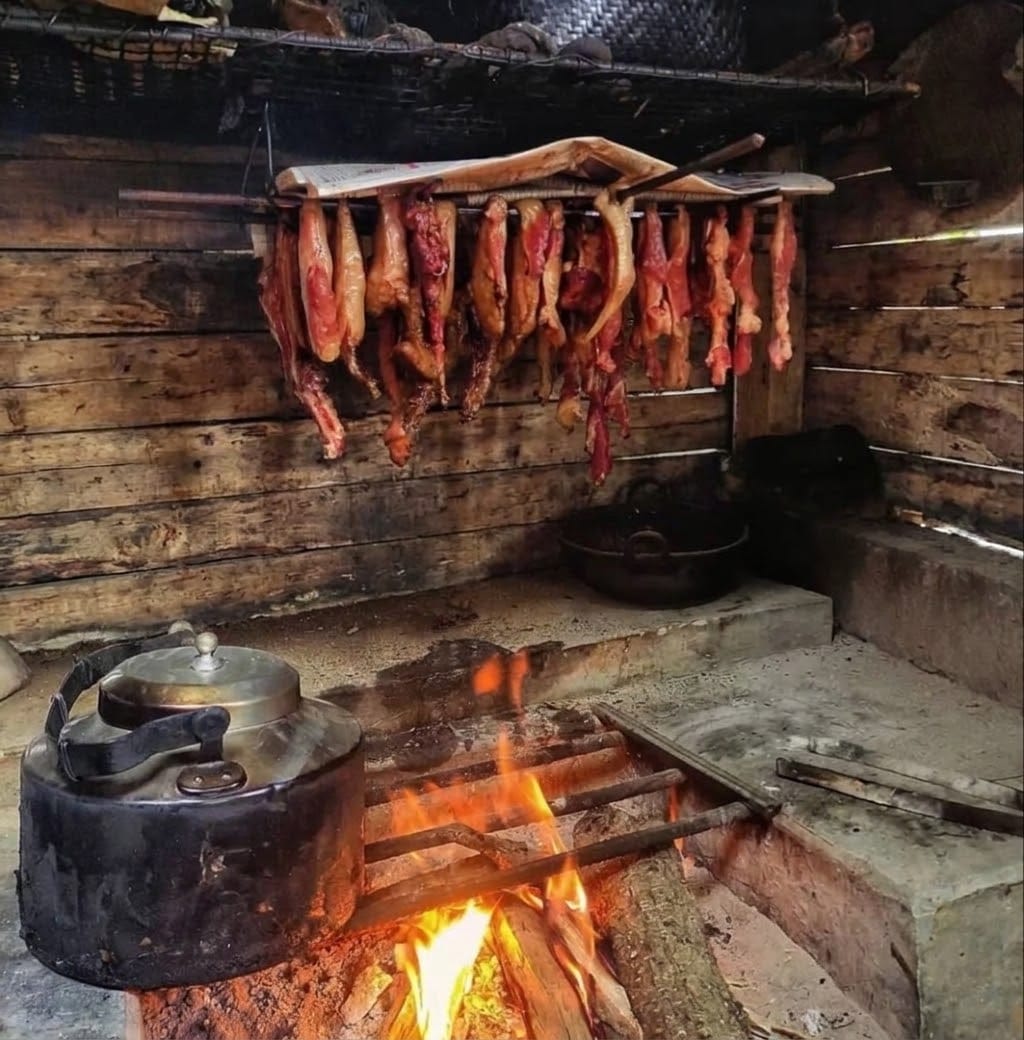
Sāyung, as it is called in Tangkhul Nagas of Manipur, is cured pork, flavoured and aged for weeks or even months, either over the smoke of a wood fire or simply kept and left to mature. In Somdal, we call it Sāyu, and that is the name I'll use here. If you sit in a village kitchen there, especially in the festive season, it is the first thing you notice. Woodsmoke settles into the wooden walls, into your hair, into your clothes. And somewhere above the hearth, growing a little darker with every passing week, hang slabs of pork that will one day become the heart of a meal.
Please do not mistake it for the smoked pork sold in cities today, the kind dried over a charcoal oven for a day or two and then packed for sale. The Sāyu I am speaking of is the time-tested one, cured and aged for months, with the deep, woody, earthy smell that only comes from a village hearth.
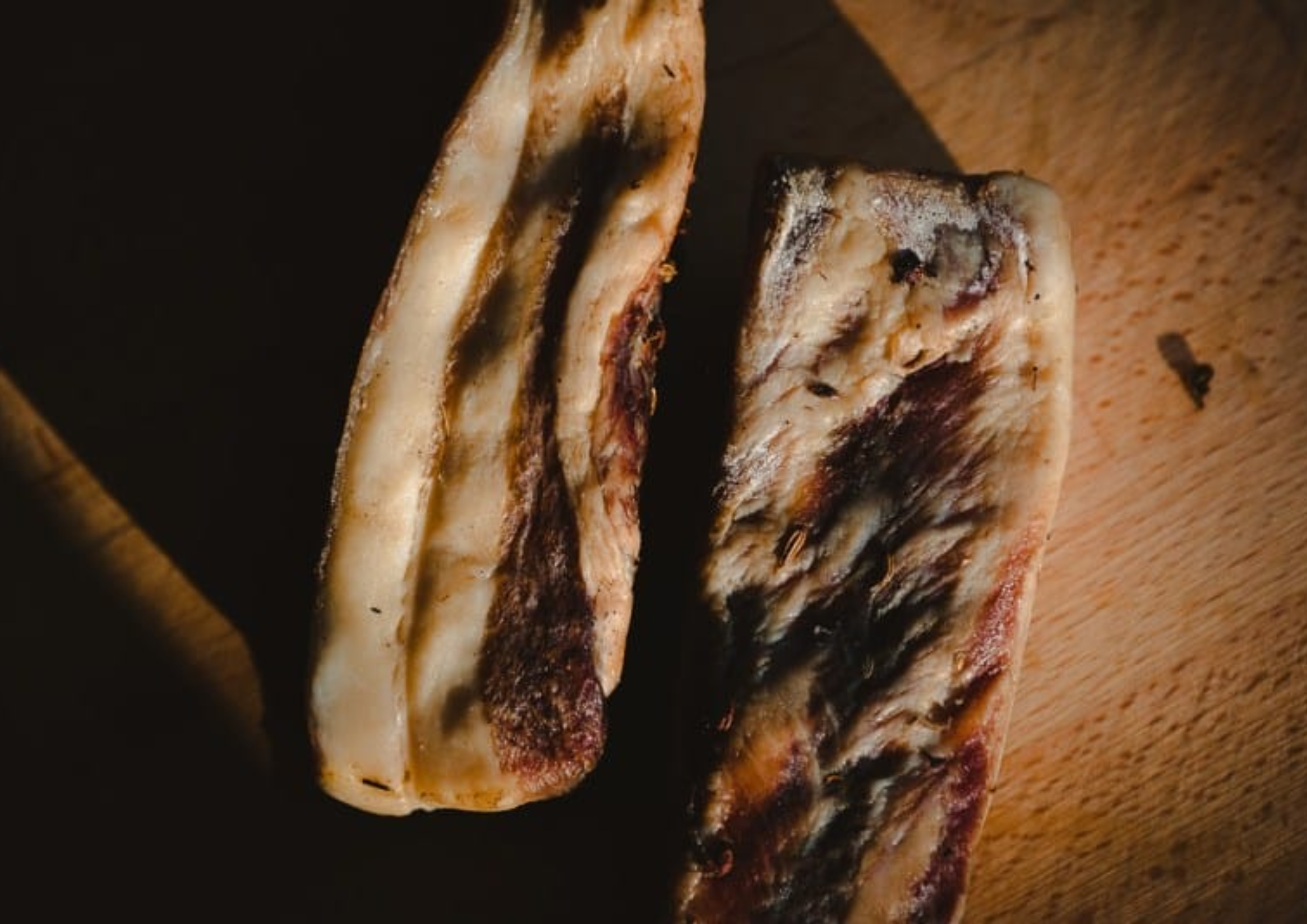
It is no exaggeration to say that aged pork is one of the oldest and perhaps the most loved foods in Somdal, and among the Tangkhul Nagas as a whole. The way it was made in the olden days, and the way it still is today, says a great deal about how we live.
Sāyu comes in many ages, and it is the aged ones I love most. I know many people don't enjoy very old Sāyu, and I understand them. My grandmother kept pieces for almost a year, sometimes longer. By then the flavour has turned bitter and strange. The smoke, once light and pleasant, becomes heavy and sharp, almost tarry, and it settles at the back of your throat. Over time the fat turns yellow and the meat dries hard. Those of us who grew up on it call it strong and satisfying. Many families will tell you that a broth made from Sāyu is richer than anything else, because so much flavour has been packed into so little meat. For me, that bitterness is the best part.
When I fell sick with a fever, a cold or the flu, my taste buds would fade and I would refuse to eat anything at all. That was when my grandmother went to find her oldest Sāyu. She cut a thin slice and roasted it over the wood fire, then held it above a plate of rice and let the fat drip down as the meat softened and melted. When half the slice had turned to liquid, she mixed the fat through the rice, laid the roasted piece beside it, and made me eat.
It tasted a little bitter, but it was full of aroma and the unmistakable taste of age. It is still my favourite way to eat Sāyu, and I have often wondered why. Part of it is the flavour, of course. But I think part of it is that I was a sick child who wanted to be fussed over, and she knew exactly how to do it. The plate of rice was the love.
A flavour like that does not come from the pot alone. It takes patience, a good many hands and a whole season, and it starts long before anyone lights the kitchen fire. So grab a coffee, and let me tell you how Sāyu is made.
In Somdal, food was seldom bought from a shop. We grew what we ate. Every family had its rice fields, its vegetable gardens and its patch of farmland, and almost every household kept chickens and pigs. The chickens roamed freely, scratching about the yard from morning till dusk, while the pigs were kept in a pigsty behind the house or in the space beneath it. From inside you could often hear them grunting, waiting to be fed.
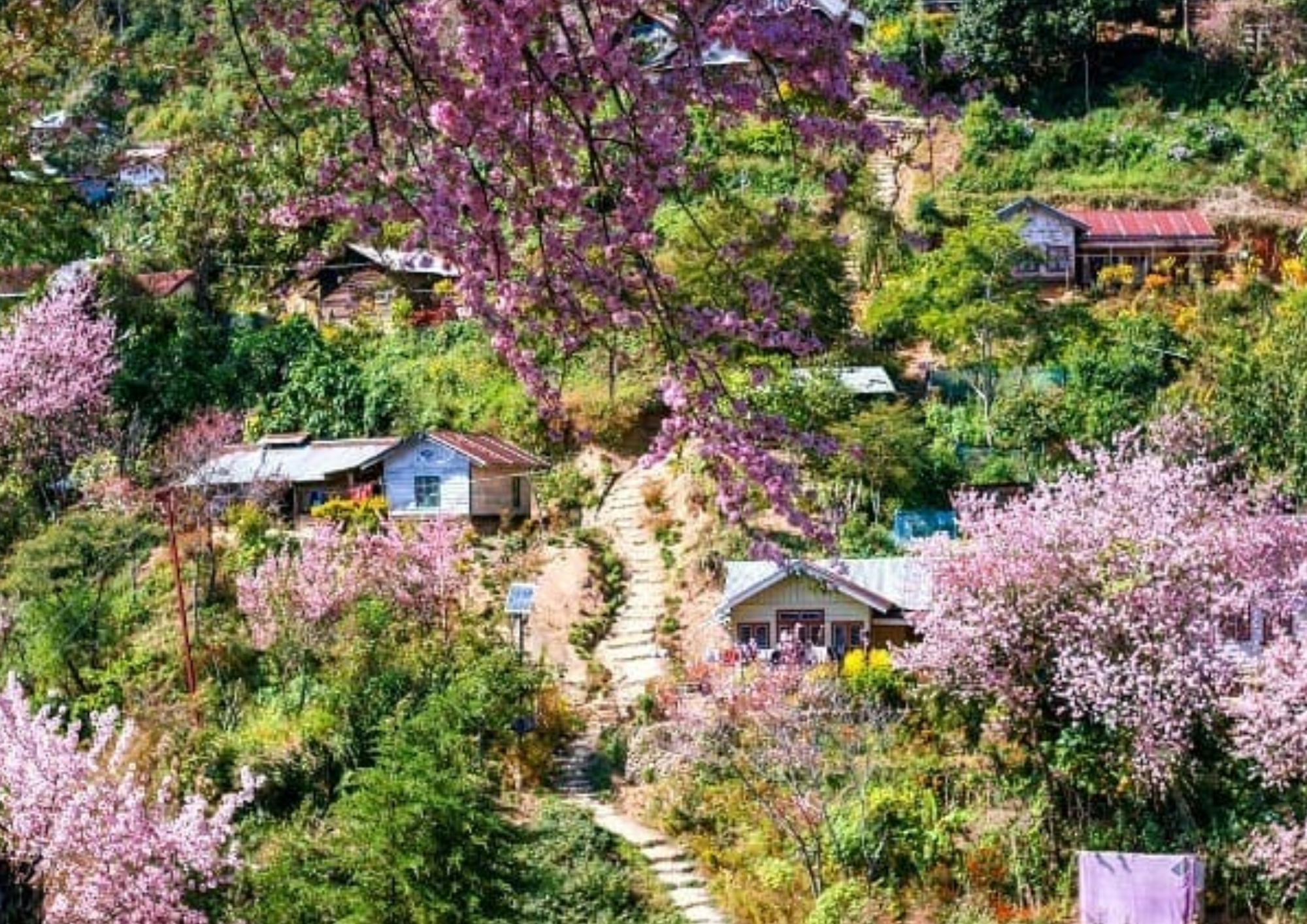
A pig was wealth, and it was also a promise of future feasts. Nearly every home had a pig. Families with enough to spare kept the meat for themselves, and those who needed the money sold a share of it. What was kept was saved, for celebrations, for the end of a long season of work, and above all for the great feasts of merit, where a man proved his generosity by feeding those near and dear to him.
These pigs never ate feed from the market. They lived on rice bran, rice, yam, wild banana stem, household scraps and whatever the jhum fields could spare, all cooked into a mash almost as often as we cooked our own lunch and dinner. Someone had to walk into the forest to gather green leaves, chop them and tend the pot, and the work took up a great part of the day. This is why a small family with many responsibilities often could not raise a pig of its own.
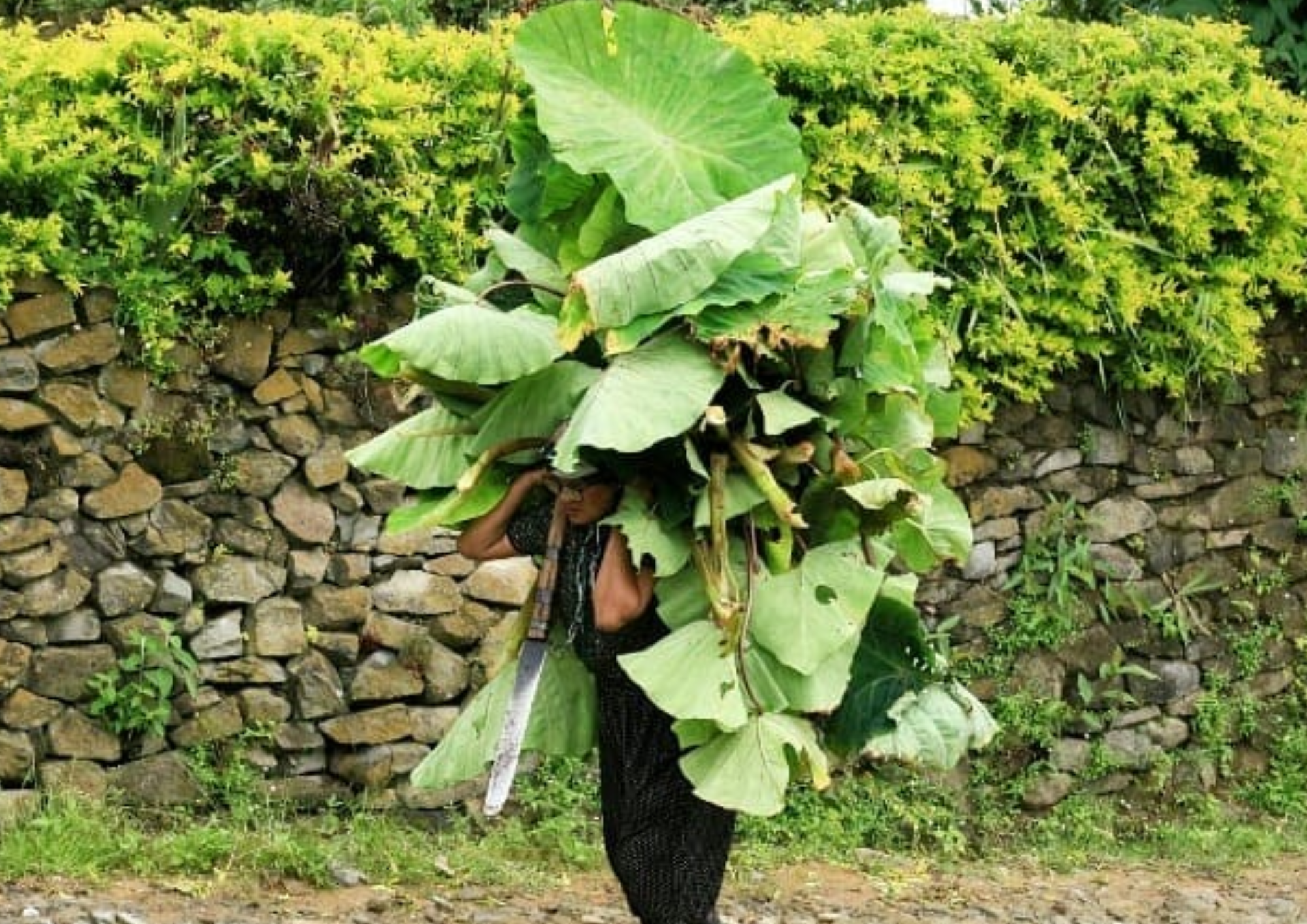
But the village always found a way. A single mother, or someone busy with an office job, would buy a piglet or two early in the year and hand them to a more able family to raise. When the pig was ready, the two families either shared the meat in half or took one pig each. Both came out ahead: one had meat on the table without the daily labour, and the other had a reward for its patience. It was a quiet arrangement built on trust, one of the many ways the village looked after its own.
All that effort shows in the meat. The taste and aroma are nothing like what you find in city markets, in the butcheries of big malls, or in high-end restaurants.
The elders knew their pigs well too. They could judge a pig's weight by measuring its length and girth with a span, the stretch from thumb to third finger. They called it Wai, and more often than not they were right. I still don't know how they did the calculation.
Most of these pigs were slaughtered in a single season. A few were killed now and then through the year, but the biggest slaughter always came in December. I don't think there was a rule or a special meaning behind it. The village simply followed the agricultural calendar, and in Somdal, food followed festivals.
The timing was perfect, though, and I think everyone quietly knew it. December is when the family comes home. People who had moved away for work or school returned for the long holidays, for weddings and for Christmas. Houses that were quiet for most of the year suddenly overflowed with cousins, aunts and uncles. Our table grew longer, and we invited friends and relatives to join us for dinner.
There was a practical reason too. The months after the festivities are the months of cultivation, when the fields demand strength and long hours from everyone. A person who spends the whole day bent over the soil wants, and deserves, a meal that tastes like a reward. A winter pig, well preserved, promised that meal for months.
And preserved it had to be. A pig is a lot of meat, and in those days there was no refrigeration, so smoking was how families made it last. A well-smoked piece of pork could hang through the rainy months and still be good when the fields were bare.
The work began with the slaughter of the pig. In Somdal, the pigsty always stands close to the kitchen or the home garden, usually with a little open space around it, and that space was where the work was done.
Today, many people burn off the bristles with an LPG stove, which is easier and cheaper than it used to be. My uncle would never hear of it. He insisted on thatch leaves, just as our forefathers had done.
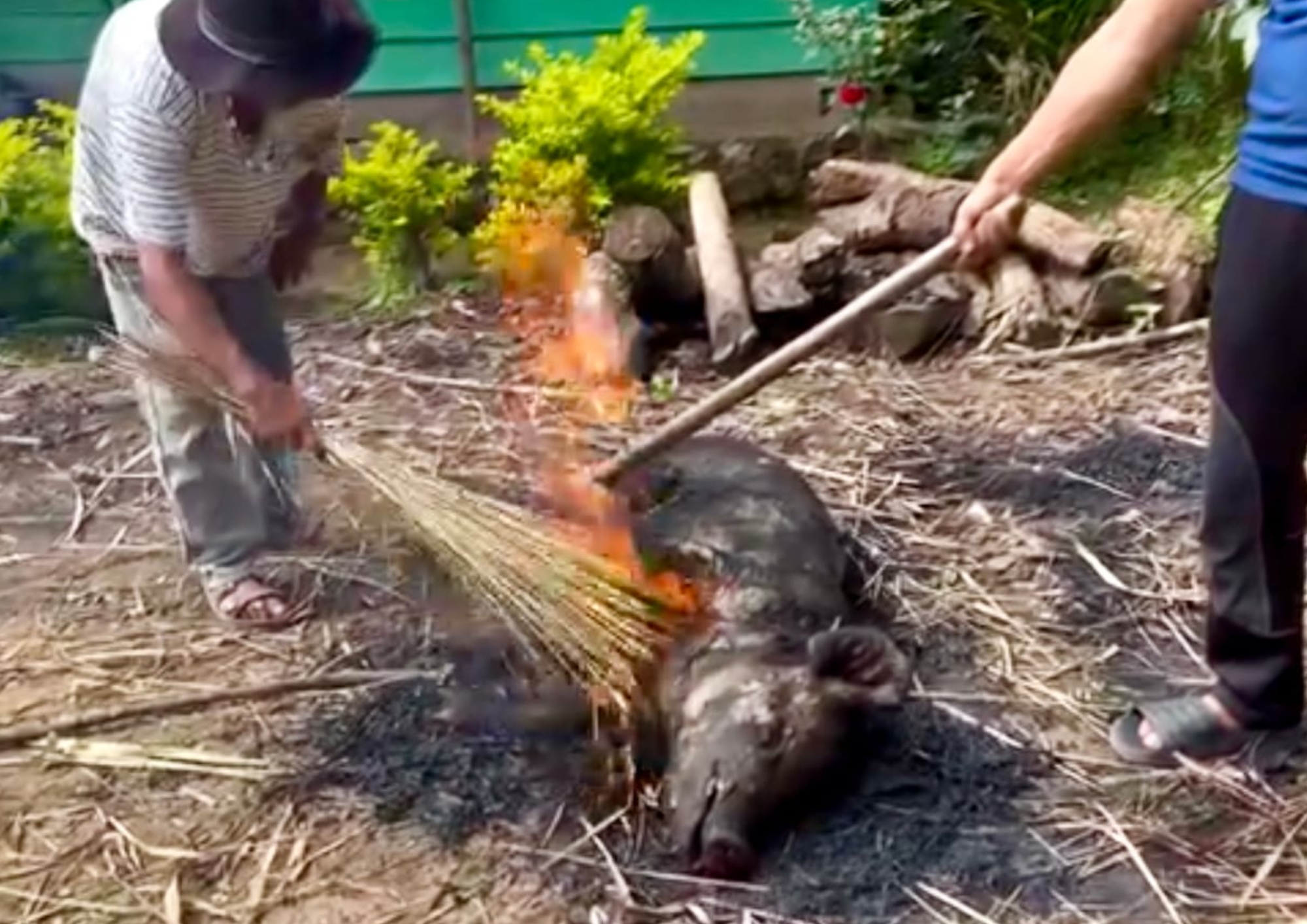
As a child I did not understand why he made such a fuss, I only knew he would not be moved. I understood only later, when I ate pork that had not been singed over thatch and found something missing. Singeing over thatch is not only about cleaning the skin. My uncle used to say that thatch burns at the right heat, quick and even, never too fierce. He was right. It takes off the bristles without cooking the skin, and it gives the skin a first, gentle touch of smoke that, I like to think, never quite leaves the meat.
Once the bristles were burnt off, the skin was scraped clean with a sharp knife. This was my job, or at least the small part of it a child was trusted with. The adults scraped while I poured water from a mug to rinse the skin as they worked. It was a small task, but I remember feeling enormously important. Then the meat was cut into thick chunks.
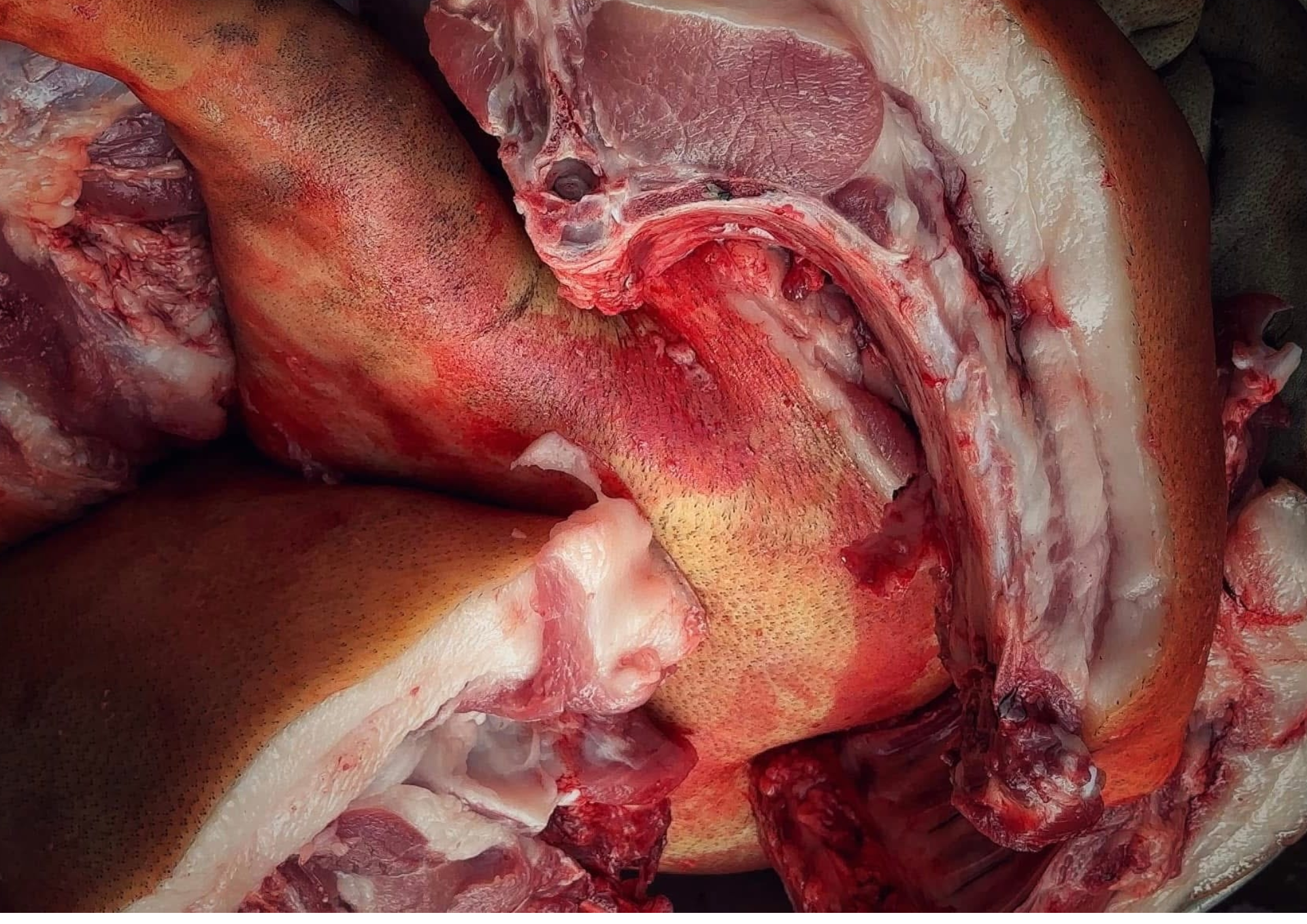
The day itself was a feast, but a pig is far more meat than a family and its guests can eat in one sitting. So whatever remained was set aside for preservation. It was cut into long strips and heavy chunks, each weighing a kilo or two, and the fat was always left on. Fat is the whole point. It protects the meat as it dries and keeps the inside soft and tender while the outside hardens.
Every kitchen had its own way of doing it. One method, called Kharingchār, was to rub the meat with salt and a little turmeric powder. A small iron or bamboo rod was pushed through each piece, and the meat was hung from a bamboo rack above the kitchen fireplace, close enough to catch the warmth and the smoke, but far enough that the heat did not cook it or make the fat drip away. It asked for time and dedication, because the meat had to be watched constantly.
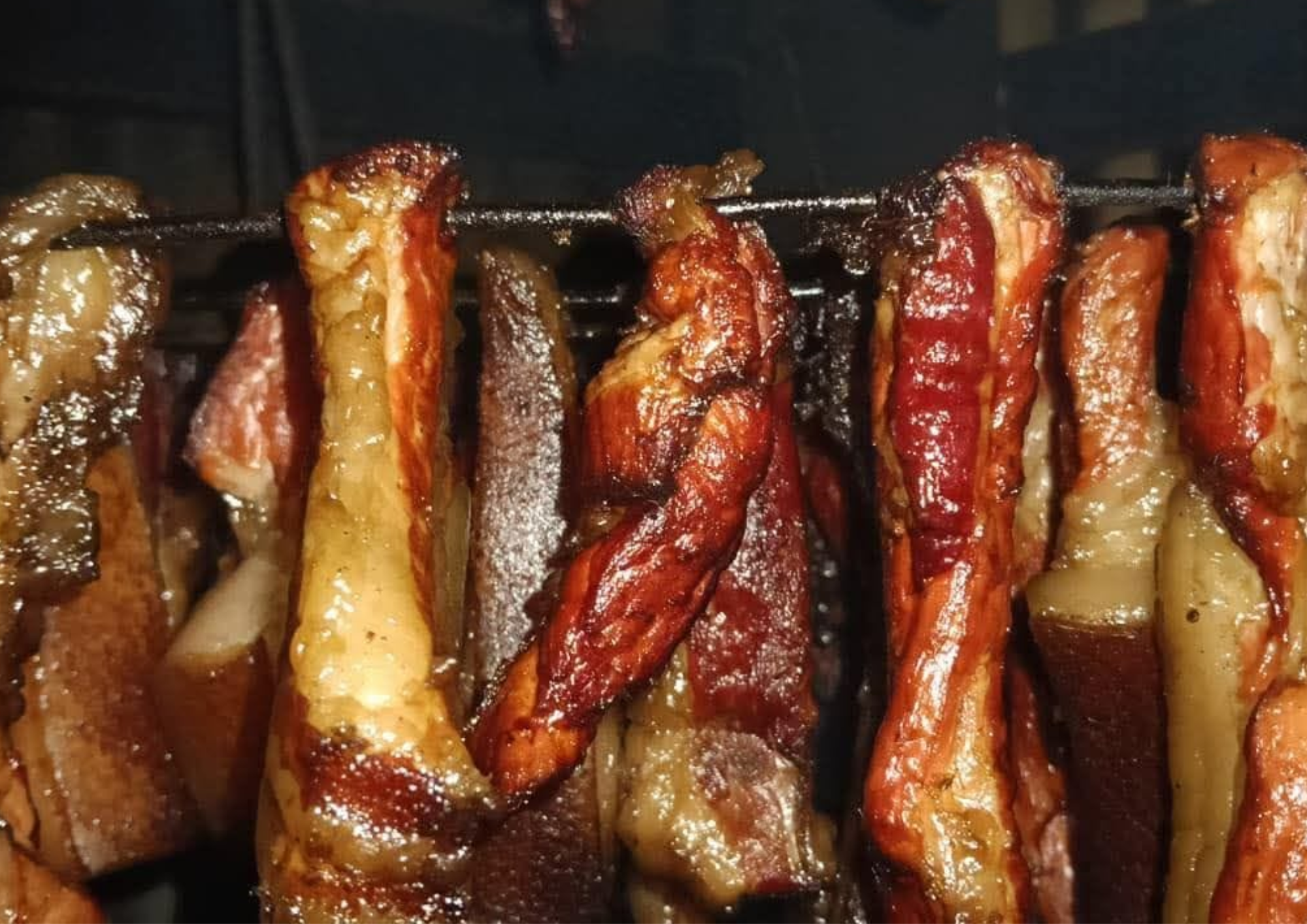
The kitchen fire never went cold. Fed with hardwood, its smoke worked slowly on the meat for days, sometimes weeks. The outside turned black and hard, while the inside stayed firm and deeply flavoured. It had no set number of days, you could just tell by sight, by touch and by smell when it was ready to come down from the hearth.
The other method, the older one, was to boil the chunks in a big cooking pot. You had to judge the boiling carefully. Meat left half cooked would draw maggots, so it had to be cooked through, but not overcooked. While it was still tender, a hole was punched through each piece, and a fresh bamboo strip, split thin and fine, was threaded through and tied into a loop.
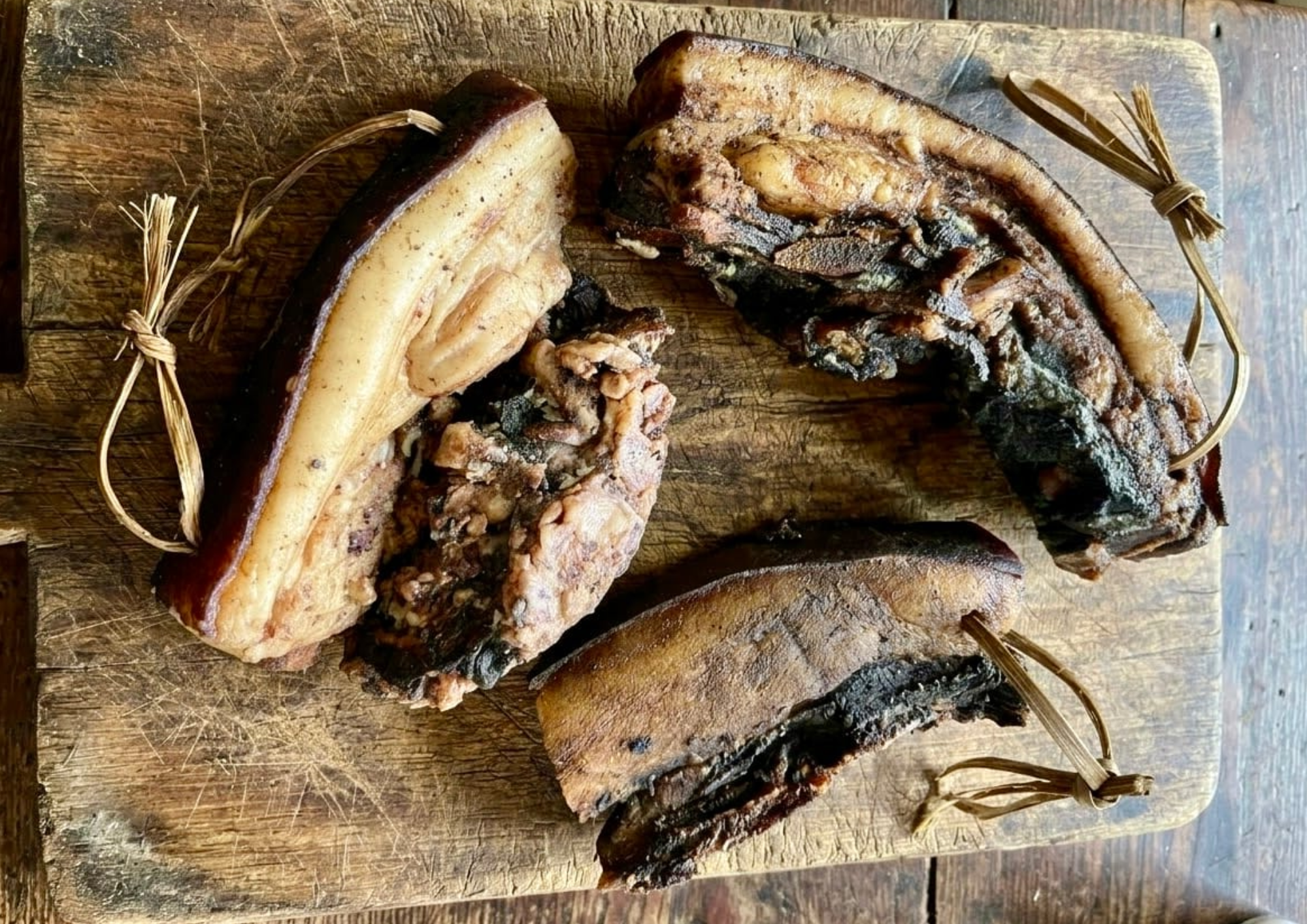
Once the meat was ready, my grandmother would move it to our granary, which stood behind the kitchen. I never asked why she chose it, though we had many other places that could have held the meat. Now that I am older, I think I understand. A granary is rarely opened. It is dark, and it is built without gaps or holes where rats and insects might creep in. In its own quiet way, it was the perfect cellar.
On one side of the granary hung a long, strong bamboo pole. I would help her hang the meat there, one piece at a time, slipping each bamboo loop over the pole. She spaced the pieces carefully so that they never touched. The granary was so dark that even in the daytime we needed a torch to see, and I can still smell that room, all smoke and grain.
The meat stayed there for weeks, and then for months.
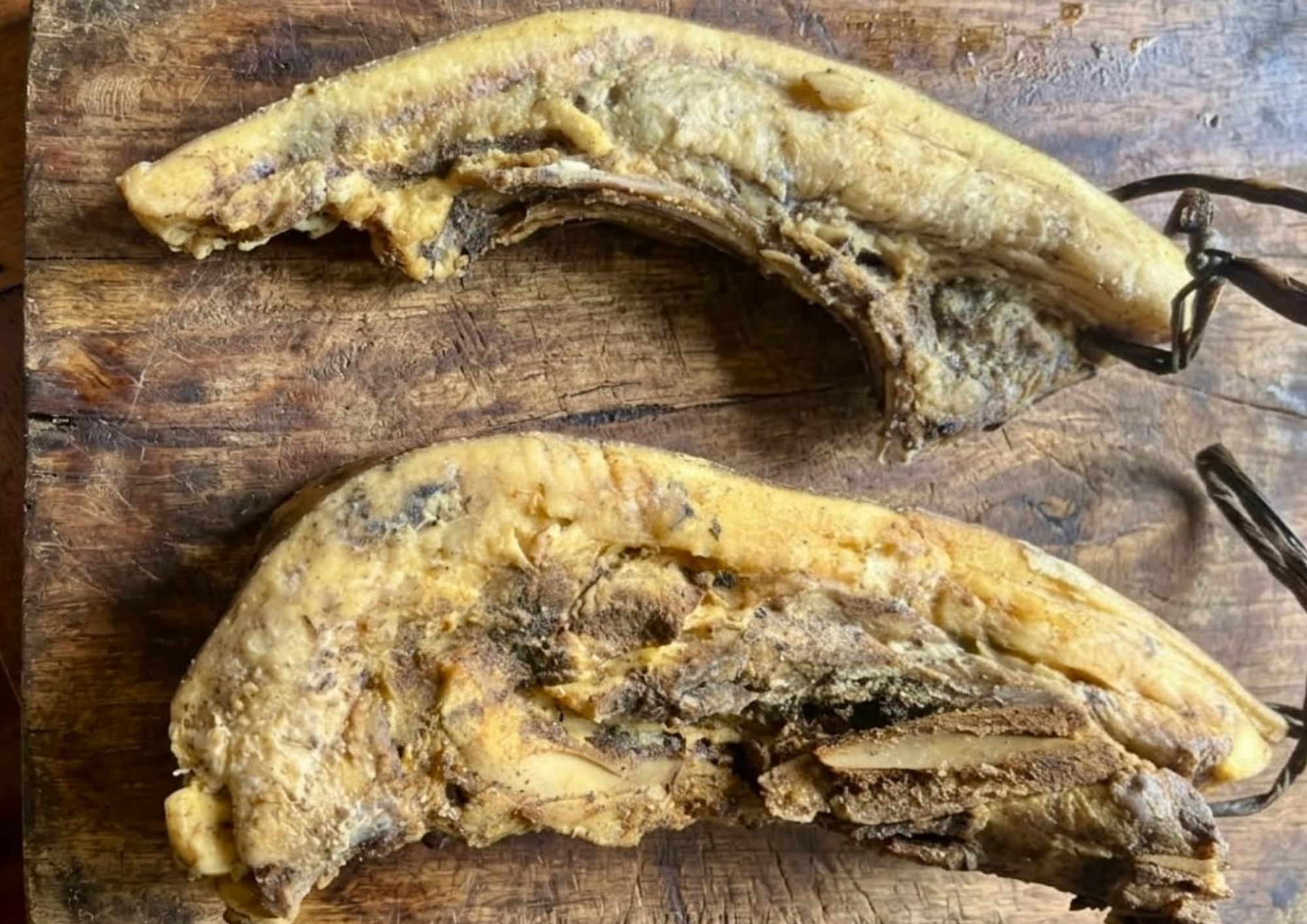
When pork was needed, a piece was taken down. We rested it over a fire with big flames, just enough to soften it for easier cutting. Then the sooty surface was scraped and scrubbed away, the meat was washed, and it was cut into small cubes with the skin and fat still attached. And into the pot it went.
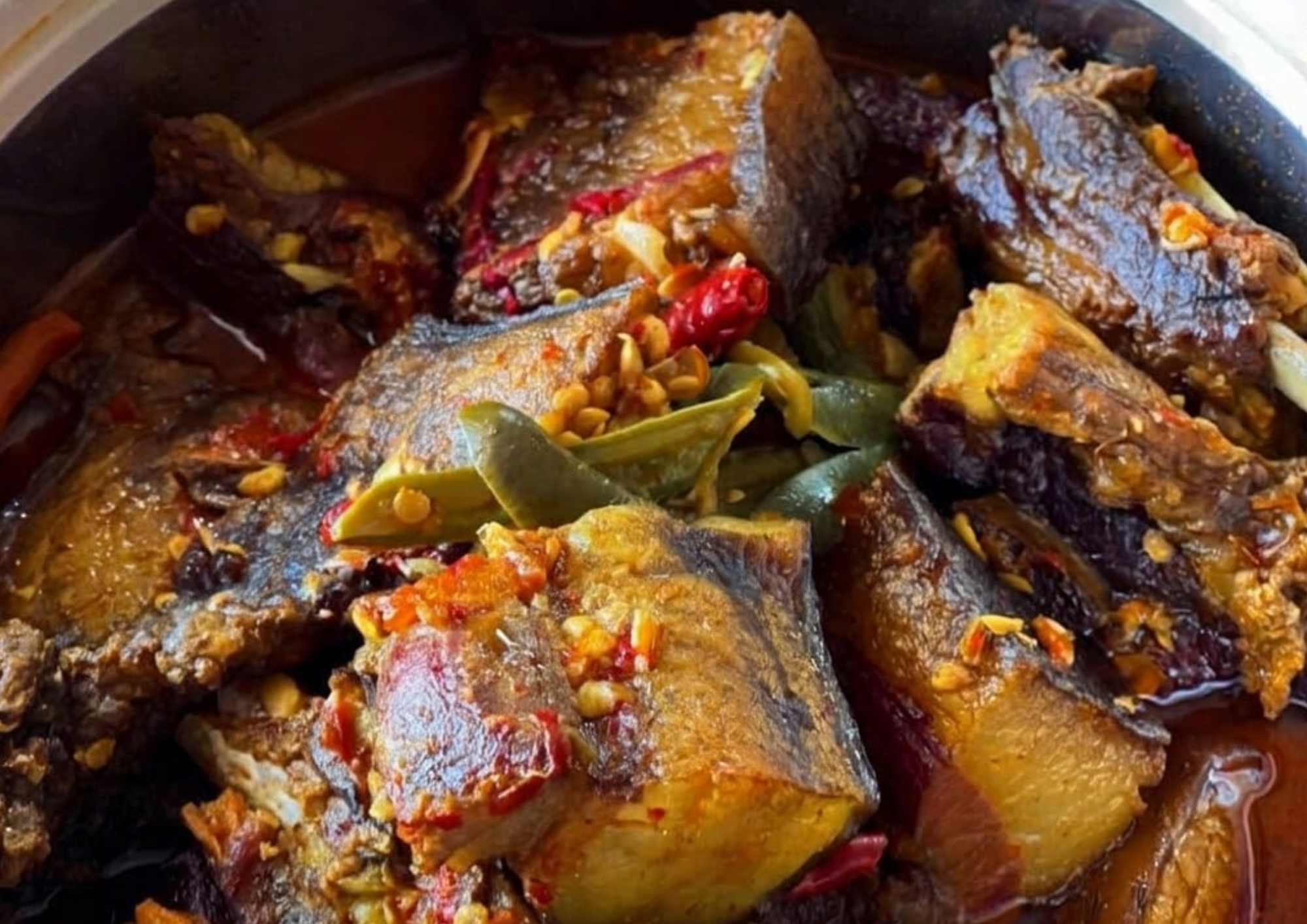
In Somdal, the traditional way of cooking Sāyu is gentle. There is no frying in oil and no long list of spices. Water goes in, and the pork simmers until the fat softens and the smoke seeps slowly into the broth. Then come the things the hills provide. Fiery dried king chilli brings the heat, ginger, garlic and a few leaves from the garden finish the pot. Salt goes in last, and carefully, because the smoked meat already carries plenty. That is all it needs. The broth comes out dark and smoky, with the heat of the chilli sitting at the back.
Aged Sāyu is strong, so a small piece is enough to flavour a whole pot. In lean seasons it is used sparingly, just a few cubes to give taste to a pot of greens.
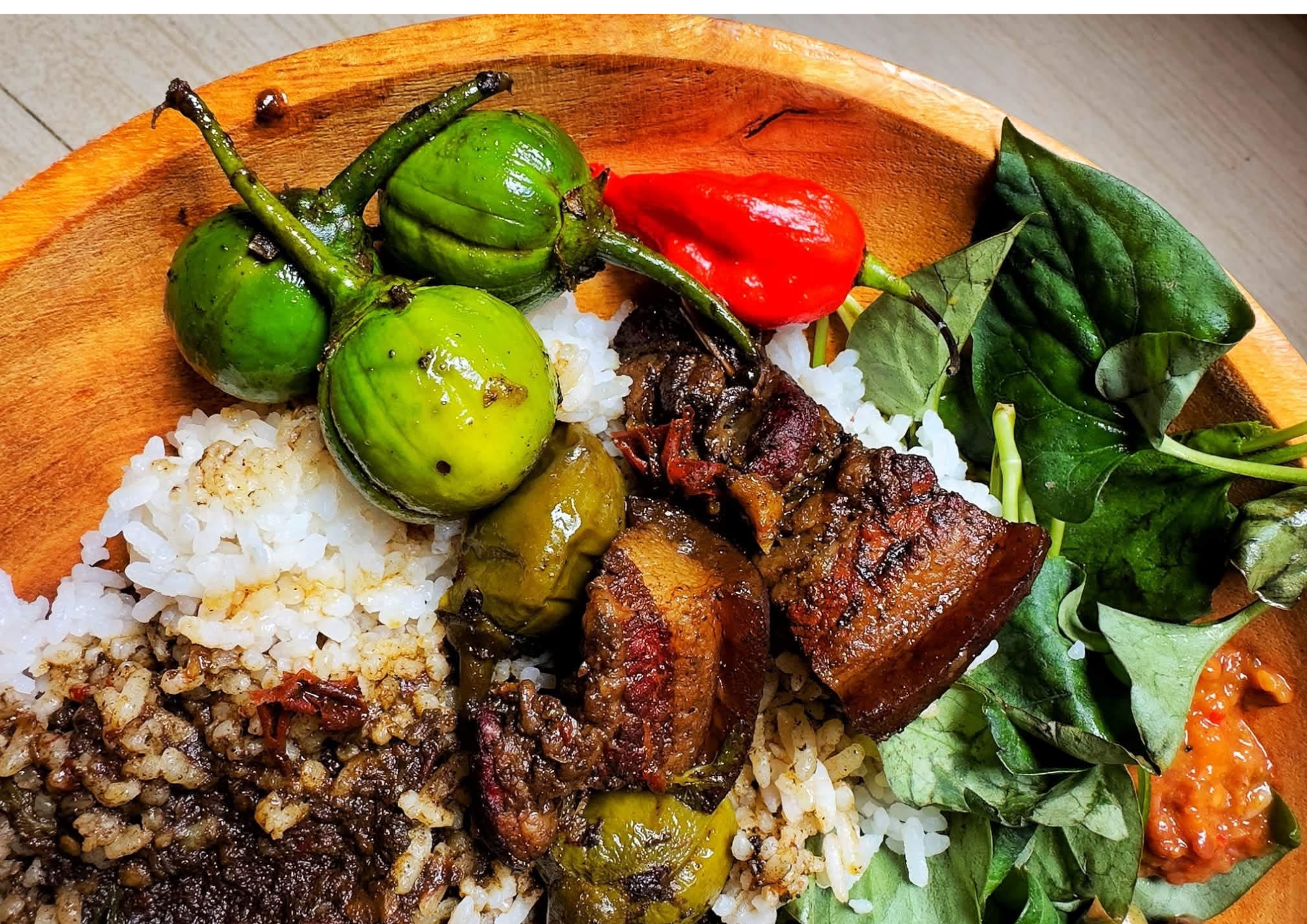
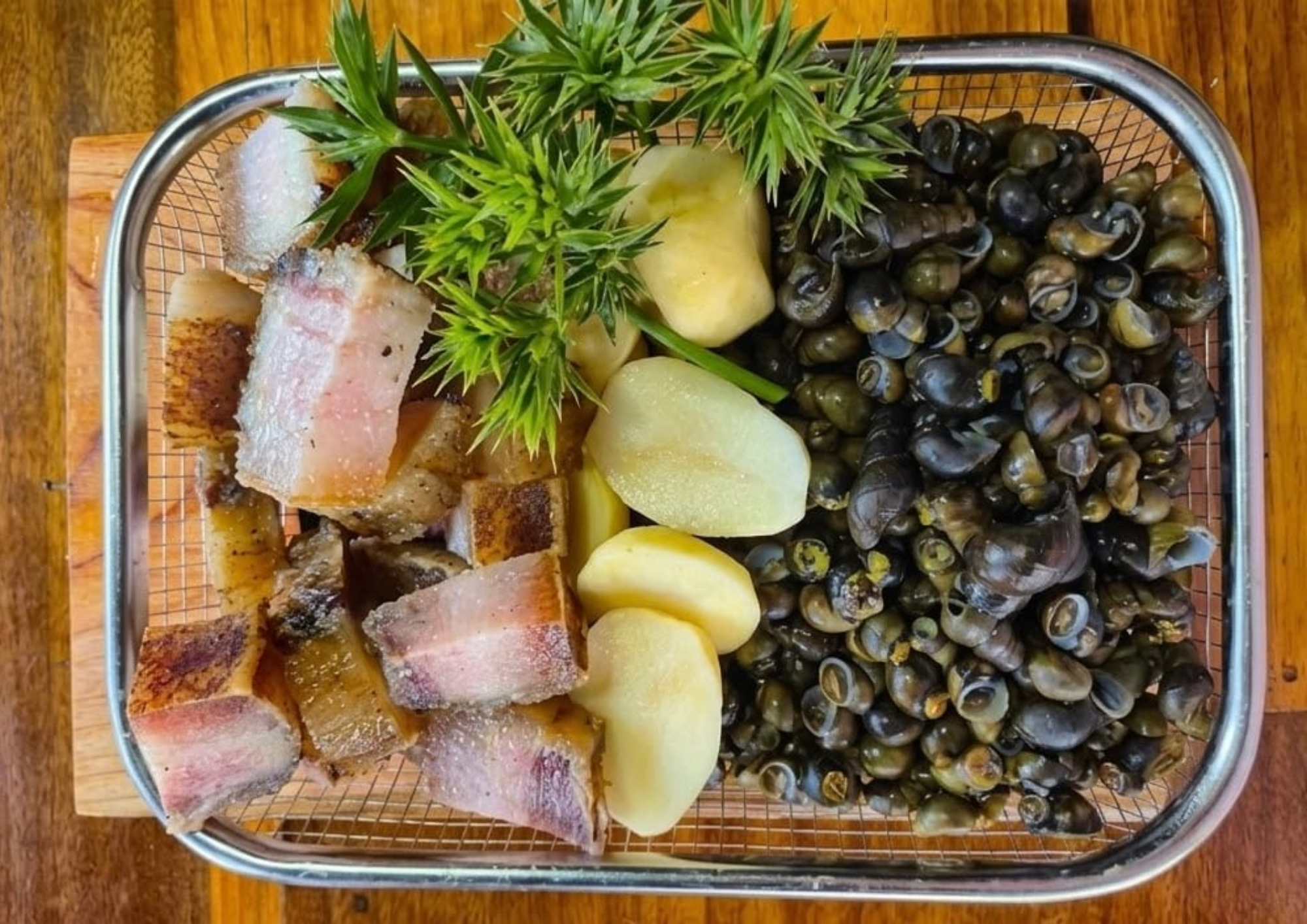
I noticed that Sāyu is eaten differently from place to place and from tribe to tribe. The basic cooking is much the same, but other Naga communities, in Nagaland for instance, often cook it with bamboo shoots or axone, the fermented soybean, or with garden vegetables or river snails. Sāyu goes well with almost anything you pair it with. It tastes wonderful, and more and more people are learning from one another, trading recipes and picking up each other's food traditions.
These days, smoked pork is sold in cities everywhere, in restaurants, in packets and at stalls that cater to travellers. It shares something with Sāyu, but it is not the same thing. What you find in the market is usually dried over a charcoal oven for a day or two and packed to sell, and the pigs were most likely raised on commercial feed. Sāyu is the slow, aged meat from a village hearth, made to last through the year and be shared at the table. None of that can be hurried.
I am glad smoked pork has introduced more people to Naga flavours. But I have tried it from many cooks, stalls and restaurants, and none of it comes close to the Sāyu I ate as a child in Somdal.
The difference is in the pig, in what it eats, in the fire and in the months of waiting in the dark. Skip any one of those and you no longer have Sāyu. A stranger might eat both and see no difference, but someone from Somdal knows at the first bite.
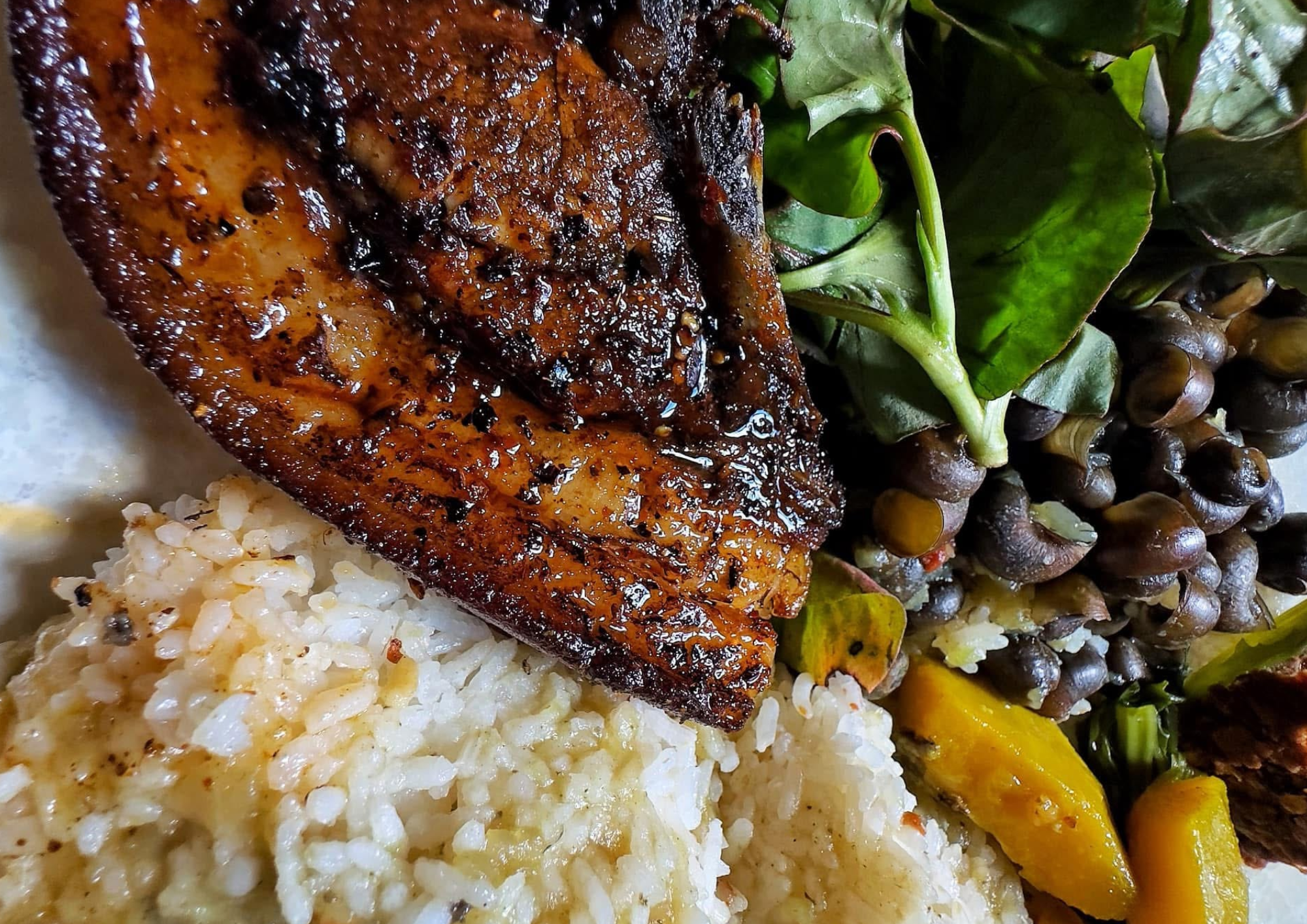
If you want to make Sāyu yourself, and I hope you do, keep it simple. Good pork, few spices, and more patience than you think you have.
And if you ever get the chance to eat Sāyu in a Somdal village kitchen, sit down and take your time. Eat it the way we did, hot, with rice, and the fire still going behind you, and stay a while after the meal. You will smell of smoke for a day or two afterwards. My grandmother is gone now, but the smoke is not. I still find it in my clothes after a visit home, and I don’t wash them straight away.