What Fell from the Trees of Somdal
Our mothers never wrote it down. They only stirred, tasted and gave. I write for the children they raised and the ones they never met, so that when someone asks what Khalathi was, the answer tastes, even faintly, like home.

I cannot tell you when I first tasted Khalathi, because I cannot remember a time before it. It was simply there, the way the hills were there and the rain was there. By the time I was old enough to understand that it was a fruit with a botanical name and a season of its own, I had already eaten more of it than I could count.
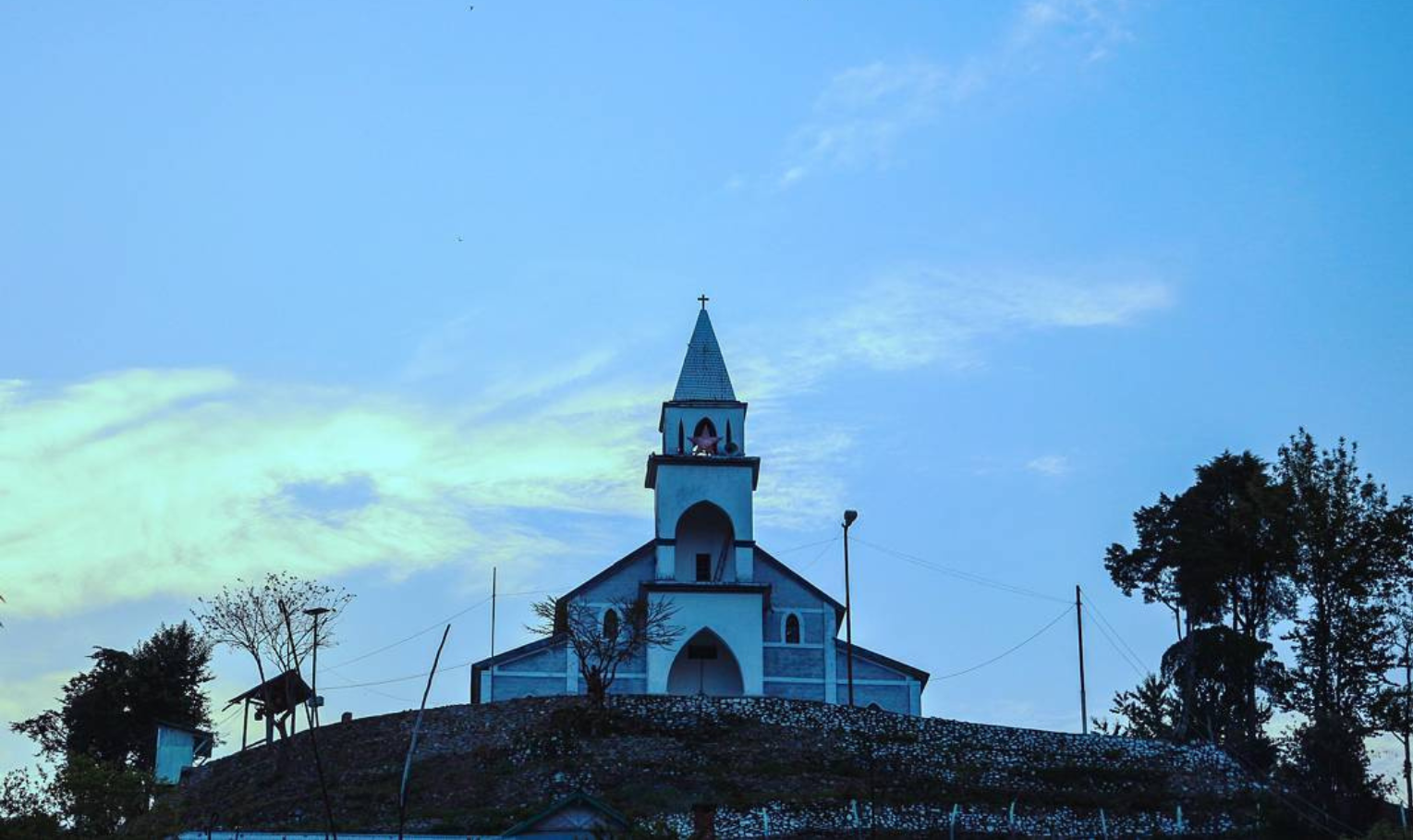
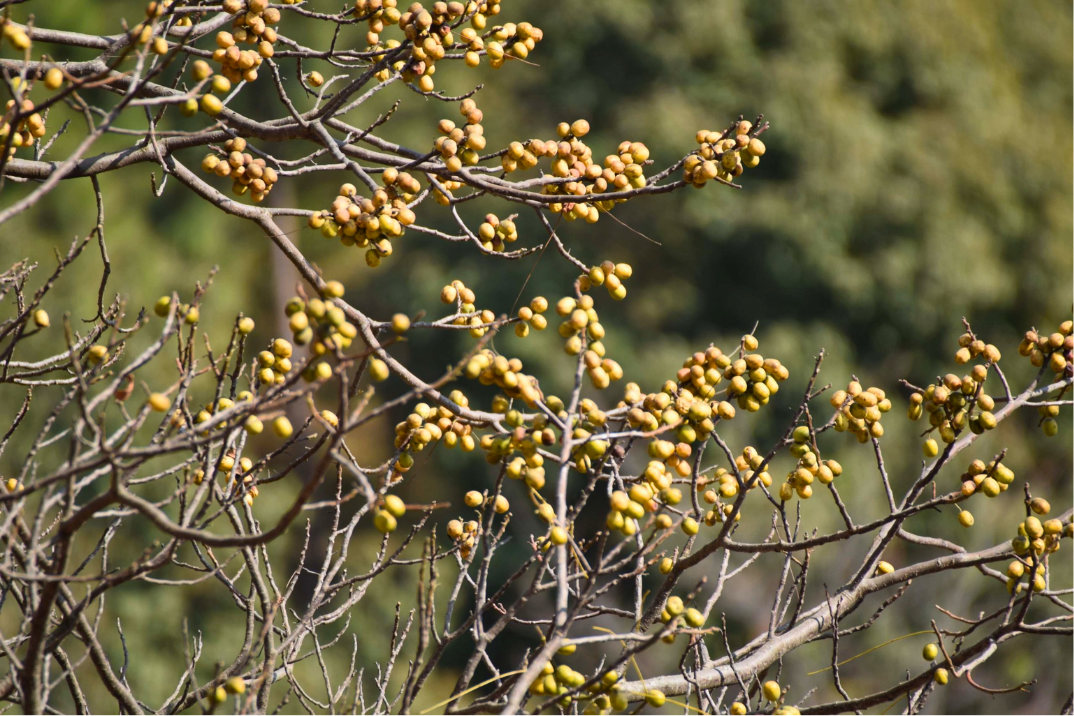
In Somdal, a village on the western side of Ukhrul district, Manipur, we simply call both the fruit and the candy made from it Khalathi. It wasn’t until I looked it up that I learned botanists call the tree the Nepali Hog Plum, Choerospondias axillaris. It grows across parts of Asia, and does particularly well in the fertile soil around our village.
Growing up, I often felt that this fruit was little known outside my hometown. Perhaps people in other villages in Ukhrul district did not know how to eat it, or perhaps the tree simply does not grow as plentifully there as it does in my hometown.
In Tangkhul the fruit is called Shangkhalatthei, but children and young people usually call it Napkuithei, as a tease. The word means snotfruit, because the flesh is slimy and looks a lot like snot. I understand why people tease the name, but the fruit deserves far more respect than a giggle.
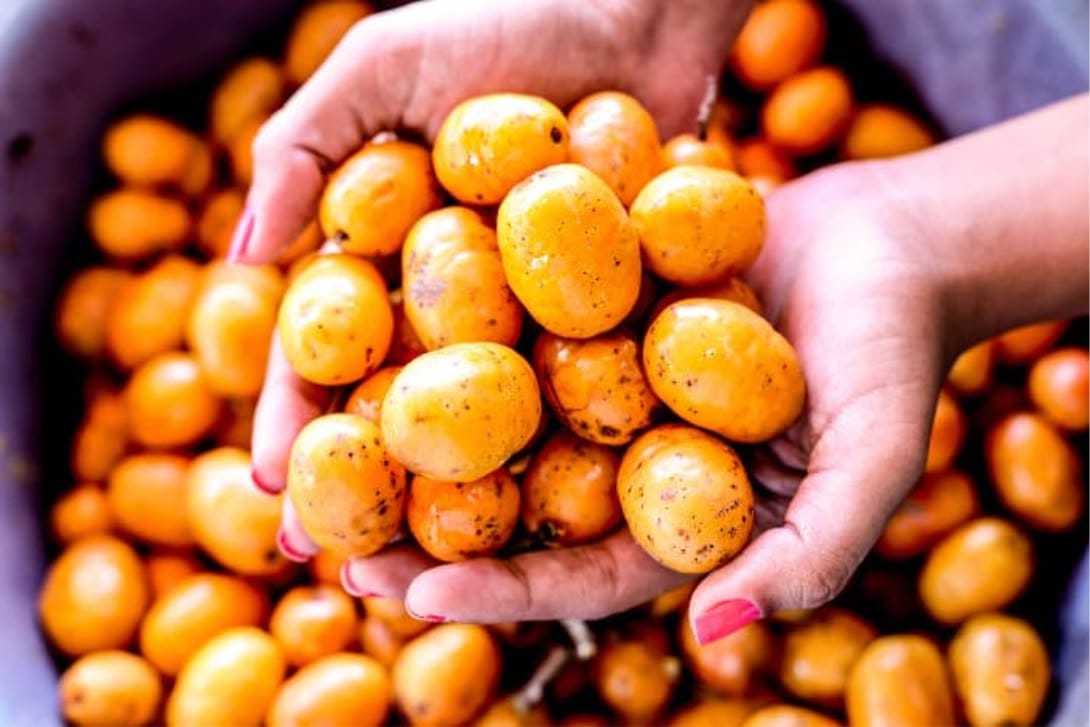
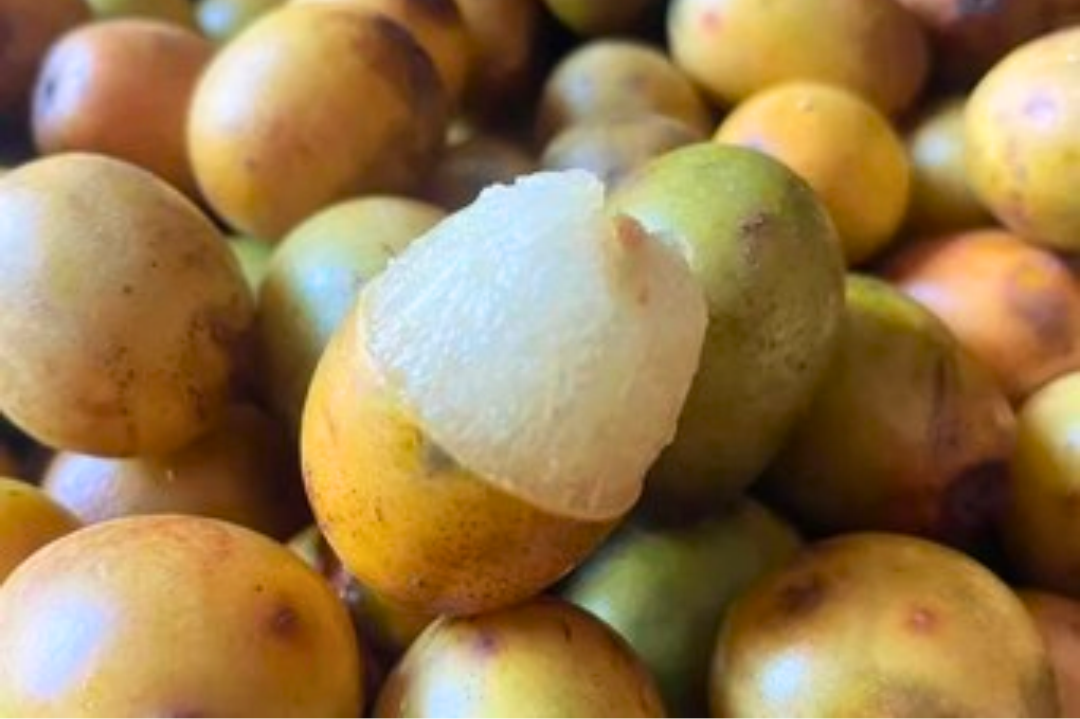
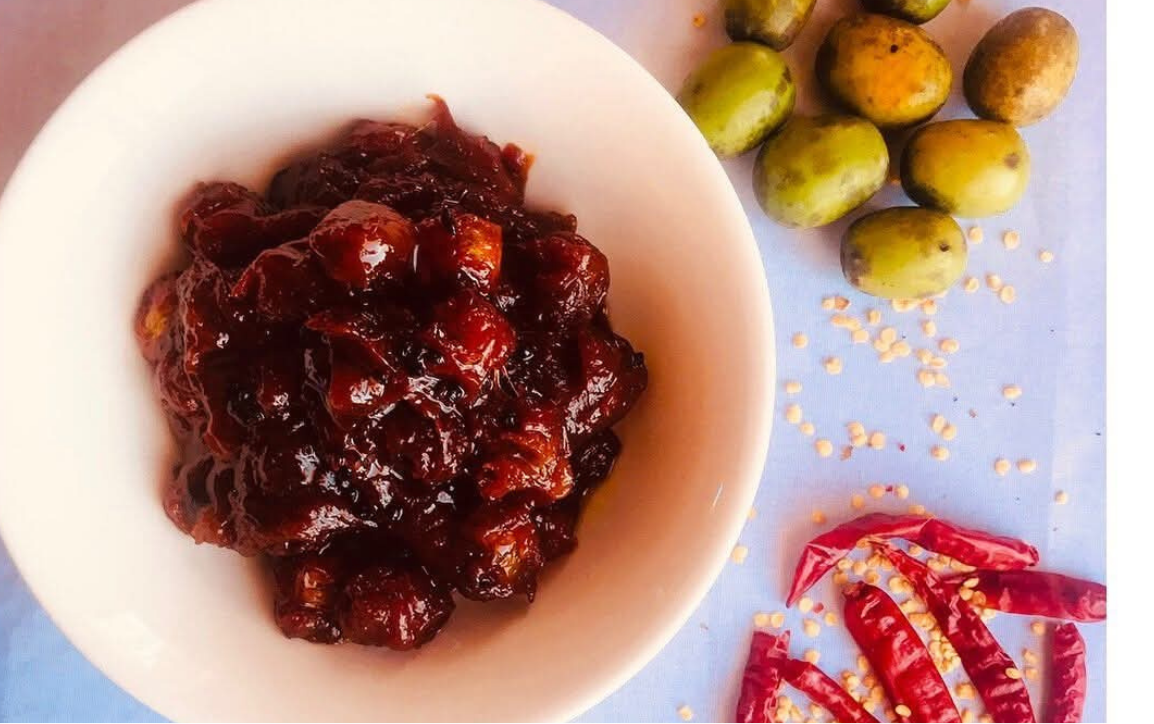
It is a small fruit, only about four centimeters long and oval in shape, turning a greenish yellow as it ripens. Beneath the tough, fibrous skin, pale yellow flesh clings tightly to a large brown seed that is nearly as hard as wood. Very little of the fruit can actually be eaten. But what little you get is bold and tangy, with a sourness far bigger than its size.
I have seen the tree in neighboring villages, but people in Somdal will tell you, with complete confidence, that the fruit tastes better the Somdal way. We have never put the claim to the test. Some things are better left as pride.
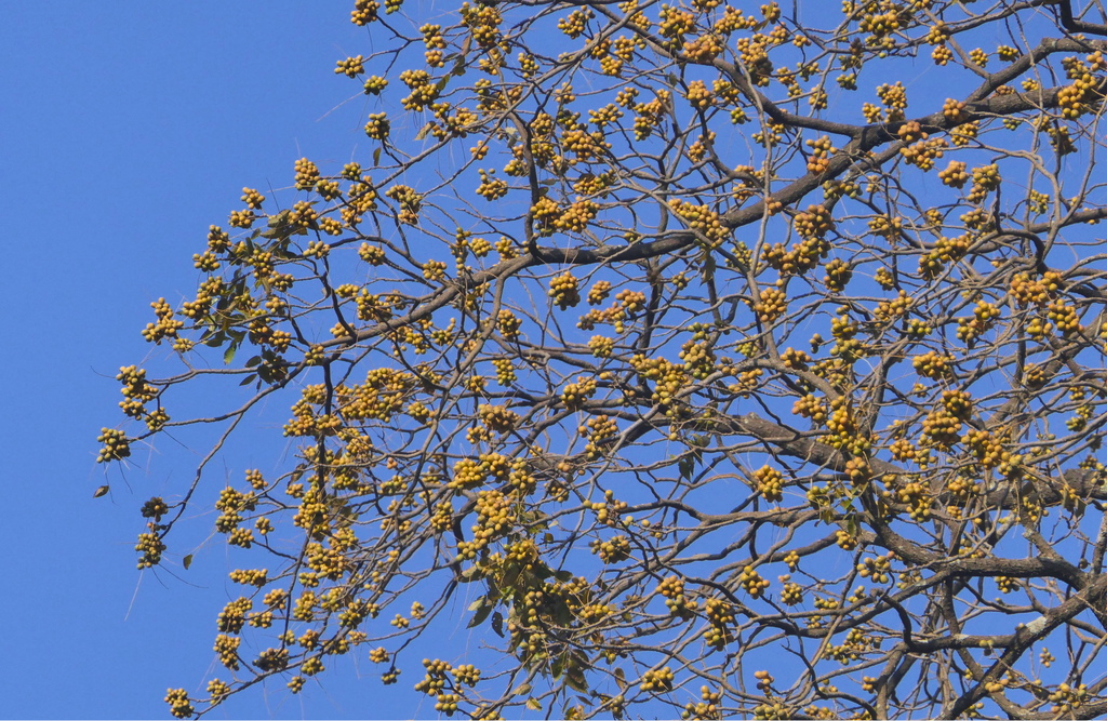
A mature Khalathi tree can reach around twenty meters, which makes it one of the giants around the village. Some grew close to homesteads, others stood deep in the forest where only the people who knew the paths ever went. A young tree takes years before it bears fruit, so every heavy branch you see was waiting for someone to leave it alone long enough. These trees also give shade, and the fallen fruit feeds forest animals like deer, which carry the seeds far from the tree. It is easy to forget that when you are a child with an empty basket and a mouth already watering.
In Somdal, the fruit ripens between October and January, and that was the stretch of the year we looked forward to without ever saying so. Mature fruits fall to the ground on their own, so there was no need to shake the branches. We simply went out and gathered. Nobody was too young or too old to join in, and the collecting turned into something communal without anyone planning it. We walked along the base of the trees, bent over, checking the fruit in our hands one by one. The fruit seldom spoiled or rotted, even after lying on the ground for a while, so we were never rescuing it from decay. We were choosing the best. After enough seasons, you learned to spot a good one almost without thinking, by its color, its weight and the way the skin felt under your thumb.
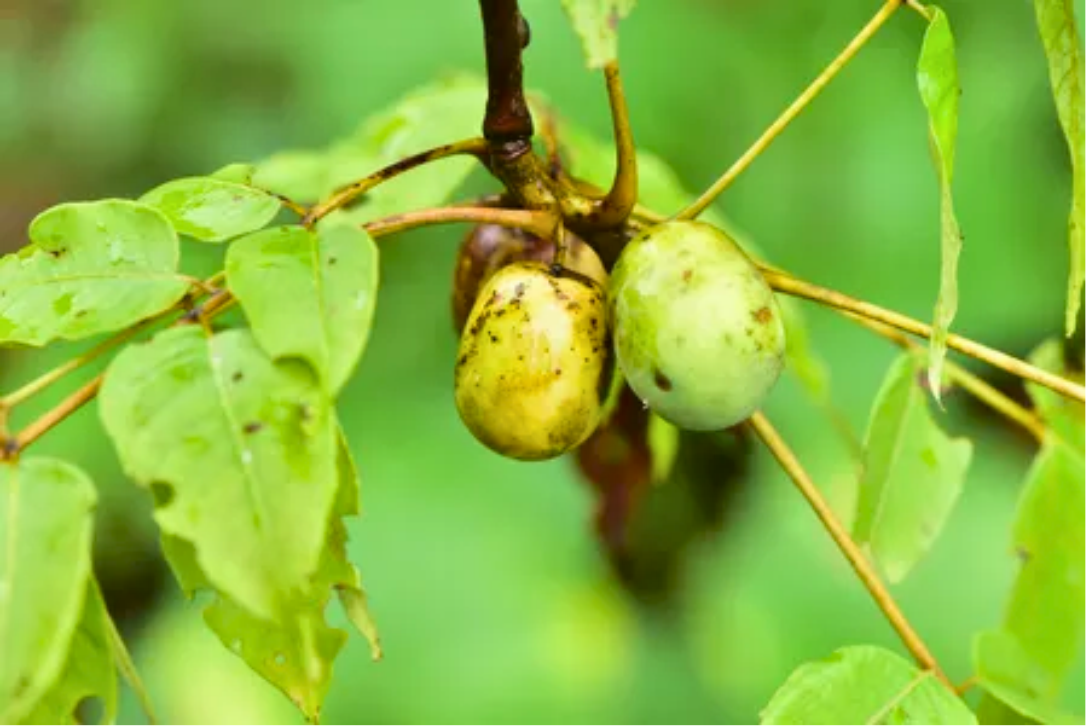
I knew the fruit was not much fun to eat on its own. The skin was tough and fibrous, and it never peeled away cleanly. Underneath, the pale yellow pulp clung to the woody seed, so you had to work at it with your teeth for a few small bites. Then the sourness hit. Your mouth flooded, your eyes squeezed shut, your lips puckered. We felt it in our teeth every time. Still, raw is how we ate most of it as children. We peeled the fruit and sprinkled the flesh with chili powder and salt for a spicy tang, or with a little sugar when we wanted a quick burst of sweetness. A handful of fruit in the forest, with our fingers turning red, was a small feast all on its own.
Most of the harvest, though, was carried home, and there the fruit changed into something else. I spent nearly as much of my childhood in those kitchens, watching.
The basic method is the same everywhere in the village. The fruits are washed well to get rid of dirt and dust. Then they are boiled gently in water until the skins crack and burst, which softens the pulp and helps release the flavor.
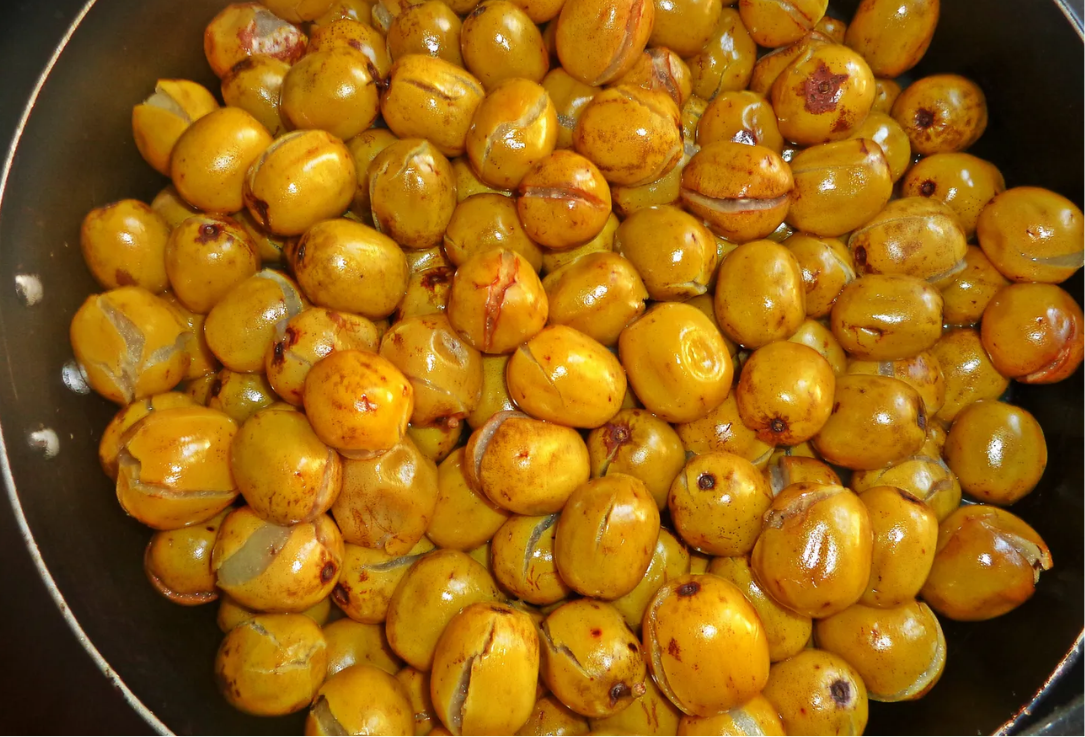
Once the fruit has cooled, the skins give way to patient hands, slipping off to reveal a pulp both tender and tart, its sharp, sunny flavor still bright. In the old way, that was enough. A pinch of salt, a sprinkle of sugar or a dusting of spice, and the fruit was eaten just as it was, simple and most honest form. Of course, at this stage the cooked fruits turned syrupy and slick, childhood bravado kicked in and it quickly escalated into a daring contest of who could swallow the most whole seeds.
Mothers today take it further. Over a low flame and with slow, unhurried time, the pulp simmers until it turns glossy and deep in flavor. Sugar, salt or chili powder is stirred in with a judging eye, tasted and adjusted until sweet, sour and heat settle into balance. What was once a quick bite becomes a preserve, something made to be kept, passed from hand to hand and opened in a leaner season.
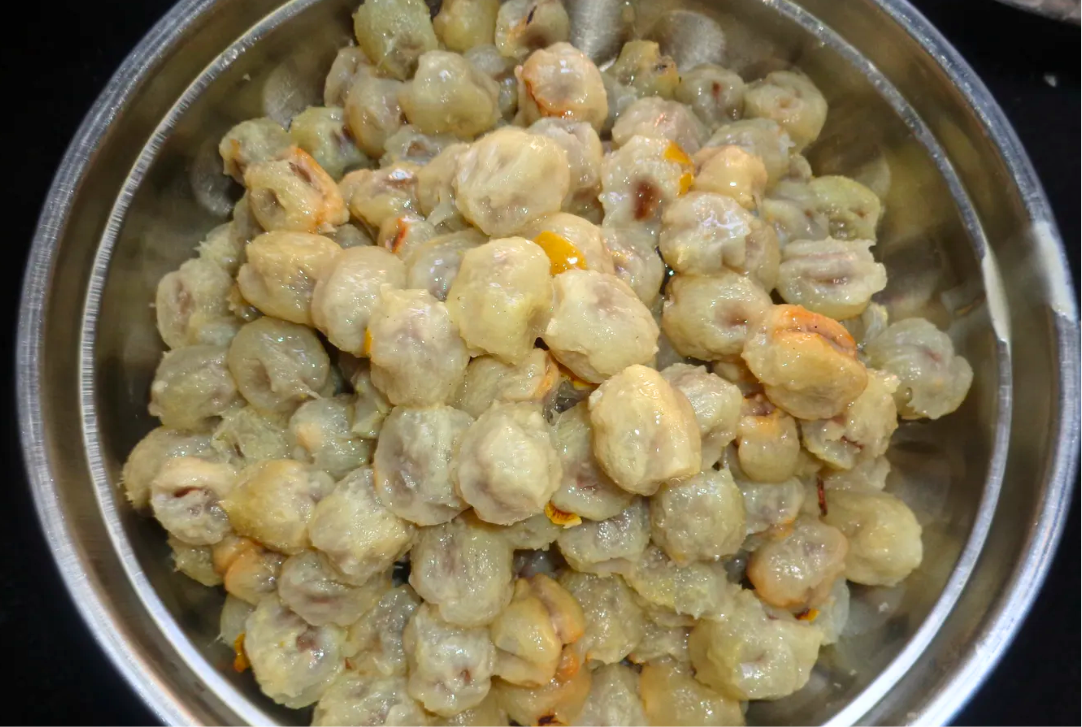
As a child, I noticed that every household made Khalathi a little differently. Nobody followed a written recipe, because there was none. People cooked by taste and habit. One neighbor used a good amount of chili, enough that your lips tingled afterward. Another put in a little more salt, and her candy tasted sharper. My aunt kept hers sweeter and softer. She left it slightly dry, so the pieces stuck together a bit like a fruit preserve. People simply tasted as they went and changed the balance of sweet, salty and spicy until it was right for them. Most were quietly proud of their own batch.
The cooking time varied as well, and it decided what kind of candy you ended up with. Some people stopped early. Once the fruit was peeled, they heated the pulp only until the sugar dissolved completely and the flavors had blended. The result was soft, syrupy and juicy, and it slid down easily. This kind could be eaten fresh or kept in jars, but only for a few weeks, so it tended to disappear quickly. I remember it as the easiest one to share, and the hardest one to stop eating.
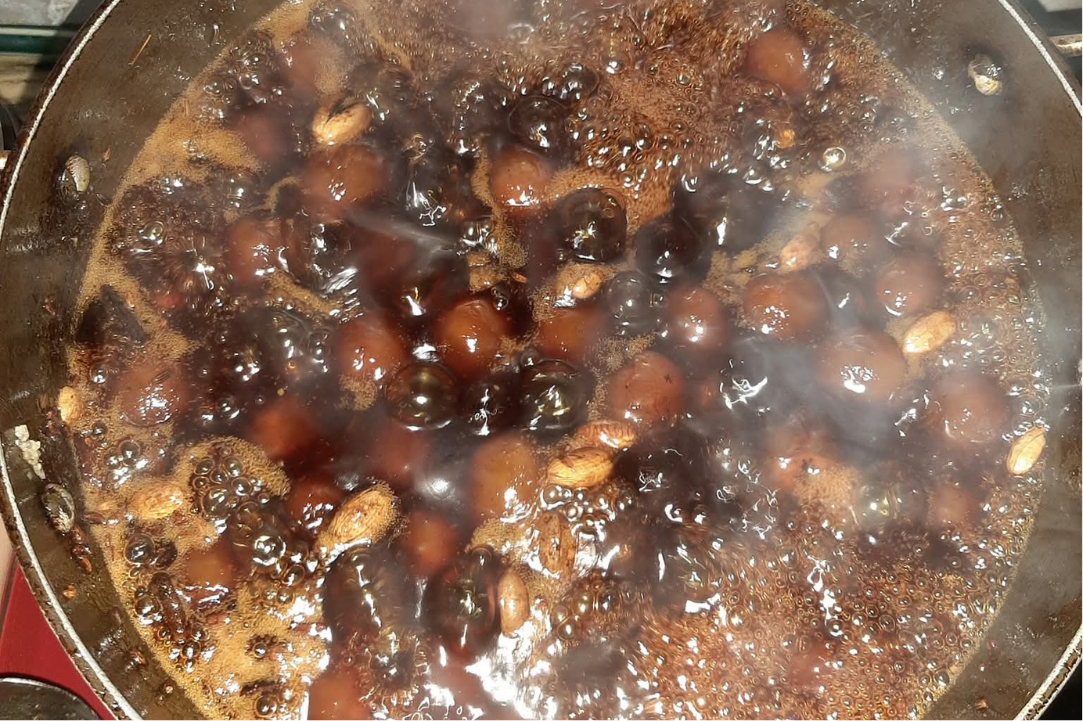
Others had the patience for the longer method. The peeled fruit was simmered over very low heat for several hours with a generous amount of sugar. Whoever was cooking had to keep stirring, because the mixture would scorch if left alone, and it took a steady arm and a steadier mind. Slowly the water evaporated, and the fruit turned dense, sticky and golden brown around its seeds.
Once it cooled, it set into chewy pieces that were meant to be enjoyed gradually, one at a time. This was the candy that lasted. It was packed into jars or sealed pouches, sold at the market, and given as gifts to relatives, neighbors, and offered to guests.
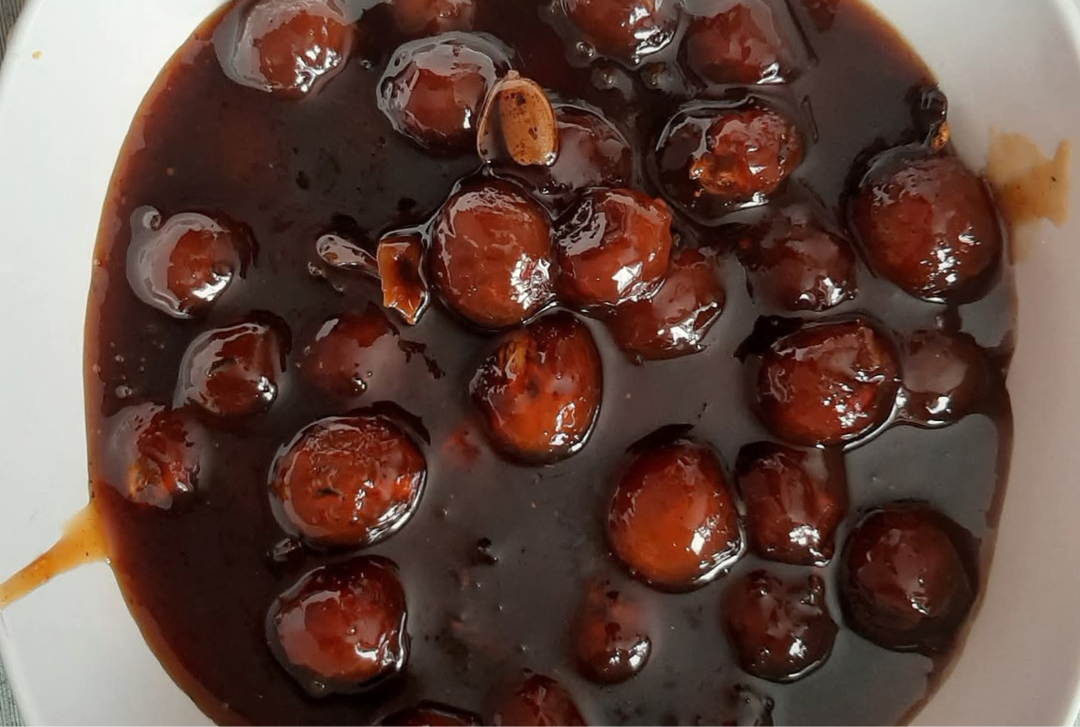
I watched this process many times, in many kitchens, with many different people at the pot. Some worked in silence, bent over the fire. Some talked the whole time, stirring without ever looking down. Some let the children help with the peeling, and some guarded the pot as though it held something that could not be replaced.
Over the years I noticed that the candy was never quite the same twice, even from the same hands. It depended on the fruit that season, how ripe it was, how much sugar went in, and how long it stayed on the fire. That, I think, is part of why it never grew boring.
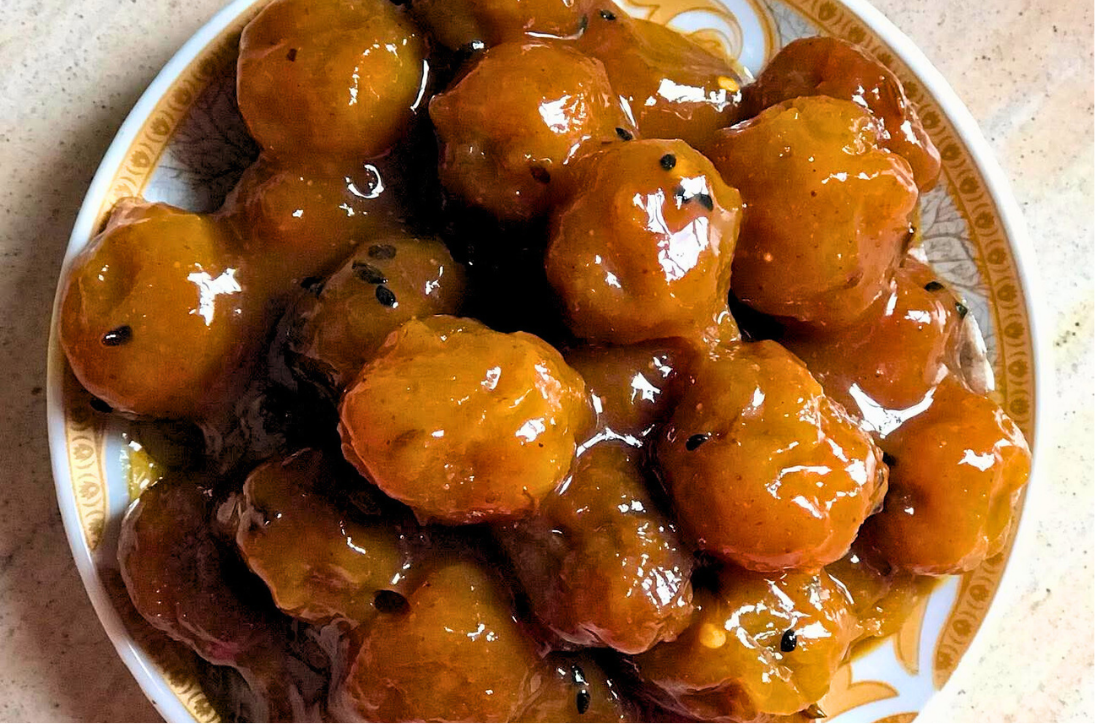
There is real wisdom tucked inside this process, and I only appreciated it later. The Khalathi season is short, and the fruit is far too sour and perishable to be kept for long as it is. Cooking it with sugar or salt turned a few months of harvest into something that could sit in a jar for much longer. It was a clever, practical way of preserving seasonal fruit, born from households that wasted nothing and planned ahead. Cooked slowly, the fruit also keeps and deepens its natural flavor, which is why a good piece tastes the way it does: a bright, citrusy tang first, a mellow sweetness that follows, and then a faint smoky warmth that lingers on the tongue.
Khalathi was never reserved for special days. It lived in schoolbags, wrapped in paper and squashed between books. Shopkeepers sold it from jars at small stalls. At weddings and gatherings it was handed to guests without ceremony, and visitors to a home were rarely allowed to leave without a piece or two in their hands. Among friends at school, it was a kind of currency. A piece shared could mend a quarrel or start a friendship.
It also had a reputation that older people repeated with great confidence. After a meal, especially a heavy one, someone would pass around a few pieces of Khalathi and say it would help the stomach settle. The belief that it aids digestion is an old one in Somdal, and many people still enjoy it as a palate cleanser and a digestive tonic after eating.
I cannot offer scientific proof for this, and I will not pretend to. I can only say that I grew up hearing it, and that I never once saw anyone refuse a piece.
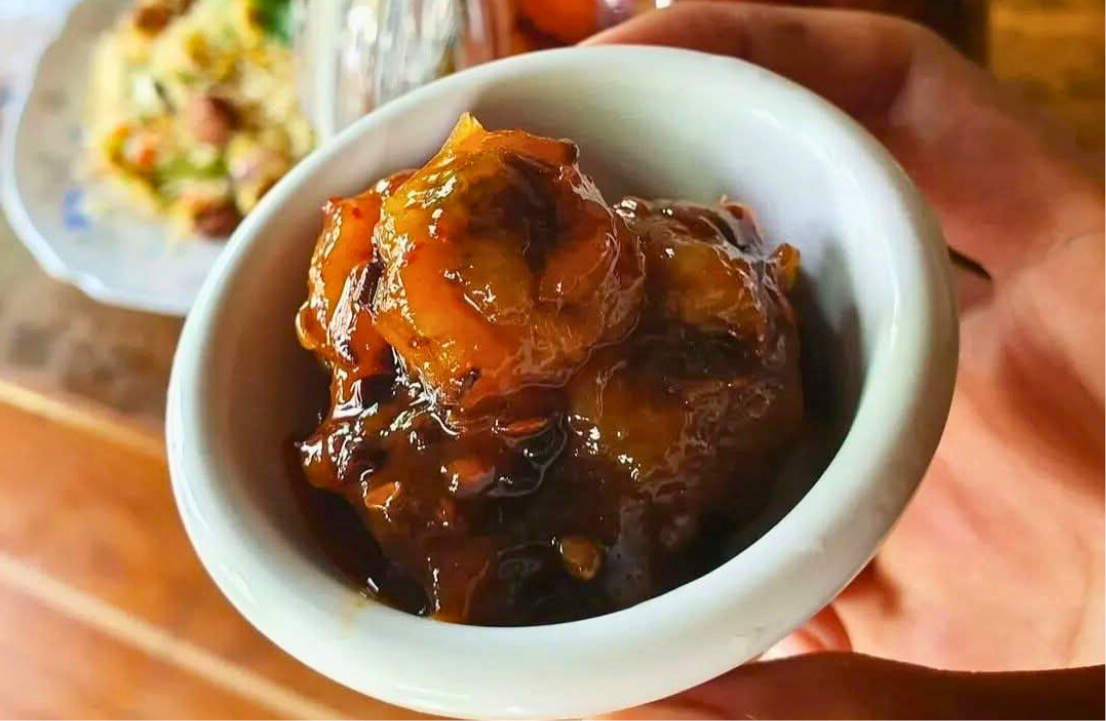
When I look back now, what stays with me most is not any single taste, but the whole circle of it. The walks to gather the fruit. The long afternoons watching different hands prepare it in different ways. The jars lined up on shelves, each one slightly different from the next. The way a piece, passed from one person to another, carried a little of the person who made it. Khalathi was never a product of one recipe. It was a product of a whole community, each family leaving its own small mark on something we all shared.
There is so little to eat in a Khalathi. A thin layer of flesh, a hard seed, a skin you throw away. Yet people spent hours over it, stirring pots, adjusting the salt, filling jars to give away. I did not think much about that as a child. I only knew the cool months were coming and that we would soon be out under the trees.
Now, when I taste it, I think about how much care went into something so small, and how much of that care came from people who never talked about it. If you are offered a piece in Somdal, take your time with it.