Three Routes to Somdal, All of Them Inside Me
There was a time in Somdal when December meant more than Christmas. Miles away this year but I still know every route: through childhood paths, lifelong friendships and traditions, and the quiet roads of memory, where the child in me never left.
It’s November, and I’ve caught myself staring out of the window more often than usual, thinking of home. That’s how I know December is close. I’m miles from home this year, but the wind has turned anyway. It’s dry and thin, carrying a faint smell of smoke from somewhere I can’t see. The little child in me catches it first. My body understands before my head does, and there it is, that same little jump in my stomach. December is close.
Dear children of the glowing screens, this is how we used to spend December. Sit down, it’s a long one.
I grew up in Ukhrul town. My childhood, my school years, all of it happened there. But every Christmas, and every winter vacation, I went home to Somdal, where my roots are. Those days always felt too short, and I wished they would stretch a little longer.
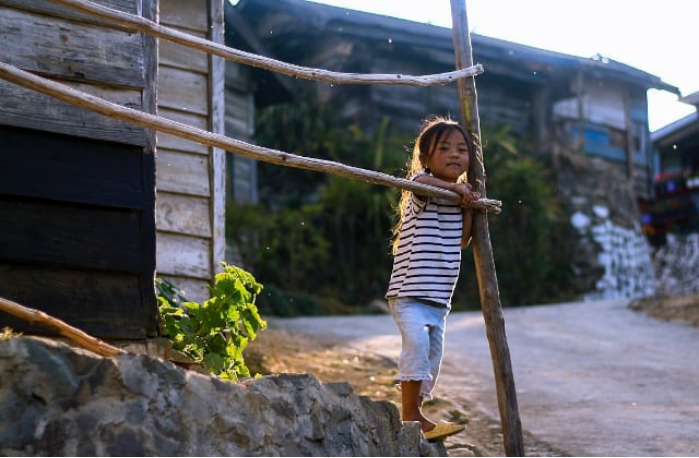
The day school closed, our journey from Ukhrul town to Somdal was always on foot. Nobody came to drive us home. It wasn't a question of affordability; public transportation was simply not readily available. Unlike today, there were hardly any taxis or vehicles plying the roads. Walking was just a part of life.
We knew every shortcut that saved ten minutes, which path had the steeper climb, and which one was kinder to the legs but made you pay in time. Once we reached Somdal, we didn’t need a plan. We simply walked out of the house and found our best friend, a cousin, or the neighbor's boy. Nobody texted first, because there was nothing to text with. No smartphones, no internet, no engines grinding past the house all day. Sometimes we walked all the way to a friend’s place only to find nobody home, and we just turned around and went looking somewhere else.
I honestly think we millennials were the last to know the world before it was filtered. We had a little technology here and there, but we never leaned on it. We lived much the way our forefathers had and picked up the modern world as we went along. Plenty of the old ways are still alive. But we’ve handed so much over to trends, gadgets and fashion that some things slipped away without anyone ever deciding they should. Now we attend our festivals as photographers instead of participants, and our traditional clothes live more on our feeds than in our streets.
So let me tell you how it was back when I was a kid, when we had nothing in our pockets.
November always felt like the longest month, heavy with waiting. It began with the wind. Back in Somdal, the harvest has been brought in. The paddies lay cut down to stubble that rattled when the air moved through it, and the terraces turned a pale gold, the colour of a field that had finished its work and had been told it can rest. People sat longer over tea. They visited neighbours for no reason except that they could. Everyone knew the ploughing would come around again the following year, and nobody mentioned it.
As children, we were supposed to be studying. Final exams were approaching, textbooks lay open, but half of us were already somewhere else. Even now, I can picture the mothers looking over their houses with a new eye and the old men talking quietly on their porches. Someone always asked, for the third time that week, whether the brother in the faraway city was really coming home this year.
Because that’s what December was in Somdal. It was people coming back.
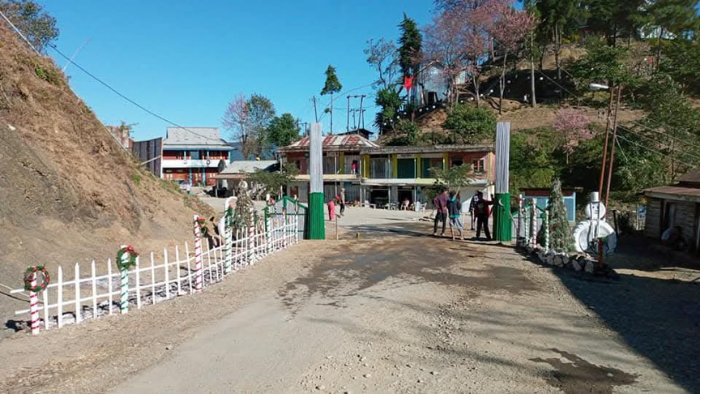
The students who had spent the year in hostels and distant towns, the ones who had left in tears, finally came home with so much to say. A test they had passed. Something that had hurt. How strange the new place had been. Then the young professionals arrived, followed by the newly married couples, and they walked into woodsmoke, swept compounds and a plate of food they hadn’t had to cook. Somebody across the yard called their name as if they had never left.
Then the whole village began cleaning. Houses that had sat shut for months were thrown open. Floors were swept. Kitchens black with smoke were scrubbed. Water pots were polished until they gleamed like bronze. Fences straightened, and roofs cleared of leaves. Parents counted the days, siblings circled dates. And those who stayed behind cut paper stars and made decorations by hand, badly and with great seriousness.
Nobody announced what it was all for. A string of lights on a roof beam said it. A clean doorstep said it.
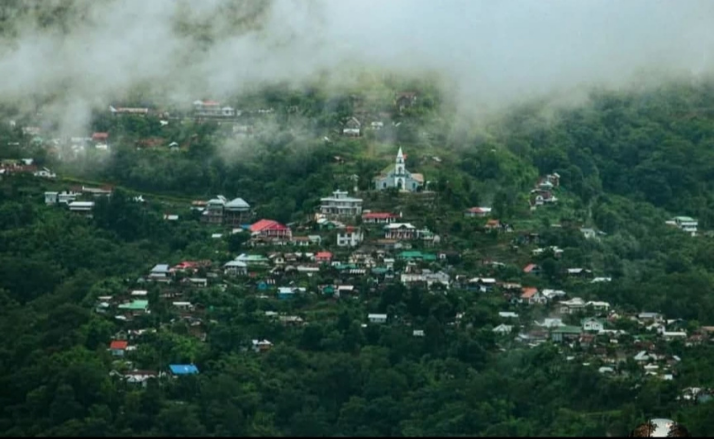
Somdal is organised into seven neighbourhoods, and we call each one a Tā. You learn them the way you learn your own hands, without anyone ever teaching you.
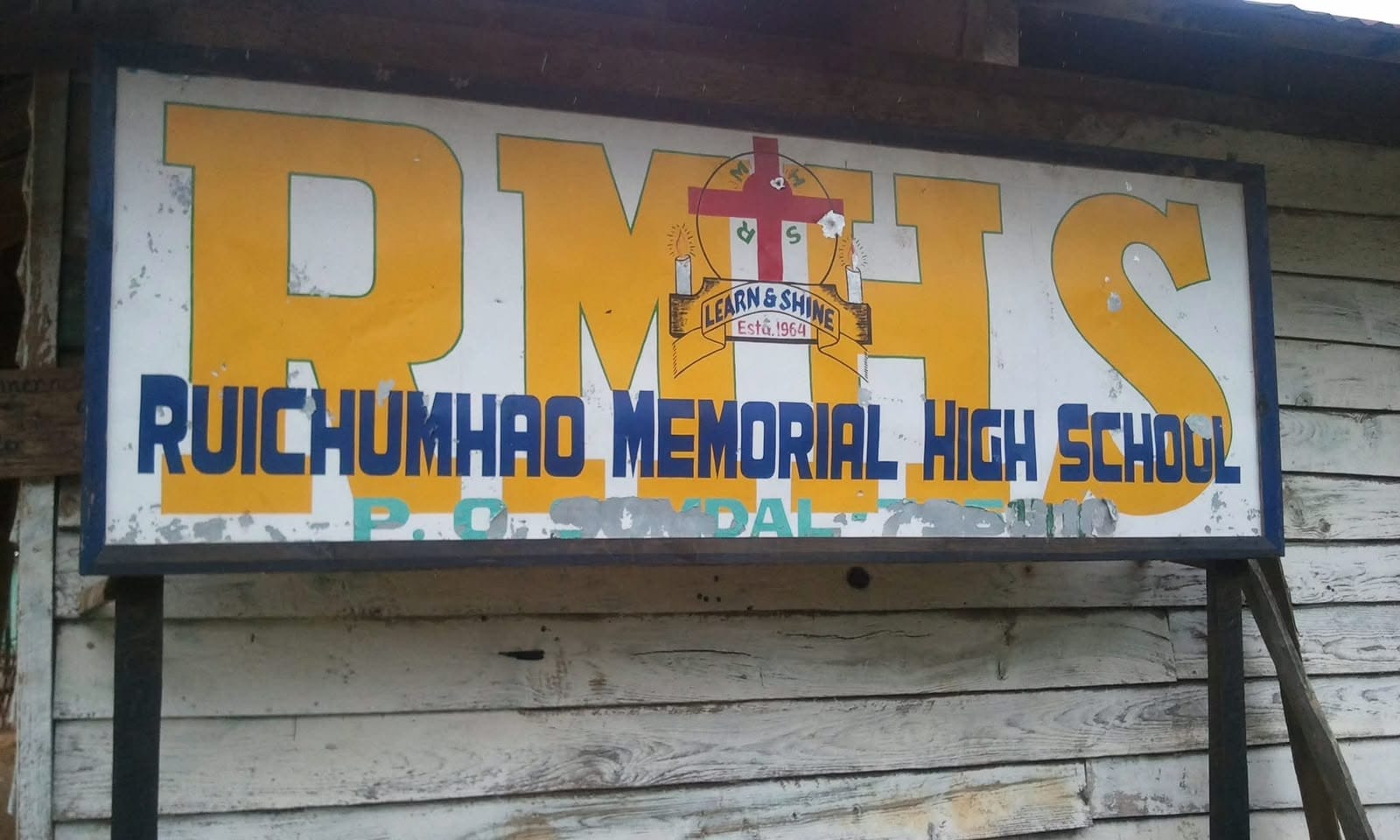
Shimphutā lies in the southwest, and it is where the kids are. Every village has a corner like that, loud from morning till dusk. Shijantā, in the southeast, is home to Reichumhao Memorial High School, and it is the first place every returning student looks for. Many of those who now study in other cities grew up within its walls, and they look for it before they look for home, as if checking that it still stands and still remembers them.
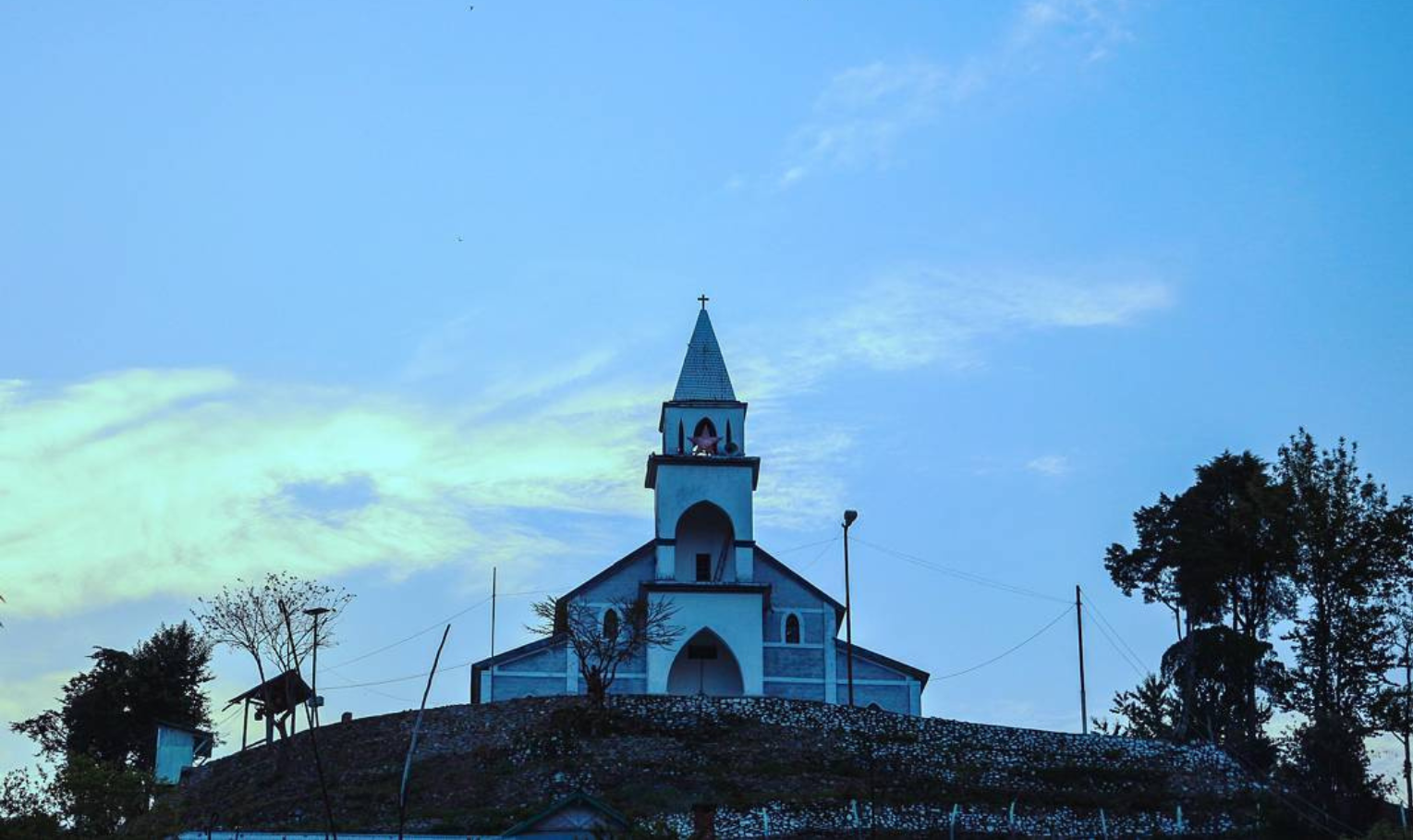
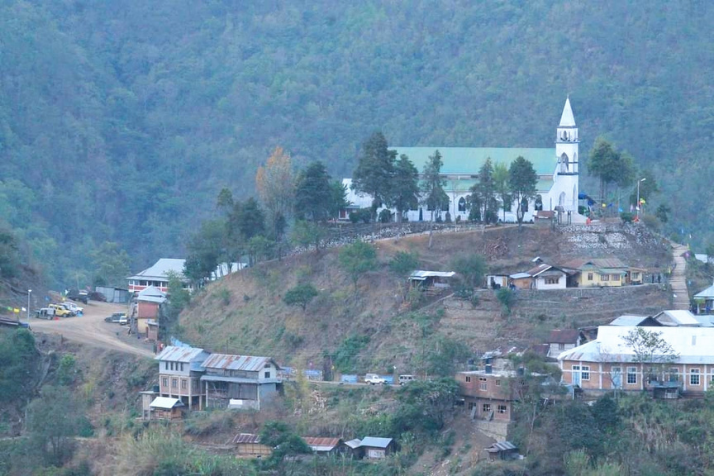
Roiritā sits at the centre with the church, and Ngotā shares the road with it, so close that the two seem to lean on each other. Up north are Lethtā and Phāchamtā. And in the northwestern mountains, Kasomtā sits above everyone and watches over the rest of us, the way an elder watches a courtyard full of children, without needing to say a word.
Most of the year, the Tās compete. At nearly every celebration, each neighbourhood wants to win, and things gets personal. Pride runs deep here, and a lost contest can be remembered for years, sometimes longer than the winning itself.
But December was different. Throughout the month, as Christmas and New Year drew closer, those lines slowly disappeared. Nobody counted which Tā had won more or sung louder. The rivalries gave way to something bigger. The whole village pulled in one direction, and the paths from all seven neighbourhoods converged at the same church. It was perhaps the only time of year when Somdal felt like one house with seven doors.
The church kept things in order, loosely. Nobody handed out rulebooks. People were sorted into groups by age, and every year the groups were shuffled, so you grew up in Somdal by moving from one to the next, like a child climbing the terraces.
The Learning Society comprised the early teens, still learning the songs and the manners of the village. The Juniors were those getting ready to leave for college, half eager and half afraid. The Intermediates were young adults who had just started earning a living. They worked alongside the elders but still remembered how it felt to be young. The Seniors were the grown-ups with jobs, and they held things up. Then came the Parei-gahar, the newlyweds and those still strong and active, and at the far end were the Khararlong, who carried the memory of how things had been done before.
The church groups were simply the order you were assigned. The group you chose, or rather, the one that chose you, mattered more. In Somdal, those born close together grew up close together, and what began as a shared childhood on the same paths quietly turned into friendships that lasted a lifetime. You didn’t pick them so much as inherit them, the way you inherited a surname or a way of laughing.
We called these groups yarnao. Every yarnao carried a name, and the names were serious business. Hunter, Man, Saat, Meisum, Basic, and many more. Nobody handed those names down to us. Each yarnao named itself, usually in some loud, exciting moment when twenty or thirty, sometimes even forty, of us were crowded together and someone shouted out the first silly thing that came to mind. A few seconds of laughter, a show of hands, and it was settled. Nobody stopped to ask whether it made sense, and nobody ever thought to change it.
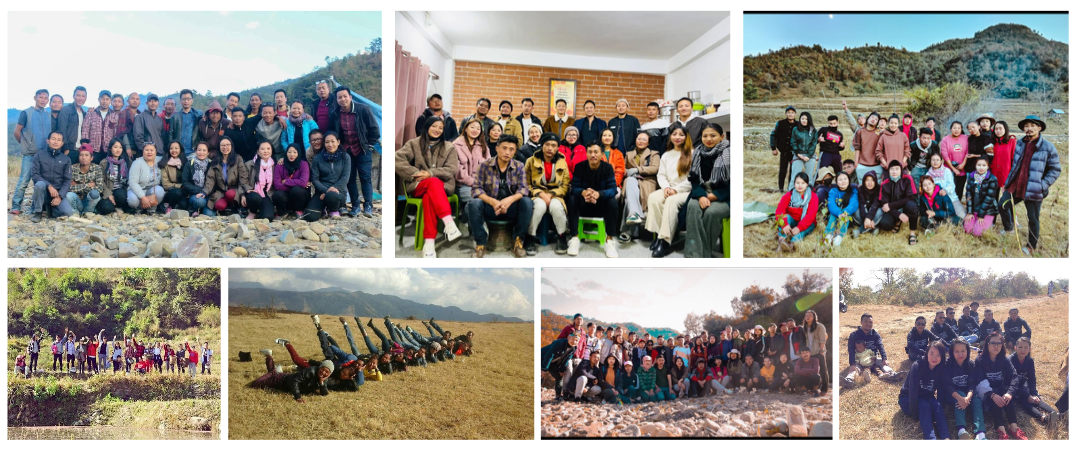
And with a name came a crowd, and all the mischief a village with nowhere to hide could absorb. We moved in packs and were loud on the paths. Someone was always in trouble, and someone else was always hiding them. Before anyone knew your parents or even your name, they knew which group you belonged to, and that was enough to place you.
The church shuffled its groups every year, but these never changed. They didn’t end when school did. People left for hostels, cities and other countries. They married, changed jobs, grew tired and busy. But the group stayed, holding its place through the passign season, waiting for December to call it home.
The older groups were proof of that. Thotyar, for one, still came every December, no matter where its members lived or how little leave they had managed to scrape together. You could hear them before you saw them, their laughter reaching the village first. They arrived a little heavier and a little greyer, and within an hour they were talking over one another and laughing at jokes decades old. For a few days, nobody was a manager or a parent or a stranger in a faraway city. They were twelve again.
As a child, I thought they were simply old. It took me years to understand that I was watching my own future walk down the road.
By November, the church had already formed its Christmas committee. The dates had been chosen and the schedule drawn up, and all of it had been settled before we children had even thought to ask. We only ever saw the result, never the deciding.
The committee was a mixed table, and it was meant to be. There were the respected elders, who carried the old ways in their heads and knew how things had been done before. There were the energetic youth, who had the legs for climbing ladders and running errands up and down the hill. And in between sat the people who had organised the celebrations in earlier years, who knew exactly how much could go wrong and said so gently when a plan sounded too good to be true.
The church backed them with finances and blessings, and I suspect the blessings were needed more. It was a serious job. They had to take something holy and something fun and make one celebration out of the two, without letting either one win. Too solemn, and we children would have squirmed through the three days, counting the minutes until the games. Too merry, and the elders would have gone quiet, and the church would have felt like a fairground with a cross on top. They found the balance every year, and because they did, we never noticed. We only knew that Christmas was coming.
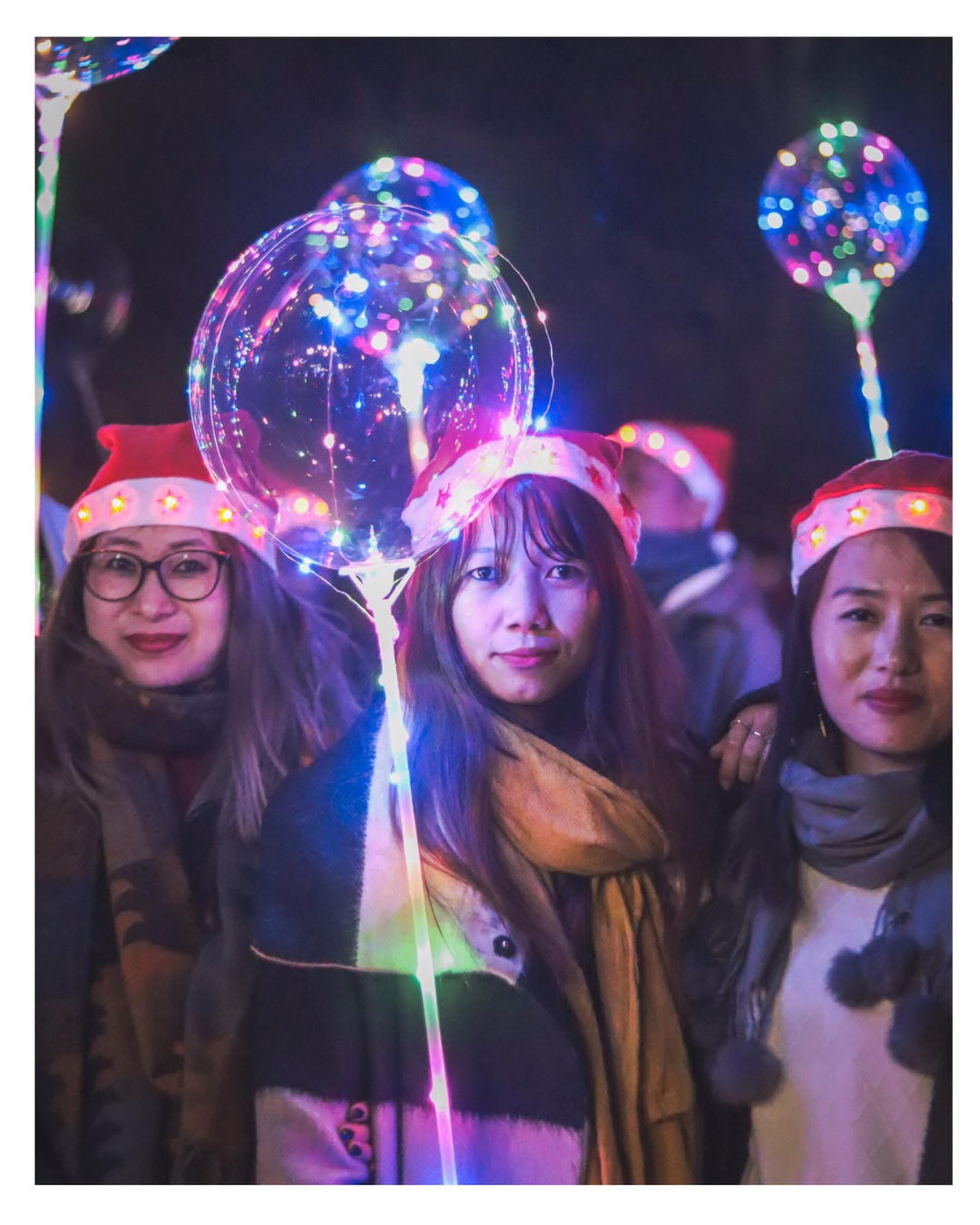
By early December, Somdal had begun to light up. Strings of lights stretched along the roof beams and across the porches, while the paper stars we had cut, badly but with great care, hung in doorways everywhere. Houses that had been closed for months were opened up and cleaned from corner to corner. Compounds were swept until not a leaf was left behind. Everything looked freshly tended, almost as if the village knew people were coming and wanted to make them feel welcome. For the first time in months, Somdal felt full again.
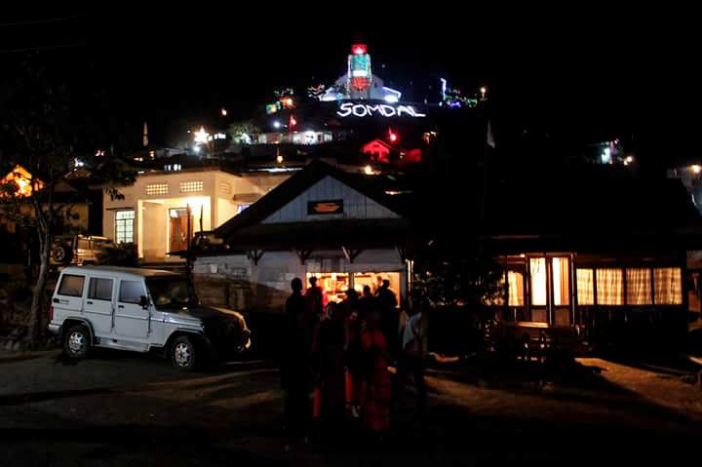
The quiet of November broke a little more each day with every new voice. A name was called across the yard, someone came running, and there was an embrace in the middle of the lane before the bags had even been put down. Doors that had been closed stayed open from morning till night. Kitchens were never empty. A house that had held two people the previous week now held ten, and nobody minded that the floor had become a bed.
And the friends found each other, as they always did. They met after a whole year apart, and it was never quiet. There was a shout, then laughter, then the slap of a hand on a shoulder. Everyone talked at once about everything and nothing. A year of life was traded in a few minutes, and then they were off together, down the same old paths to the same old places, as if they had never left.
With the people came the weddings, the ceremonies and the feasts. Couples who had waited all year for everyone to be home chose those days to marry, and nobody needed to be told twice. The news was enough, and everyone simply came. The church was full at every service, benches packed and latecomers standing along the walls. The village had been leaning towards this moment for weeks, and now, at last, the long-awaited Christmas began.
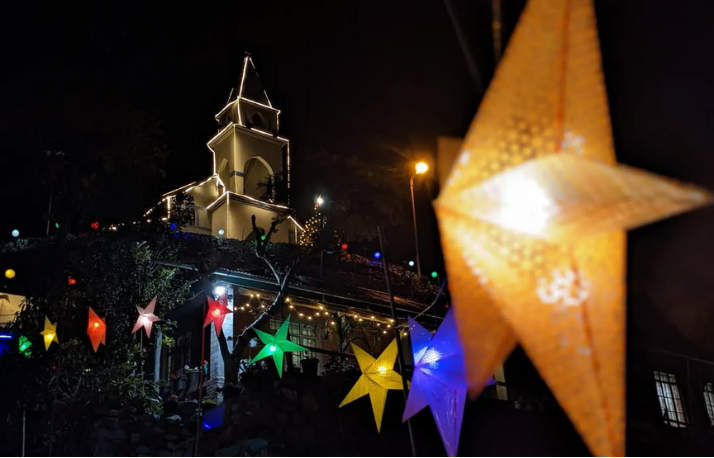
The 24th was Welcome Night, and it was busy from the first light. Nobody slept in. By morning, homes were already full of movement, with knives being sharpened, fires being built and water being set to boil. Most families slaughtered pigs and cattle on this day, an old farming habit that nobody had ever needed to explain. Part of it was for the feast, the great pots that would feed whoever walked through the door during the festive season. The rest was cut, salted, smoked or dried, and hung in the rafters to see the family through the work months ahead. The smell of woodsmoke and cooking fat settled over the whole village and did not lift until evening.
It was practical, of course. A household had to eat through the year, and this was how it was done. But it was also something quieter. After a season of harvest and a year of work, this was the family’s way of saying thank you: for the rice that had come in, for the animals that had been raised, and for the people who had made it home. Nothing was wasted, and nothing was taken for granted.
In the early evening of the 24th, before the noise began, the church filled for a service of a different kind. The pastor led it to bless the office bearers who would run the three days. They came forward one by one, and the pastor laid his hands on their heads and prayed over them. Nothing about it was hurried. Responsibility was being passed along, from one pair of hands to the next, the way it had been passed along every year before. Some of them had done it many times, while others were doing it for the first time and felt the weight of it in their shoulders.
Then came the sermon, and it was the one we knew. Christ arriving, grace, hope in a manger. We had heard it every year of our lives, and still the village listened as if hearing it for the first time. Perhaps that was the point. Some stories do not wear out. They only grow softer with each telling, the way a path does when it is walked by many feet.
Outside, the lights were coming on, and the courtyards were still warm from the day’s cooking. But for now, inside the church, there was only the low hum of prayer and the stillness of a full congregation.
And after the service, the noise began.
The elders went home to get some sleep. They knew what the night asked of them because, at midnight, the whole village would meet again in the church to celebrate the birth of Christ, and they meant to be awake for it. They lay down early, with blankets pulled up to their chins and the long day settling into their bones.
The little ones swore they would not sleep at all. They were far too clever for that. They sat bolt upright and announced that they could keep going all night, and for an hour or so they almost did. Then, one by one, they folded up, a cheek against a cousin’s shoulder, a head in someone’s lap, mid-sentence, mid-argument, gone.
The youths did not sleep. They gathered in the dark with guitars and soft drums and went out into the streets, singing between the sleeping roofs in the cold. Nobody rehearsed. Somebody started a song, a few voices leaned in, and the rest caught up. Their breath clouded in front of their faces. Fingers went stiff on the strings. They sang anyway, house after house, and every house heard that the King of kings had come, whether or not it wanted to wake up. Behind a shuttered window, a blanket shifted, and someone smiled into the dark.
Close to midnight, the church bell rang. It was big and deep, and its sound rolled across the hills and down into every Tā. All over the village, doors began to open. We heard footsteps on the frozen ground, crisp and unhurried. Lanterns and torches bobbed along the paths. Families came out together, the little ones carried half-asleep on shoulders, the elders walking slowly with a hand on a stick or a grandchild’s arm. From every direction, from all seven Tās, they made their way towards the middle of the village, towards the church. It was Christmas Eve, and everyone was answering the same call, coming together to celebrate the birth of Christ.
Christmas morning was freezing and bright. The youths who had spent the small hours with their own yarnao had only just gone home to sleep. It was three or four in the morning by the time they finally lay down, and it felt like no time at all before the shouting began.
It started in every Tā at once. Someone stood in the cold and called out:
“Oh Roiritā yaron-alā lan shaiphokā sou!”
Oh youths of Roiritā, let the caroling begin!
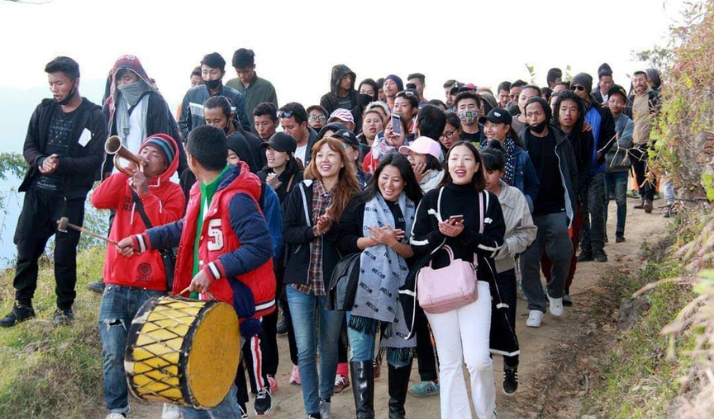
From across the hill, another Tā answered with the same call, and then another, until the whole village was shouting the same invitation, each calling out its own name. And the sleepy faces stepped out into the sharp morning light.
The youths gathered in their own neighbourhoods, young and old, the kids running ahead and the older youths following behind with guitars and drums. Latecomers kept joining as the group moved, pulling on jackets and falling into the song halfway through a verse. Each Tā sang only through its own households, and every household was entered. No door was skipped because the cheer was meant to reach everyone.
And every home gave something. Fruit from its own trees, vegetables from the garden, a little money, a craft someone had made weeks earlier. Whatever you had was fine, and nobody measured it against what the neighbours gave. Each gift was taken, held up and called out loudly for everyone to hear. Every house ended with three big cheers that rang off the hillside and woke whoever was still asleep.
Later, everything that had been collected went to an open auction, and that was where the village showed its true nature. A sugarcane from someone's garden suddenly became a very serious bidding matter. Grown men argued over it. Neighbourhoods teased one another over the price. And all the while, the money raised was going back to the church, so even the loudest quarrel over a stalk of sugarcane ended up as a gift.
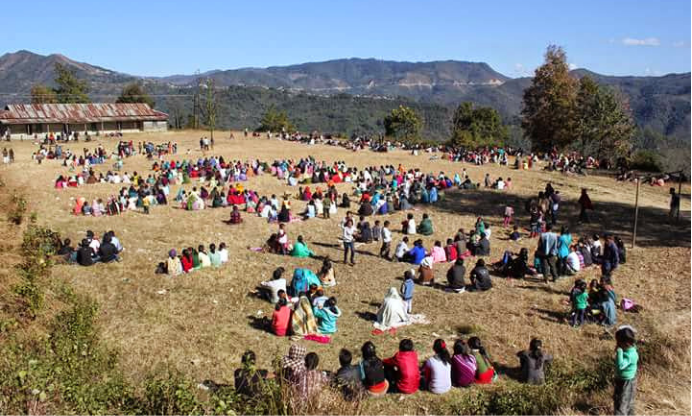
By midday, everybody had wandered up to the playground. Fathers arrived with toddlers riding on their shoulders. Mothers settled on low benches with their shawls pulled tight against the cold. The grandparents came last and slowest, leaning on sticks or on their grandchildren, grinning wider than anyone. They had watched this a hundred times, and still they turned up as though it were the first.
Then the games began.
There were sack races, with kids going down in clouds of dust and getting up laughing. There was tug-of-war, the teams digging in their heels while the shouting came from every direction at once. There were relays, the baton passed from one friend to the next as everyone cheered them on.
Sweets and chocolates were tossed high into the air for the kids to scramble after. The smallest children ran their very first races and squealed the whole way, whether they crossed the line first or tumbled along the way. The teenagers sprinted as if everything depended on it, with their friends yelling their names from the sidelines. A win brought a big cheer, and a fall brought warm laughter that helped you back onto your feet.
No one is too young or too old to be challenged, everyone gets pulled into the fun. The men, who had sworn they were too grown up for any of this, found themselves racing and tumbling in the dry grass, and nobody would let them forget it for a year.
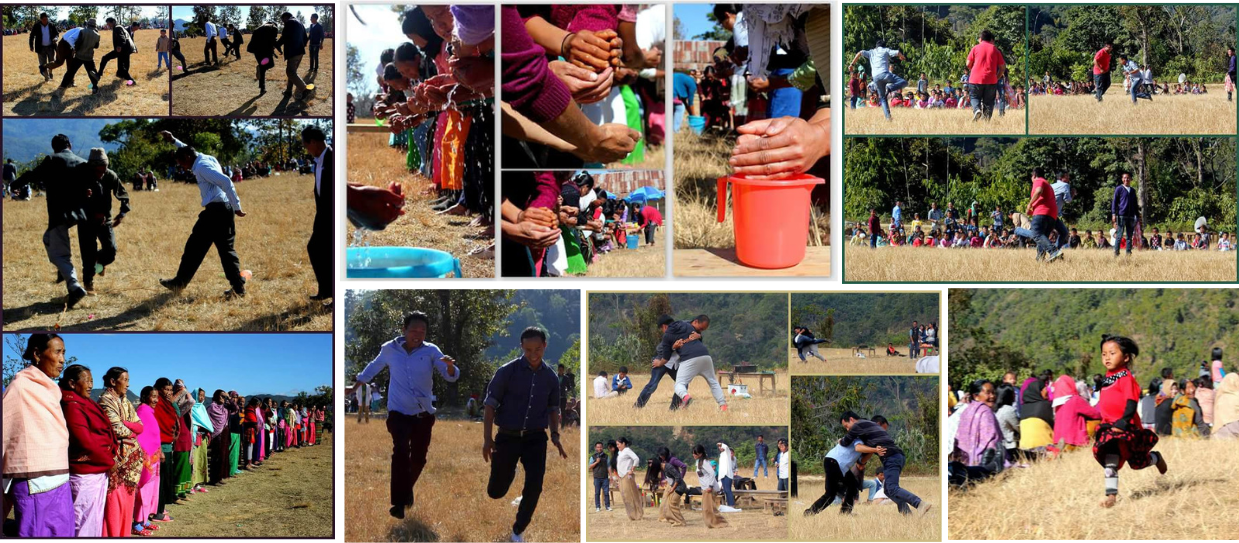
In the shade, the old people watched and told stories about running barefoot on that same ground. Across the field, a group of mothers took up some balancing game and giggled like schoolgirls, and the whole thing became a source of endless amusement.
For those few hours, there were no ages and no ranks. The church groups, the yarnao and the Tās all blurred into one noisy crowd. Nobody was just watching.
The church committee moved through the crowd with traditional wicker baskets of jaggery, cut into blocks about the size of a palm. It was a Christmas tradition, and nobody had to explain it. Everyone got a piece, from the oldest grandparent sitting in the shade to the toddler on a father’s shoulders. The sharing said what the whole season had been saying: we share what we have, and we are grateful for it.
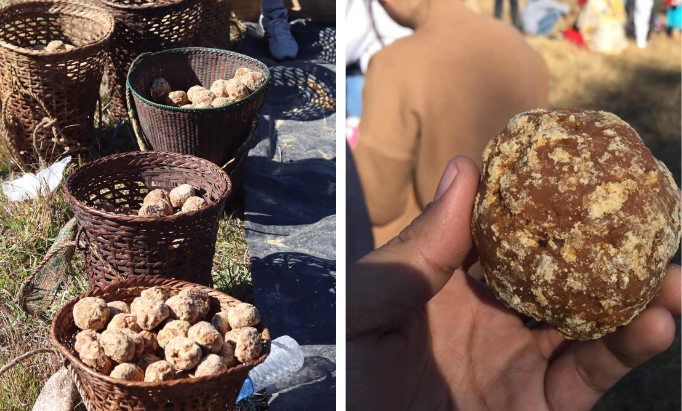
The kids chewed slowly, making it last, their faces sticky all the way to their ears. Some tucked theirs into a pocket to take home, saving it the way you save something you aren’t ready to finish. Later, in the dark, a hand would go into that pocket and find it still there.
When the sun went behind the hills, we gathered at Leuphushet, the big open square in Roiritā. Nobody had called us. The youths arrived one by one, then in twos, then in noisy clusters, some from the far colonies along the stony paths, others just out of the house next door.
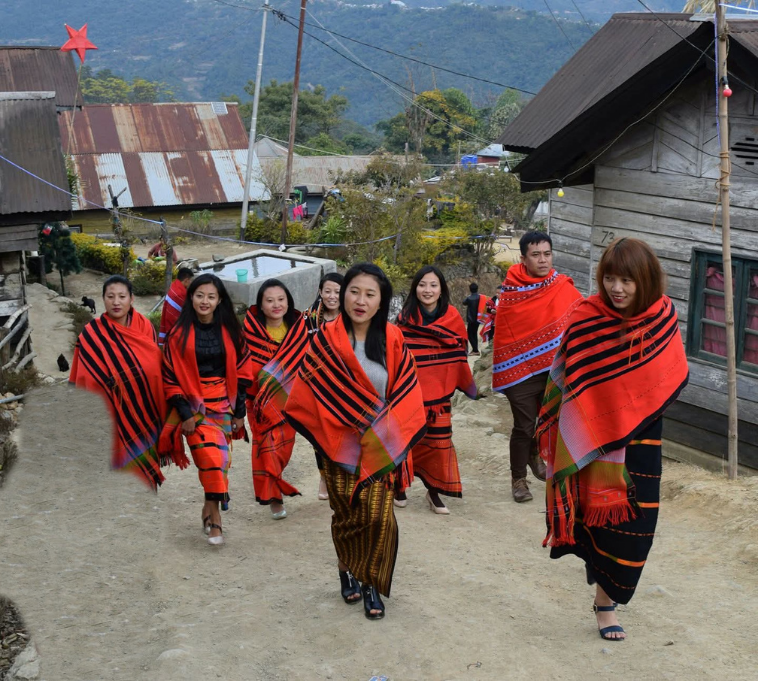
This was Marching, in traditional dress. It was solemn and happy at the same time, and that’s a feeling words don’t quite carry. Honestly, you had to be there to get it.
The elders watched from the edges. The kids gathered at the rim of the square, some standing on tiptoe, others squatting low. Women with babies, grandmothers in extra shawls. Plenty of them had marched there themselves once, as nervous as we were, and they followed the circle, whispering names and noticing who had grown. For us, it was several things at once. A chance to see old friends. To see someone new, to catch a smile that might turn into a story. Some of us were already nostalgic. Some were starting fresh, some walked quietly. Others sang loudly, their voices rising above the crowd.
The square soon burst into laughter and chatter. Somebody stepped forward with a joke, acted out a shared memory or came up with a rhyme. The stiffness disappeared. People who had been strangers ten minutes earlier were now laughing shoulder to shoulder.
Families who lived along the square stood at their gates or leaned out of windows, watching the next batch do what they had once done themselves. The songs were old, the voices were new. That was all Leuphushet had ever been.
Dinner was always quick in houses already stuffed with guests, and before long, we drifted over to Vaomalan Hall, where our community had always gathered.
The hall looks bright and almost luxurious now, with fresh paint, stronger walls and a much sturdier structure. But back then, it was considerably smaller, a little shabby around the edges, yet full of warmth and character. Along the inner wall ran a wooden bench, made for sitting along the length of the room. The large windows had no glass panes, leaving them open to the cold December air.
Electricity was unreliable in those days, sometimes going off for days or even weeks. So the hall depended on four or five kerosene-powered Petromax lamps to light up the evenings. Their bright, flickering glow filled the room, casting shadows on the walls and giving everything a warmth of its own.
The sound system was just as simple. Two aluminium horn loudspeakers stood just outside the hall, facing opposite directions, one turned towards the left and the other towards the right, carrying the music, announcements and excitement beyond the hall and across the village. Nothing like the powerful bass speakers and sound systems we have today. Yet somehow, those old speakers were enough. Every song, every announcement and every burst of laughter reached us just fine. Looking back, that old hall had a charm of its own. It wasn't grand, and it certainly wasn't comfortable by today's standards, but it held something special that the brighter, newer building can never quite replace.
The night began with song requests. Someone would shout a name from the back, sometimes teasing, sometimes whispering it with a grin. The chosen person would be coaxed out of their seat, pretending to refuse but secretly thrilled. As they made their way from their chair to the front, the entire hall would break into encouraging applause, with friends cheering them on and others calling out their favourite songs. For a moment, all eyes would be on that one person. The hall would settle, and then came the music, an old love song, a favourite tune or a folk song that got everyone singing along. Soon, the clapping, laughter and friendly banter would fill the room again.
After the song requests came the performances. The different yarnao took turns on the stage, each bringing its own act, humour and personality. Some performed skits, others came with jokes, impersonations and little dramas that had the whole hall in stitches. I particularly remember the Thotyar yarnao, which returned year after year with its famous fictional skit, Asinao. It became something of a signature performance, the kind people looked forward to and remembered long after the celebrations were over. You didn't need much of an introduction to understand the humour. The characters, the situations and the laughter belonged to all of us.
Those performances were never really just about the jokes and skits. They were about who we were, the things we had lived through and the memories we shared. They brought our little world onto a stage, and everyone in the hall recognised a part of themselves in it. Nobody needed an explanation. We were all part of the same story.
Late into the night, the elders and little ones would finally retire, but the night had only just begun for us. We split up by yarnao, and each one gathered wherever suited it best. Nothing fancy ever happened. We didn’t need fireworks or loud music or any grand arrangements. We just pulled on a warm thick jacket, wrapped a shawl over it, and walked the village path with our yarnao to spend the night together. There were no cars back then, not like today where you reach the spot in minutes. We walked, no matter which Tā we were headed to. Flashlights were too fancy for us, so we trusted the moonlight. Or we simply knew the path by heart and found our way through the dark, remembering which stretches were safe to walk. Honestly, those nights with our yarnao were my favourite part of Christmas.
Each yarnao had its own way of celebrating. Friends who had grown up together in schoolyards, church programmes and on the winding paths between houses would decide where to gather for the night. Usually, it was someone's house, chosen because there was enough space, someone had promised good food, or simply because it felt right. There was never much planning involved. Word went around, and before long, everyone knew where to be. We turned up one by one, sometimes in pairs, sometimes in noisy little clusters, carrying stories, snacks and whatever food we could bring along.
The house would gradually fill up. Someone would claim a corner, someone else would drag a chair closer, and the latecomers would squeeze into whatever space was left. Before long, the room would be crowded, warm and wonderfully chaotic. Tea and coffee were passed around in mismatched mugs. Noodles were boiled and tossed with whatever ingredients happened to be available. Sunflower seeds were scattered across the table, sugarcane was peeled and passed from hand to hand, and grilled meat and fruit were laid out without much ceremony. Nobody worried about presentation or who had brought what. Everything was meant to be shared.
There was always someone who talked too much, someone who laughed at everything, someone who insisted on telling a story everyone had already heard, and someone who sat quietly in the corner but never missed a single word. The conversations moved in every direction. One minute, someone would be retelling a ridiculous childhood mishap, complete with exaggerated gestures and details that grew more dramatic with every telling. The whole room would erupt in laughter, sometimes so loud that someone had to remind us to keep it down.
Then, just as suddenly, the mood could change. A friend who had been away for most of the year might begin talking about life in the city, the demands of work, the loneliness of living away from home or someone they had loved and lost. We listened. There was no hurry to move on to the next joke or find something entertaining to say. We knew one another well enough to laugh together and sit quietly together. Nobody needed to pretend that life had been easy just because it was Christmas.
And somehow, between the laughter, the food and the endless conversations, the years seemed to disappear. We were no longer young professionals trying to make something of ourselves, students worrying about the future or people who had spent another year away from home. We were simply the same friends who had grown up together, who knew one another's childhood stories, embarrassing moments, little habits and family histories. There was a comfort in that kind of familiarity that no new friendship could easily replace.
Sometimes we played around, teased one another, sang a little or brought up old incidents that nobody had quite forgotten. Some stories had been told so many times that we could almost recite them together, yet we never seemed to tire of hearing them. There were inside jokes that made no sense to anyone outside the yarnao, names and nicknames that had stuck since childhood, and memories that could send an entire room into laughter with just a few words.
The hours slipped by without anyone noticing. Two in the morning became three, and even then, nobody wanted to be the first to call it a night. Someone would suggest one more cup of tea. Someone else would start another story. A few would already be half-asleep, leaning against the wall or sitting with their heads bowed, while the rest carried on as though the night had only just begun. Eventually, we would make our way home, reluctantly, knowing that another day of celebrations was waiting for us.
Looking back, I think those nights were about much more than staying up late or finding ways to entertain ourselves. They were our way of catching up on a whole year of living. A year of growing older, going places, making mistakes, finding work, falling in love, losing people and becoming different versions of ourselves. For a few nights, we brought all those separate lives back under one roof.
The morning would come eventually, and we would scatter back to our homes, tired-eyed but happy, carrying the laughter of the previous night into another day of Christmas. Those nights were messy, loud, sometimes ridiculous and often unforgettable. They were friendship in its simplest form, without ceremony or pretence. Just people who had grown up together, making the most of the little time they had before life pulled them apart again.
The celebrations didn't end with Christmas. The excitement carried on through the New Year, and the village remained alive with gatherings, visits, laughter and one celebration after another. What had begun as a quiet anticipation in November gradually unfolded into weeks of reunion and festivities, finally drawing to a close in the first week of January, when the New Year celebrations came to an end.
And then, almost as naturally as everyone had arrived, people began to leave. The students were among the first to make their way back to their hostels, colleges and universities. Then came the young professionals, families and relatives who had travelled from distant towns and cities. One by one, our near and dear ones packed their belongings, exchanged their goodbyes and returned to the lives they had temporarily left behind.
The houses that had been overflowing with guests slowly returned to their usual numbers. The extra bedding was put away, the kitchens became quieter, and the familiar voices that had filled every home gradually disappeared. The village settled back into its everyday rhythm.
The one who remained carried on with the year ahead. There was work to return to, children to raise, fields to tend and the ordinary business of village life to resume. Yet something had changed, even if only for a little while. We had seen our people again, shared our stories, laughed over old memories and made a few new ones. We had been reminded of the friendships and bonds that distance and time could never quite loosen.
And so Somdal became Somdal once more, with its familiar paths, quiet courtyards and the everyday rhythm of village life. The festivities were over, but the memories would stay with us, tucked away until the next November wind began to blow.
December is a promise of coming together in Somdal, a yearly homecoming that we lived for, and one that would keep calling us back, year after year.
So now you know what our December looked like. We didn't have phones to keep us busy or the internet to fill our time. We had friends to look for, houses to visit, places to go and so many people around us. We never really had to plan a day. We just stepped outside, and the day took care of itself.
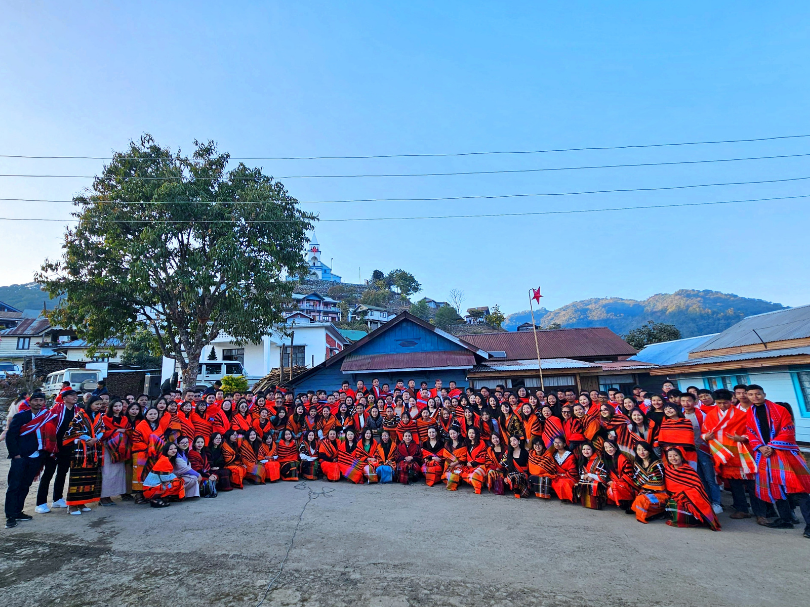
It’s November now, and I’m standing at this window, and the wind is back. I can't walk to Somdal this year, but I still know the routes. Ask me which one is best, and see how long I talk.
Because there is the route through the paths and hills that shaped my childhood, the route through the people, friendships and traditions that made Somdal a community, and then there is the route through memory, where the child I once was still lives, untouched by distance and time.
Three routes to Somdal, all of them inside me.
A Note on Photographs and Videos
The photographs and videos used in this blog have been gathered from various sources. Many of them come from images and videos shared within the Vaomalan and Chonir groups, while others have been sourced from personal posts that are publicly accessible.
I would like to sincerely thank everyone who has shared their photographs, videos and memories of Somdal, whether in these groups or through personal posts. Your willingness to share these moments has made it possible for me to bring some of these stories to life. I may not be able to acknowledge each contributor individually, but please know that your generosity is genuinely appreciated.
Please note that the photographs and videos do not necessarily depict the exact time or events described in the narration. They are included to help readers visualise the village, connect with the stories, and get a sense of the places, people and traditions being described. While all the visuals are related to Somdal village, they may belong to different periods and may not correspond directly to the events as narrated.
Unfortunately, photographs or recordings of the actual moments described in some of these stories are either unavailable or were never documented in the first place. The narratives are therefore drawn from memories and recollections, with the available visuals serving as illustrations rather than historical records of those particular moments.
If you happen to have photographs, videos or other materials that capture the actual events, traditions, places or periods described in this blog, I would love to hear from you. Your contributions, memories and corrections are most welcome. They would help make these stories richer and preserve a more complete account of Somdal for future generations.
Thank you for helping me keep these memories alive. Every shared photograph, video and recollection adds another piece to Somdal's story.