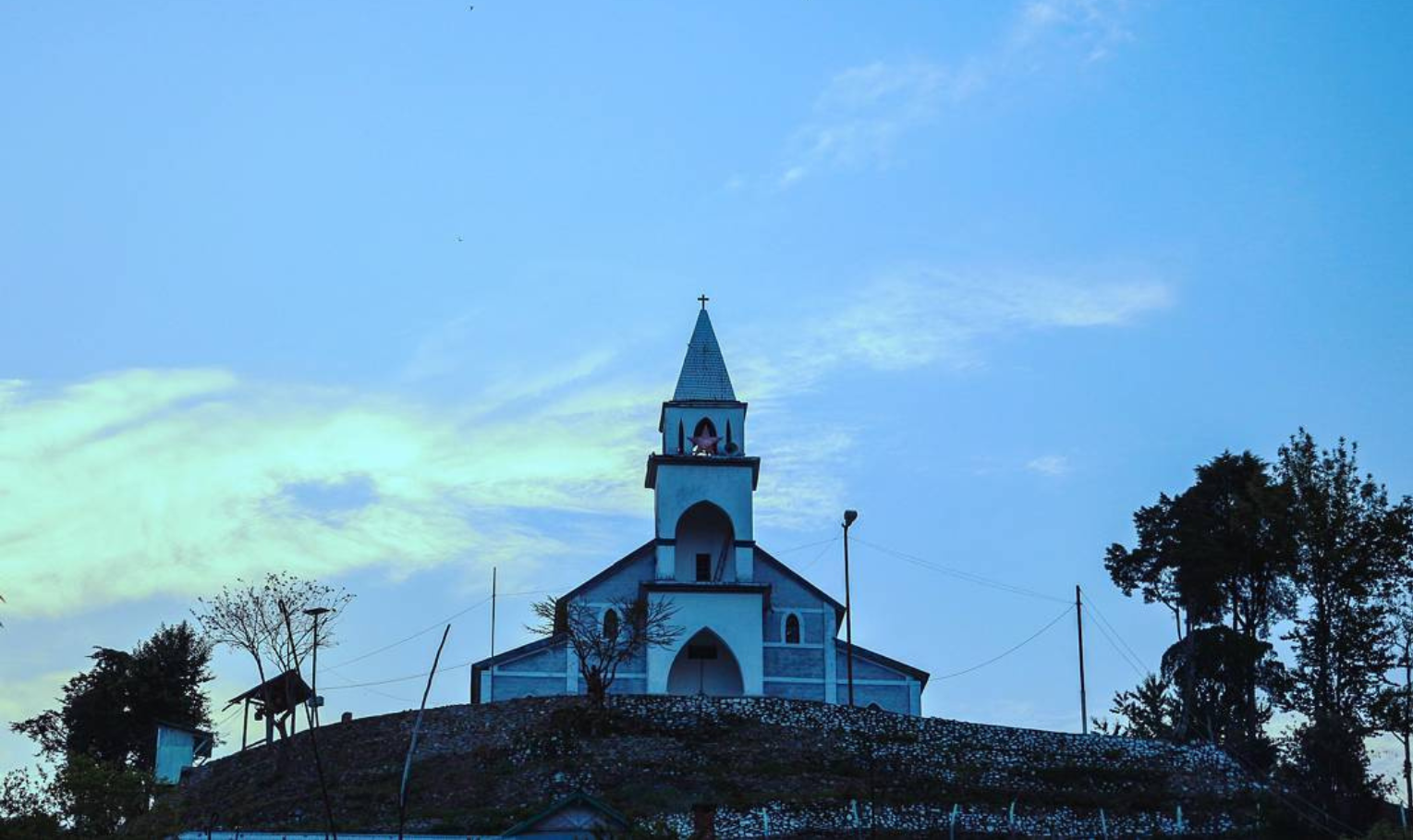
If We Lose Wild Fruits, What Stories Go With Them?
The city sells me every apple I could want, and none makes my mouth water like the Thishukthi I once dared my friends to bite. I know it’s a silly thing to ache for. Still, some evenings it’s the only thing I miss.

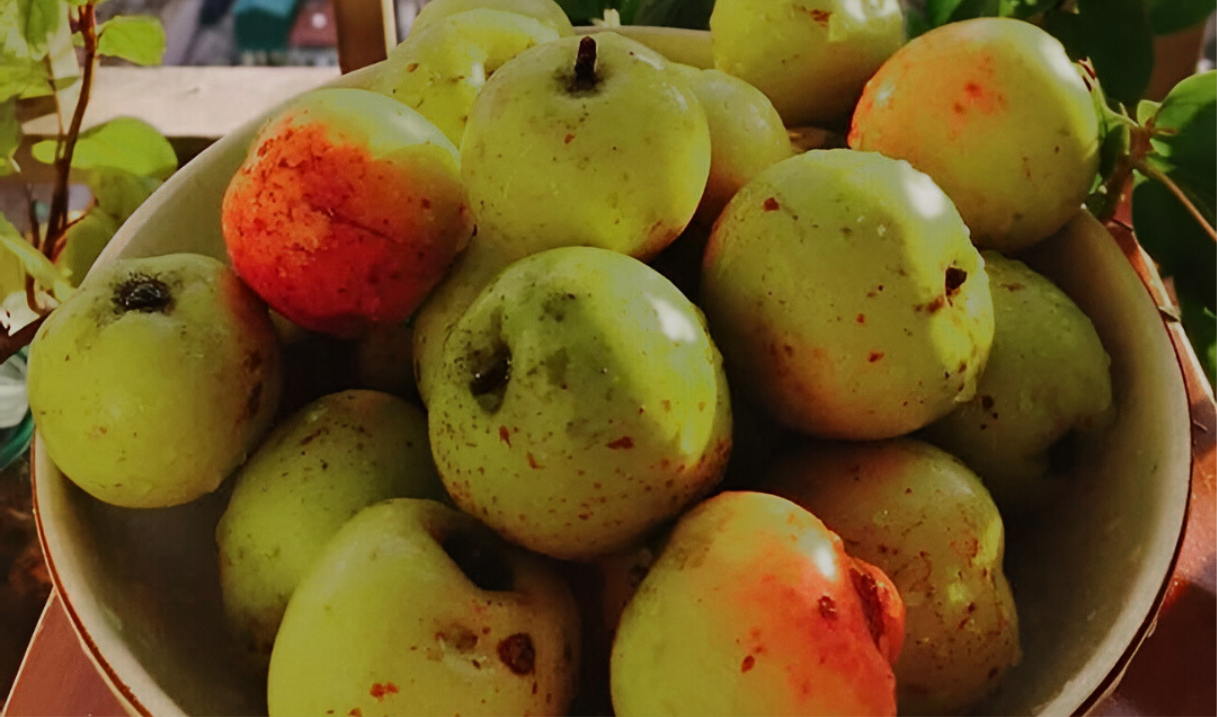
When I’m homesick, I don’t only think of my old house or the roads I walked every day. Sometimes I think of Thishukthi, a small, sour fruit from the edge of Somdal Forest. A strange thing to miss, I know.
Here’s a dare. Bite into one of these round, speckled fruits, golden with a red blush, straight off the branch, and try to keep a straight face. In Somdal, a village in Ukhrul district, Manipur, in India’s northeast, we call it Thishukthi, and every child there has taken that dare. Every single one has lost.
I live far from Somdal now, and I’ve eaten apples from fancy shops and fruit stalls, polished to shine. None of them has ever made my mouth water the way Thishukthi does.
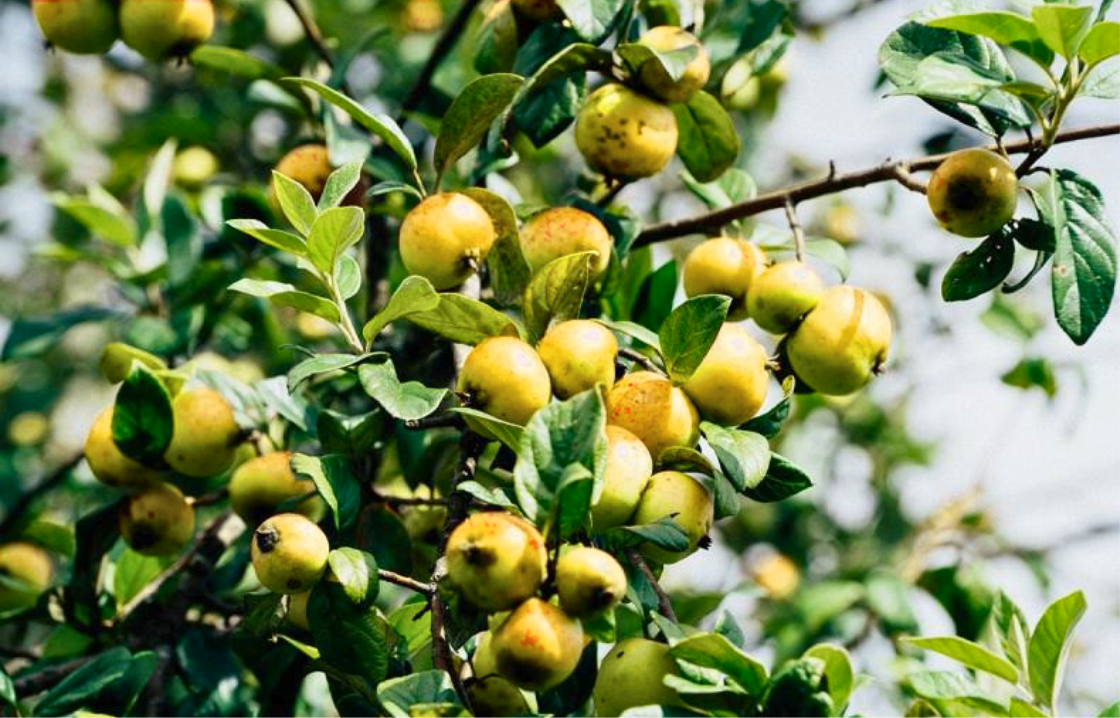
Outsiders call it the wild apple, which is the easy way to explain it. Botanists know it as Docynia indica, and in English it’s the Indian Crab Apple or Assam Apple. Among the Tangkhul Nagas it’s Theithukthei, and if you walk from one village to the next in our Ukhrul district, you’ll hear the word shift a little each time, and every version sounds like home to someone.
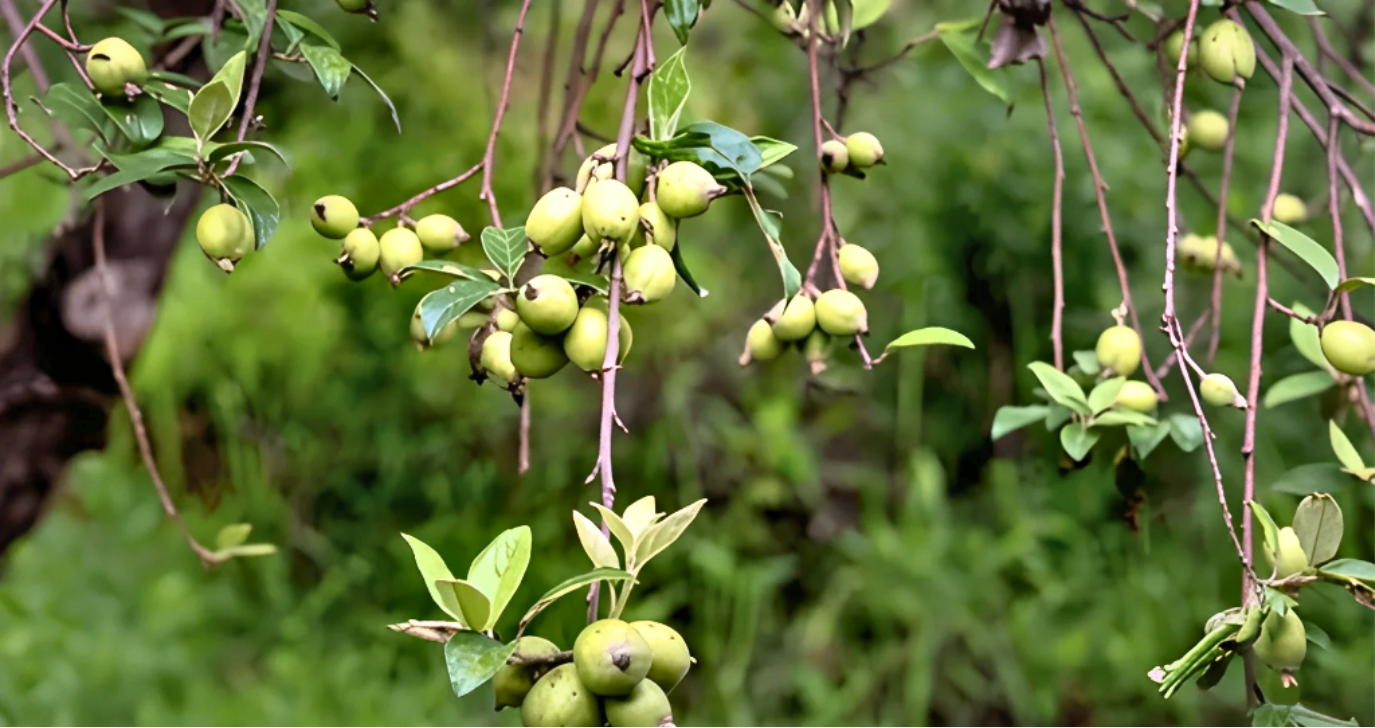
Nobody plants this tree. It just turns up at the edge of the forest, beside a footpath, or at the far end of the village where the fields give way to trees. It’s native to the Eastern Himalayas and can grow as tall as ten meters, yet for most of the year you’d walk right past it. It stands there through the rains and the cold, minding its own business.
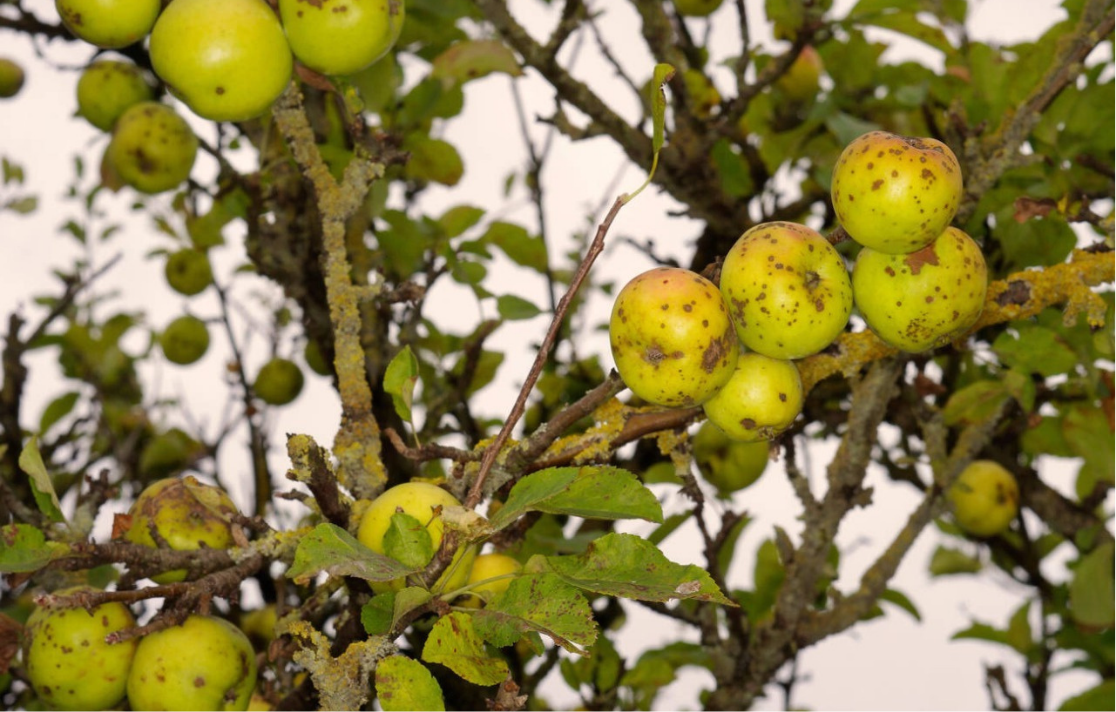
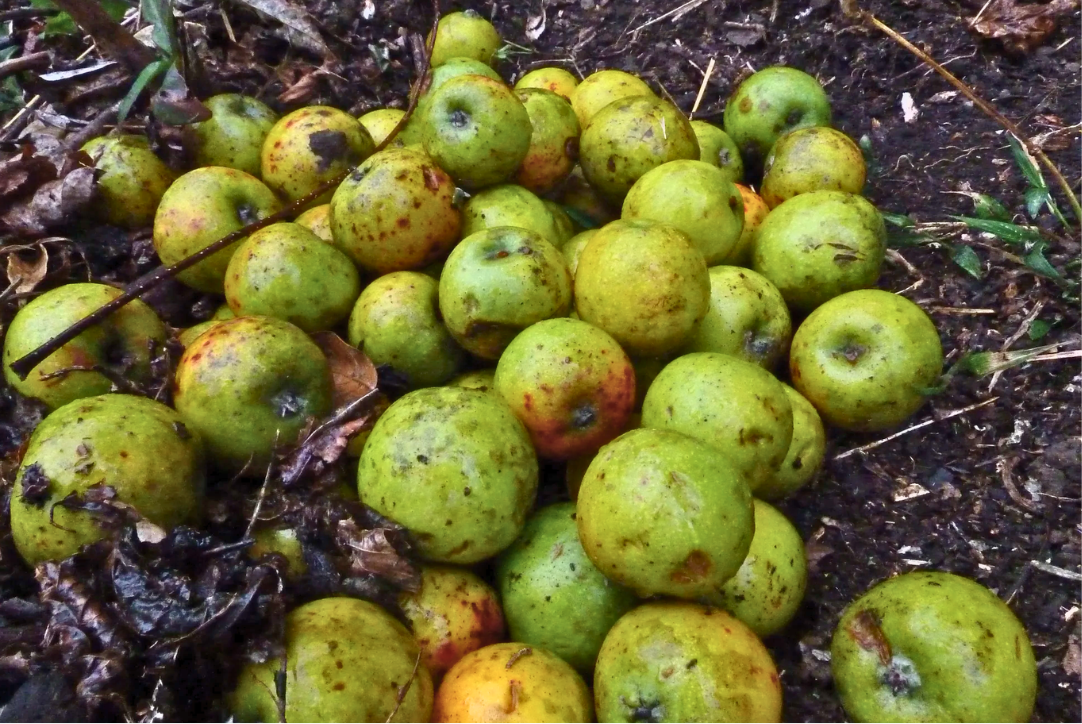
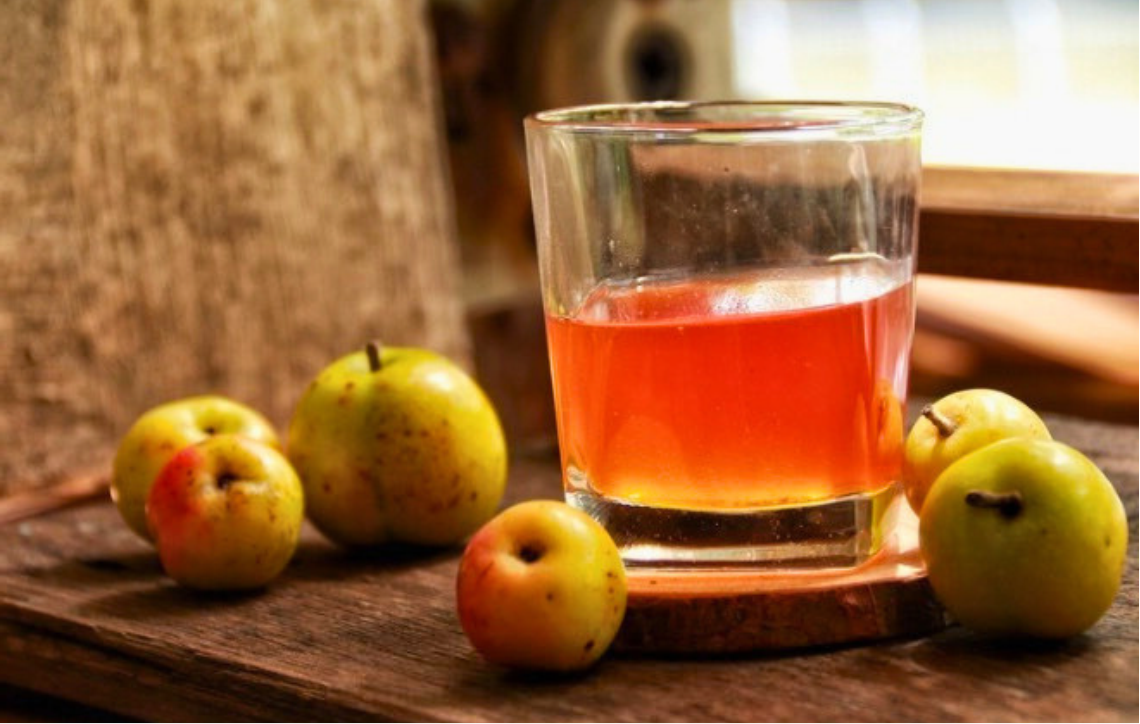
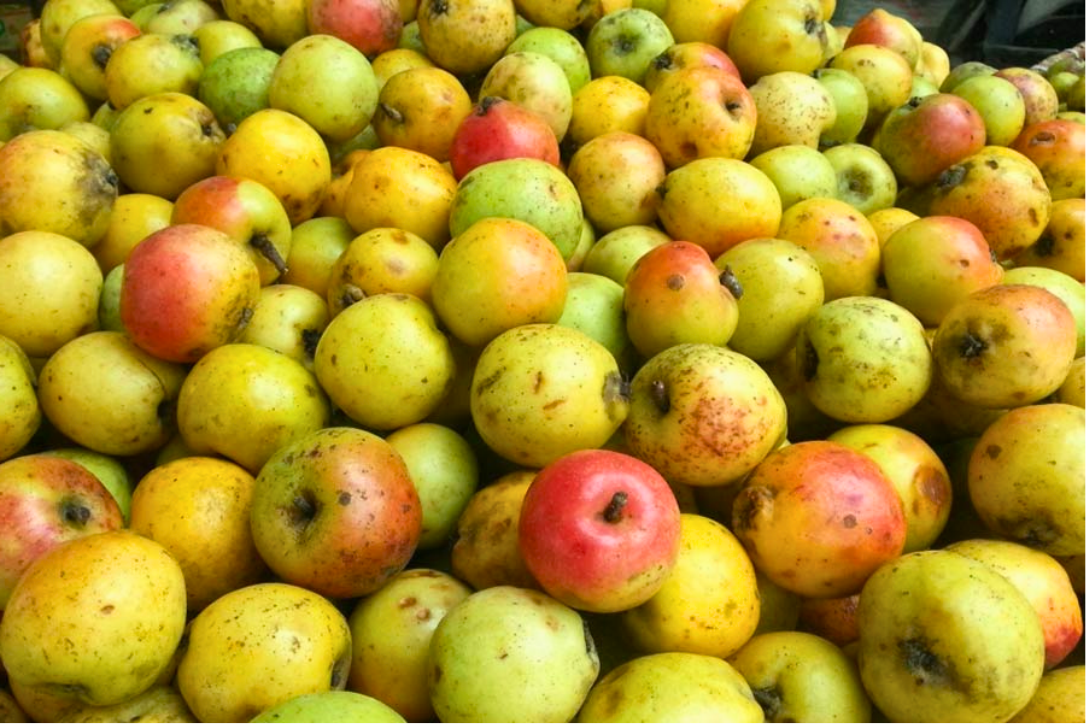
By late autumn the fruit starts to turn, going from green to yellow to orange, and finally to a golden skin flushed with red and dotted with small freckles. The fruits are about the size of a large plum and grow in bunches so tight that a single branch looks crowded. The skin is thin and a little rough. Some fruits have dark spots or a dry brown mark at the bottom, and nobody minds. Those are often the sweetest.
We learned to read those colors the way we learned to read the sky before rain. We watched the elders, noticed which fruits they reached for and which they left alone, and tested our own judgment the hard way.
If you picked too early, you got a mouthful of sourness so fierce it made your eyes water, and everyone around you fell over laughing. You made that mistake once or twice, and after that your eyes could tell before your tongue did.
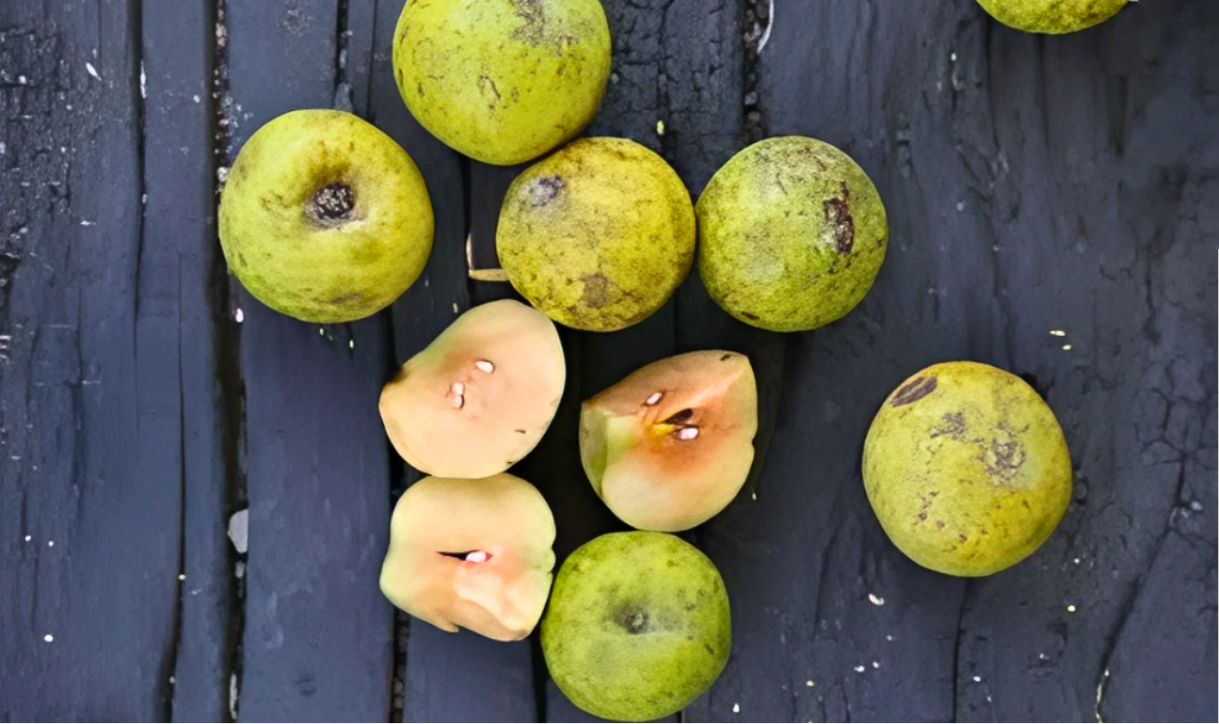
If you’re picturing a supermarket apple, the big shiny red kind, adjust your expectations. Early in the season the fruit is so sour that one or two is all you can manage, and your whole face scrunches up after the first bite. As it ripens, the sourness eases but never goes away, and a mild sweetness comes up underneath, if you’re patient. The skin is thin but firm, a little bitter and dry, so some people peel it and others chew it whole for the extra bite.
The flesh is crisp and moist, a little grainy, and some fruits are softer and mealier than others. It’s small and tangy, and not something you’d eat plain by the handful, which is why we found so many other ways to eat it, chili powder and a dare included.
After a long walk through the forest on a warm afternoon, with the sun coming down through the leaves, nothing cooled you off faster.
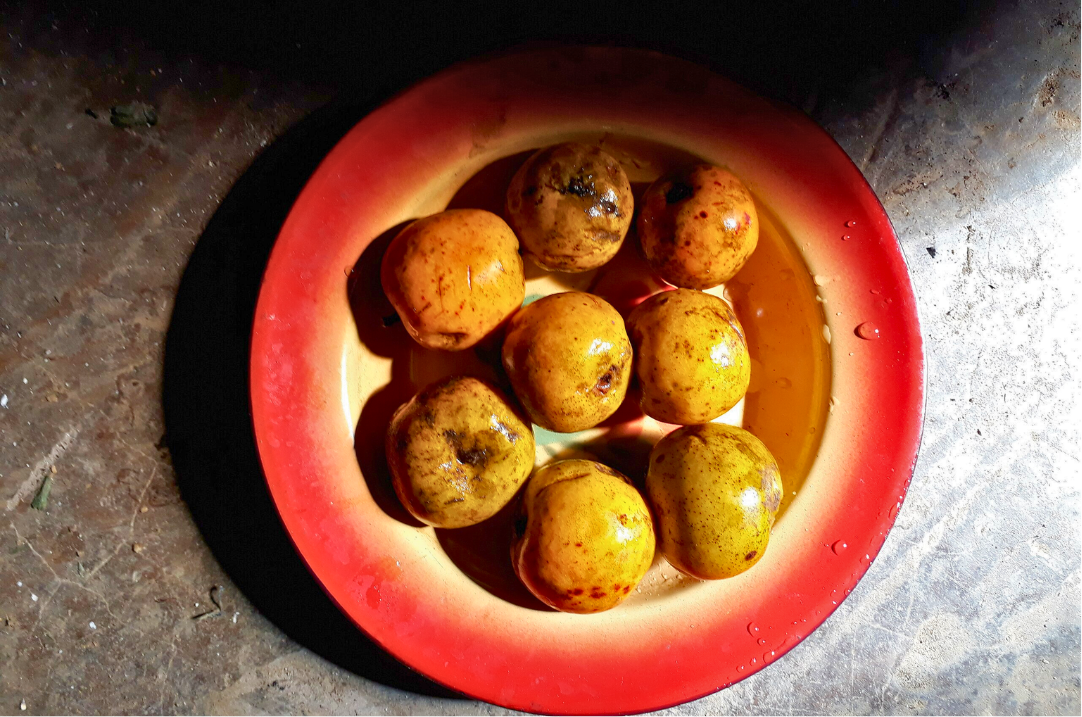
Once the harvest was in and the fields asked less of us, villagers would drift into the woods in loose groups. Sometimes it was children and grandparents, sometimes teenagers, sometimes the mothers. Someone always brought a long bamboo pole, and the rest of us picked up broken branches and flung them at the tree. We shook the fruit down, carefully when the grown-ups were watching and a lot less carefully when they weren’t. We crowded under the branches, squealing, while ripe fruit pelted the ground like heavy rain.
Then came the second half of the game, scrambling through fallen leaves after the fruit that had bounced away down the slope. Pockets bulged, shirts were hauled up into makeshift baskets, and we ate far more than we ever carried home.
You never cut a tree for its fruit. Mostly you took what you needed, and often you just waited and picked up what had fallen. We children bent that rule more than we should have. We wanted everything down at once, and we got told off until it sank in. Leave the top branches. Leave some on the ground for the birds. Come back to the same trees next year.
Still, it happened. Some years we would walk to our usual tree and find it bare, and then we’d see the stump. Some boys had cut it down because they were bored. Nobody was angry so much as stunned. Each time, the elders went to find those boys and sat them down to explain what that tree had given us every autumn, for longer than any of us had been alive.
In Somdal, foraging was always a shared activity. Cousins, neighbours and friends wandered through the woods together, calling out to one another between the trees and sharing whatever they came across. The forest provided for everyone, and no one thought of keeping its gifts to themselves.
As kids, our favorite way to eat Thishukthi was sliced or bitten whole, then dunked in chili powder and salt. Sour, hot, salty and wet, all at once. Your lips tingled, your fingertips went red, your nose started running, and you kept going anyway. Nobody stopped at one piece. We traded slices, dared each other to take bigger bites, and argued over who could handle the most chili.
Then there was the tin.
We made graters from the small round tins that chewing tobacco came in. We waited until an elder finished one, or picked up the ones that had been thrown away, and from then on it was ours. We scrubbed it with rags, water and a rough stone until the label and every mark were gone. Then we laid the lid on a flat wood and hammered a nail through it again and again, dozens of holes, until the outside bristled with tiny sharp edges. More looked better to us, so we kept poking. I still don’t know how many the lid was supposed to have.
With the lid on, we rubbed the fruit across it, and the crushed pulp dropped inside a little more with every pass. By the time the tin was full, our knuckles were scraped and our wrists ached, and we didn’t care. Then came the chili and salt, and the first handful found every scrape. Nobody admitted it hurt, we just ate faster. I haven’t grated a Thishukthi in years, but my mouth still knows how.
The adults had their own way, and honestly, theirs was better. They peeled the fruit and pounded it in a mortar into a coarse, fragrant pulp, with plenty of fresh ginger and a spoonful of ngāri, our fermented fish. As the pestle rose and fell, the juices ran and the smell of fruit, ginger and ngāri drifted through the house and pulled people in from the yard. Salt and dry-roasted red chili went in last, and then the bowl started going around.
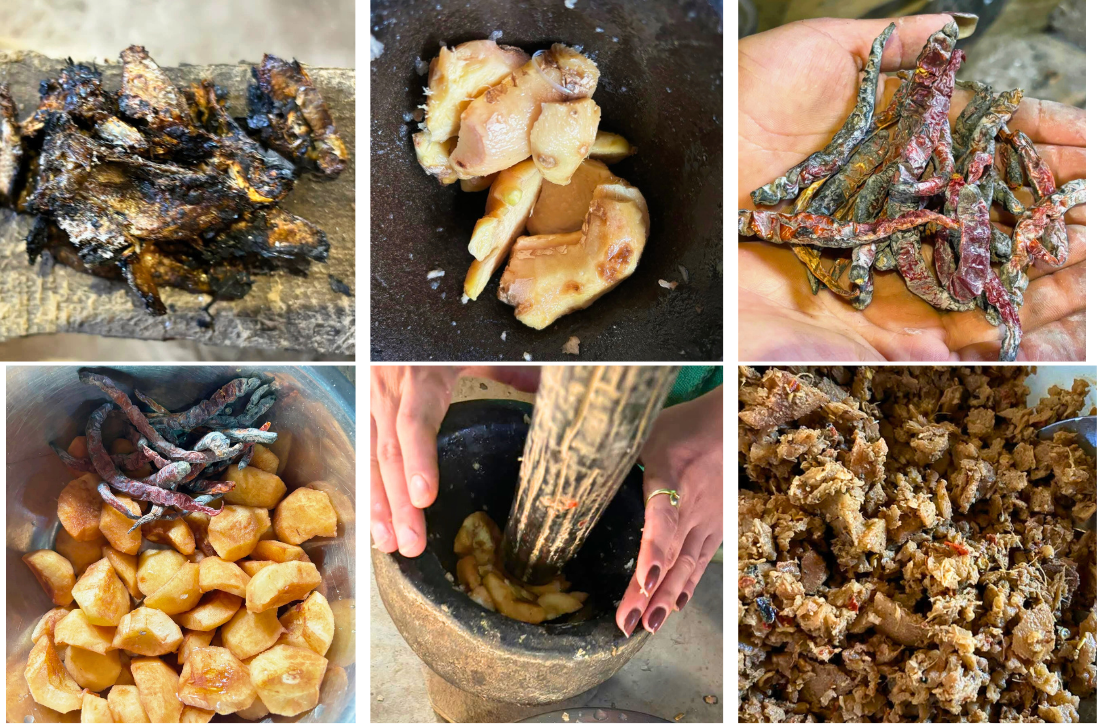
Mostly it was the women who sat around it, the pestle thudding in a steady beat, news and gossip and old stories passing from hand to hand along with the food. Someone would laugh so hard she had to stop pounding. Someone else would drop a piece of fresh gossip, pulling everyone in closer. I was too young to see what I was watching. I only knew I wanted to sit close and be handed a piece.
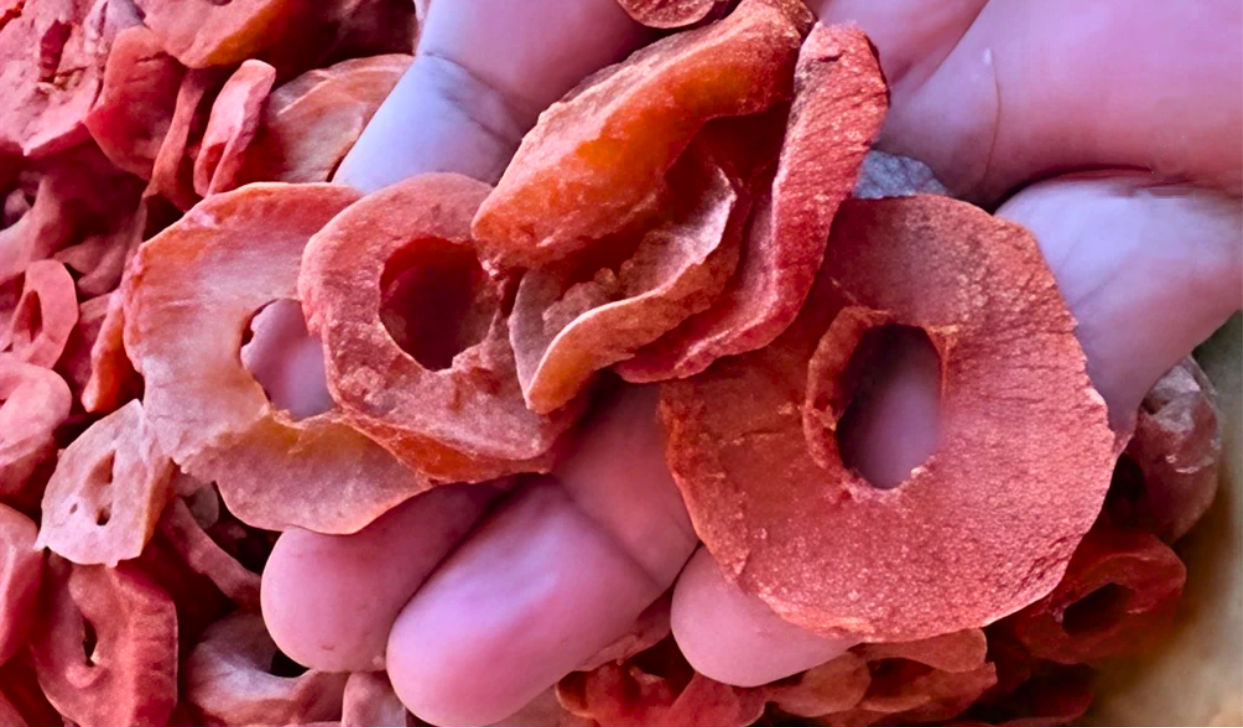
The Thishukthi season is short, but our mothers wouldn’t let it end that fast. When the harvest was good, the kitchen turned into a small workshop. They washed the fruit well to get rid of the forest dust and boiled it gently until soft. Then came the patient part: peeling off the skin, taking out the seeds, and cutting the flesh into thin wedges or rings. These went into a pot of sugar syrup to simmer slowly, the syrup pulling the moisture out of the fruit while the fruit soaked up the sweetness. After that the slices were laid out in the sun to dry, and for days the house seemed to glow.
Other mothers preferred to mince the cooked fruit into fine pieces or thin strips. They simmered these with sugar and spread them out in thin layers to dry. Anyone who has walked past a drying tray and quietly stolen a piece knows the mix of guilt and delight I mean.
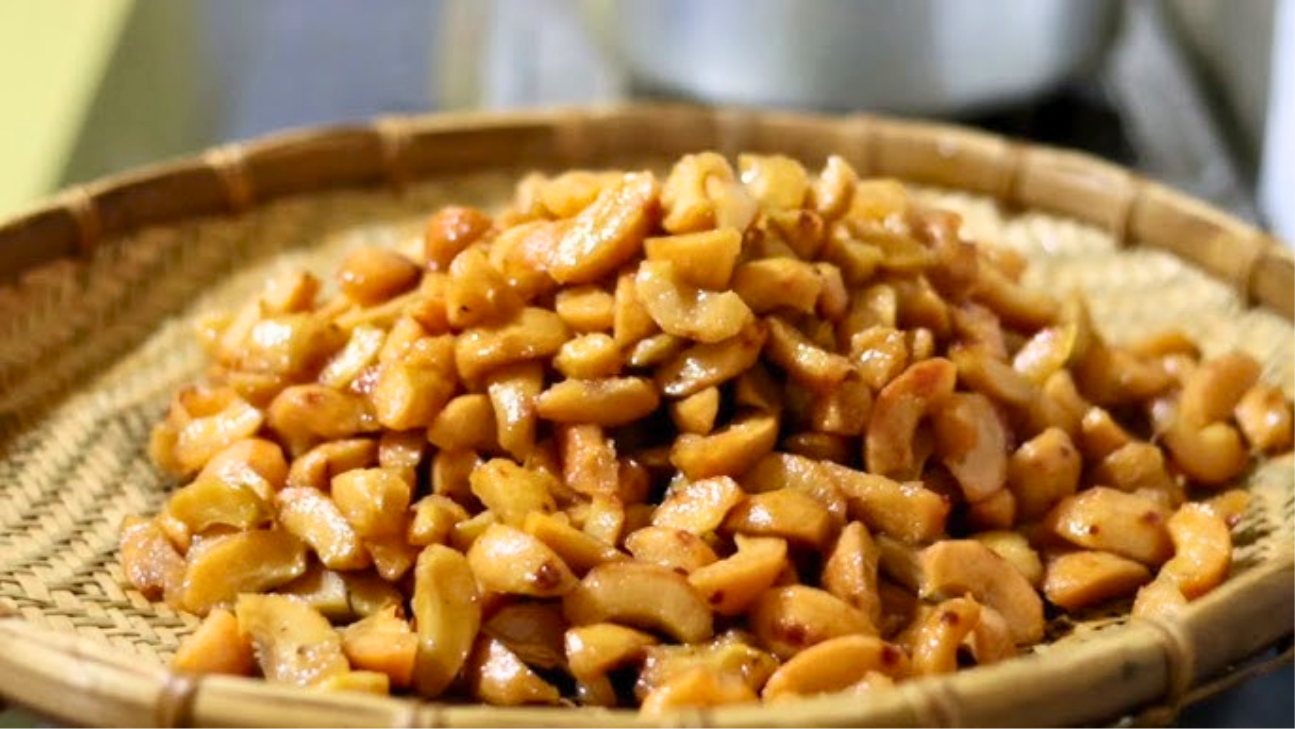
We called these candy, and no shop candy ever came close. The first taste was sharp, a burst of sourness that woke your whole mouth, and then the sweetness crept in behind it and softened everything. It was chewy and a little fibrous, handmade and a bit rough, nothing like what comes in a wrapper. A trace of ginger or chili left a gentle warmth on the tongue long afterward.
People who have never tasted the fruit often compare it to tamarind or raw mango, and I understand why. They reach for whatever sour thing they already know. But it isn’t really like either of them. The sourness is the only thing they share, and the flavor itself is something else entirely, something you could only find in our forest. To me it has only ever tasted like home, like the forest folded into something you could carry in your pocket.
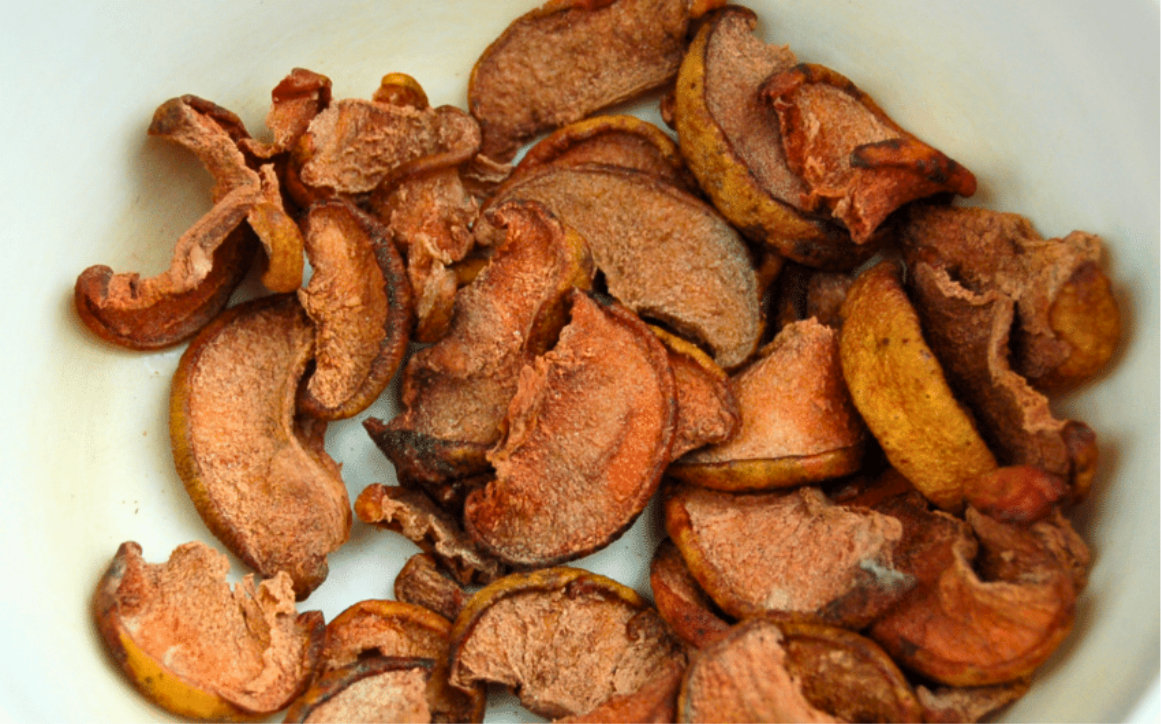
A mother’s cooking was never meant to stay in her own house, so jars and parcels went out to neighbors, friends and relatives. A small bag of candy might travel to an aunt in another village, turn up at the door of a family preparing for a wedding, or get tucked into the luggage of a relative heading far away. The taste of our forest ended up in kitchens we’d never seen.
Those who carried it took it everywhere, to cities, to tables where the forest was only a story, and some of them had not seen the forest themselves in a very long time. I like to think that somewhere far away, someone opened a packet of candy, tasted smoke and sun-warmed earth, and for a moment stood under our trees without ever having seen them.
Beyond eating it fresh or preserving it as candy, there is another tradition associated with Thishukthi that is less familiar outside our community, making wine.
It’s a quiet tradition, built on a knowledge of natural fermentation that families have handed down. Traditionally it has never been a commercial business. The ripe fruit is washed, halved and layered with sugar in clean containers, then set out in the sun so the wild yeast on the skins and in the air can do its slow work. For the first few days you shake the container every morning so everything ferments evenly and mold stays out, and you cover it loosely so the gas can escape without letting contamination in.
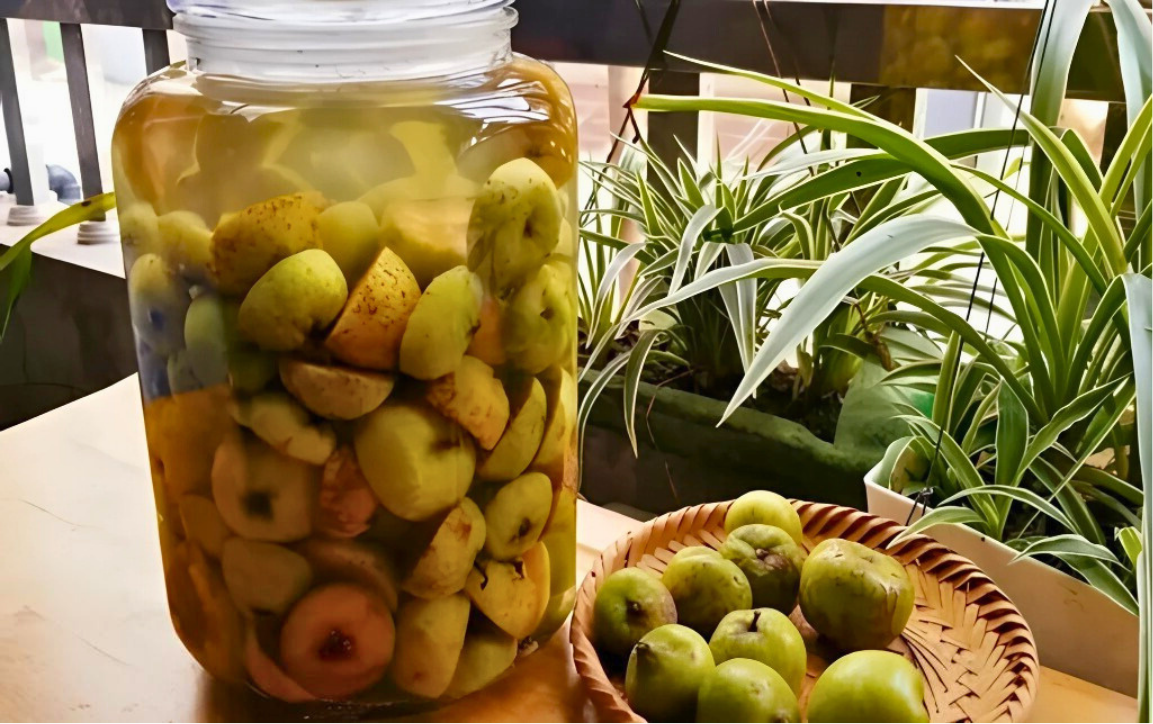
After that the liquid is strained off the pulp and sediment and moved into clean vessels for a second fermentation. Then comes the waiting, anywhere from a few weeks to a few months, depending on how patient the household is. The wine rests and its flavor deepens and mellows.
It comes out golden to amber, and a little cloudy if nobody bothered to filter it. It tastes wild and earthy. Sugar and time have softened the fruit’s sharp edge, leaving hints of apple and citrus, and sometimes a trace of ginger or forest herbs, depending on where the fruit grew and what got added. It’s mild, always served in small cups, poured at festivals and gatherings or sipped at home in the evening. No two households make it the same, and everyone is certain theirs is the best. Those opinions get shared freely, and sometimes loudly.
There’s a quiet pleasure in pouring a cup of something that grew wild on the hillside, with nobody’s help, and handing it to a neighbor.
Lately people far from Somdal have grown curious about food that is handmade and comes from a particular place, and our Thishukthi fits right in. For some mothers and families, the candy has become a small source of income, and their packets now travel well beyond home.
The fruit was long underused commercially, which seems odd for something so loved, but that is slowly changing. Some families have started protecting the trees and making jams, juices and candies. That brings in a little income, and it gives people a reason to go back to the trees and keep the old knowledge in use. The fruit is said to be rich in antioxidants, fiber and vitamin C. I can’t vouch for the fiber or vitamin C claims, but villagers have trusted this fruit for generations.
Still, I keep coming back to what travels with a fruit like this. Nobody handed me a manual for Thishukthi. I learned which color to trust by watching my grandmother’s hand hover over a branch, and none of it was ever written down. It lives in the people who know it. If nobody goes back to the trees, the name will go quiet first, then the recipes, then the stories that got told over the bowl.
I think about the children growing up now, with packets of snacks from the shop and screens in their hands. I wonder if they’ll ever stand under a Thishukthi tree in the late afternoon with a long bamboo pole and a pocket full of chili salt. I wonder if they’ll know the thump of fruit landing in dry grass, or the red chili salt that stays on your fingers all day. I hope someone takes them and shows them which color to wait for: the golden skin with the deep red blush. And I hope they bite into a green one first, the way we did, and lose the dare. Everyone loses once. After that, your eyes learn what your tongue already knows.
When I think of Thishukthi, I see myself as a child at the edge of it all, waiting for my turn to taste, with no idea I was memorizing every second. It belongs to Somdal as much as the hills do, and when I say the word, I’m standing there again.
So if I could ask one thing, it would be this: keep taking the children to the trees. The recipes and the names tend to follow.