Mikman Ruikhu - the healing waters of the ancients
A sacred healing spring hidden deep in Somdal’s Shaori Hills, Mikman Ruikhu has long been a place of faith and hope. Known for its miraculous powers, it heals those who come with humility and belief. Passed down through generations, its spirit endures as a living, sacred tale.

A sacred tale of faith and healing from Somdal
Before the days of roads and roaring engines, before electric light drowned out the stars, there existed a sacred place hidden deep within the ancient Shaori Hills of Somdal. In those quieter days, life moved gently with the rhythm of the earth. People rose with the sun, slept beneath skies heavy with stars, and trusted the land as one trusts a living elder. They believed not from blind superstition, but from generations of witnessing wonders with their own eyes that the earth itself possessed the power to heal.
And at the heart of those mist covered hills, where the forest thickens and time itself seems to slow, lies Mikman Ruikhu, the healing spring pool.
The forest surrounding it feels different from any other place. The air hangs heavy with the scent of wild herbs, damp soil, and rain soaked bark. Even the silence carries weight, deep and watchful, as though the trees themselves are listening to every footstep. Nothing there feels accidental. Every stone rests where it belongs. Every tree seems to guard an unseen secret. And every passing wind carries echoes of old stories once whispered by grandmothers beside firelit hearths.
Mikman Ruikhu does not appear on maps. No road points the way. No sign marks its presence. Yet every child born in Somdal grows up hearing its name long before they are old enough to understand its meaning.
They call it the pool that heals.
The spring that listens.
The soul of the hills.
Its water is astonishingly clear, so pure that even the smallest pebbles resting at the bottom can be counted from the shore. The surface remains still, untouched, like a prayer held silently between breaths. The water is colder than winter rain, sharp enough to wake the body instantly. But what made the spring sacred was never its beauty. It was what the water could do.
Long ago, when the homes of Somdal stood on wooden stilts and were roofed with thick grass and woven hay, life was simple and deeply connected to nature. At night, pine fatwood torches flickered against bamboo walls while the forests beyond hummed with unseen life. The villagers understood the language of the land. They knew when wild bees would swarm through the valleys, when birds would return to their nests, and when medicinal herbs would bloom along the hillsides after rain.
It was during this untouched age that a group of hunters wandered deep into the Shaori Hills while tracking game through the dense forest. After days of exhaustion, they stumbled upon a spring bubbling quietly beneath the roots of an enormous ancient tree. Some elders would later claim the tree was older than the hills themselves. Crystal clear water poured endlessly from the earth, gathering into a natural pool surrounded by moss covered stones, ferns, and the sharp green fragrance of wild ginseng growing thick nearby. The hunters, weary and thirsty, drank from the spring. Almost immediately, they felt a strange warmth move through their bodies, as though strength itself had returned to their bones. They washed the cuts and bruises earned from the hunt, and the pain began to ease. One hunter, whose eyesight had long been clouded by illness, splashed the cold water across his face before resting beside the pool for the night. By morning, his vision had cleared more than it had in years.
When the hunters returned to the village, they spoke of the spring quietly at first, sharing the story in hushed voices over meals and beside glowing hearth fires. But stories like that do not remain hidden for long. Word spread from family to family, generation to generation, until the spring became woven into the soul of Somdal itself. The elders believed the discovery was no accident. They saw it as a gift from the land, a sacred sign from the hills.
From then on, Mikman Ruikhu became a place of reverence.
People approached the spring not with laughter or noise, but with humility and silence. Before touching the water, many would bow their heads in respect. Villagers carefully cleared fallen leaves from the pool’s surface and gathered only small amounts of water, taking no more than what was truly needed. To misuse the spring was believed to be an insult not only to nature, but to the spirit believed to dwell within it.
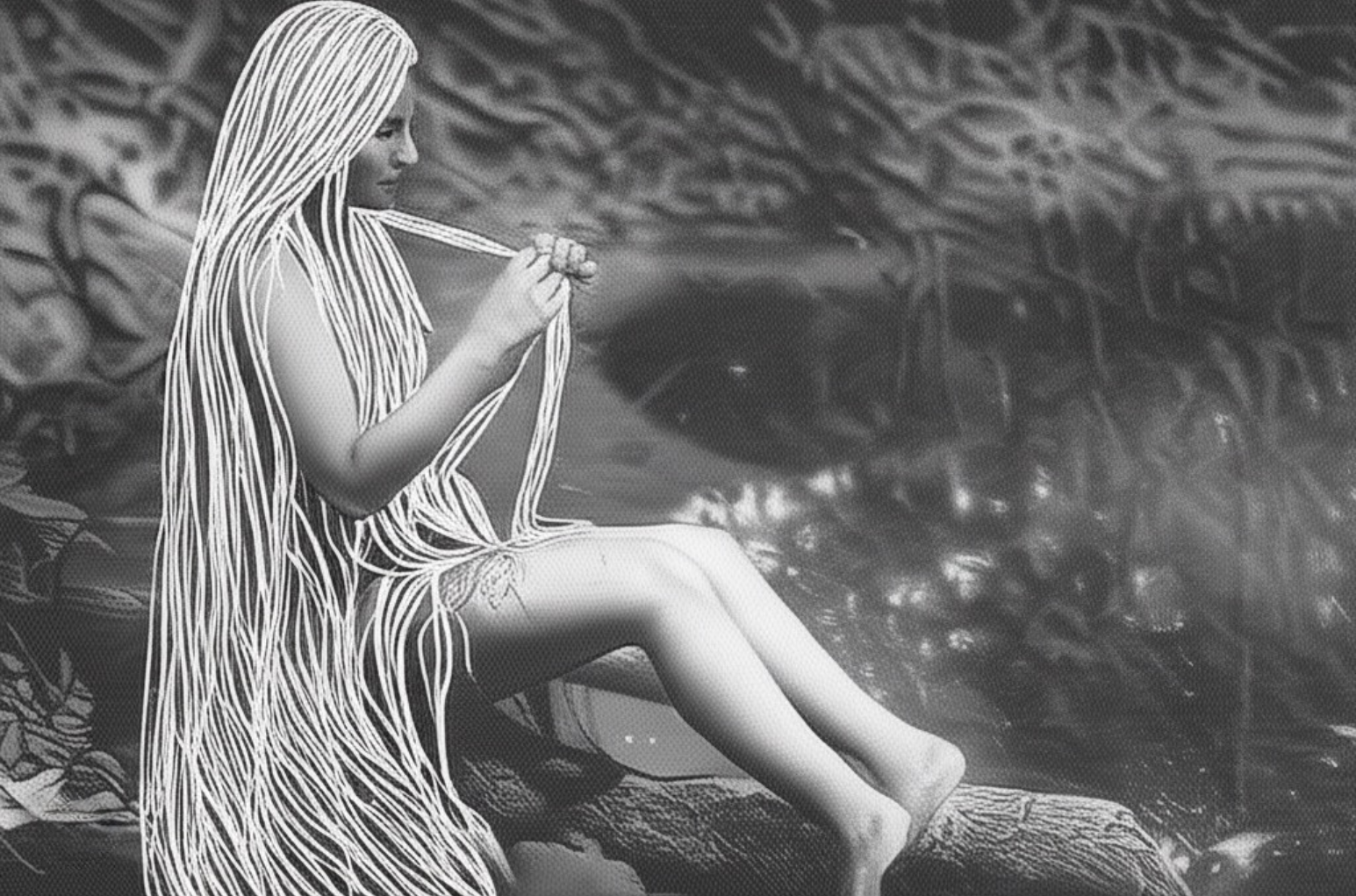
Among the oldest stories still told in Somdal is the tale of a young girl cast out from her village after developing leprosy. In those times, the disease was feared more than death itself. The afflicted were treated as cursed, abandoned by society and forced to wander alone into the wilderness. The girl, whose name has long since faded from memory, was weak from hunger and illness. Her skin was covered in painful sores, and her spirit had nearly broken beneath the weight of loneliness and rejection. She wandered through the Shaori forest with no destination, too exhausted to cry and too hopeless to continue. Then, as though guided by fate or perhaps by the forest itself, she discovered Mikman Ruikhu.
Beside the spring, she built a small shelter from branches and leaves. Every day, she bathed in the cold water and whispered quiet prayers into the silence around her, though she no longer knew who might be listening. Days passed, then weeks. Slowly, the wounds covering her body began to close. The burning fever inside her faded. Strength returned to her limbs. Her skin cleared little by little until one morning, she knelt beside the water and saw her reflection staring back at her.
Whole.
Unscarred.
Healed.
When she finally returned to her village, the people who had once turned her away could hardly recognize her. The sores that had once covered her skin had faded, and the weakness in her body was gone. At first, many simply stood in silence, unsure of what to say. Some looked at her with disbelief, while others quietly whispered among themselves, trying to understand what had happened.
News of her recovery spread quickly through the village. For the first time in a long while, people no longer spoke of her with fear or pity. Instead, they began to see her as someone who had endured suffering and somehow found healing in the heart of the forest. And from that day on, the story of the girl and the spring became one of the most enduring tales connected to Mikman Ruikhu.
As the years passed, more stories emerged from the hills surrounding Mikman Ruikhu. There was the old man whose swollen joints softened after drinking the spring water for several days. The child whose unbearable skin disease vanished after bathing in the pool. The frightened pregnant woman who feared losing her unborn child until she cupped the cold water in her trembling hands and felt an overwhelming sense of peace settle within her. Yet the elders always warned that Mikman Ruikhu was never a place of miracles for everyone. The spring, they believed, healed only those who approached it with humility, sincerity, and faith. Those who came driven by greed or arrogance often returned unchanged. It was said the water could sense the heart of the person standing before it.
Even in modern times, long after many villagers left Somdal for distant cities and foreign countries, they carried the memory of the spring with them. Some filled small bottles with water from Mikman Ruikhu before leaving home, wrapping them carefully as though carrying something sacred. A few used the water during times of sickness. Others kept the bottles untouched for years, simply as a reminder of home. To them, Mikman Ruikhu was never just water. It was hope in liquid form, a memory of their ancestors, a quiet connection to the hills that raised them.
But not every chapter of the spring’s story remained untouched by human hands.
As knowledge of medicinal plants spread beyond the hills, outsiders began hearing rumors about the rare herbs growing around Mikman Ruikhu. They came searching not for healing, but for profit. Wild ginseng and sacred plants that had flourished undisturbed for centuries were ripped from the earth and carried away in sacks. Some were dried and sold in markets. Others were ground into powders for medicines and modern supplements. Slowly, the forest began to change, the hills felt quieter, the plants grew scarce, and the air itself seemed less alive. And many villagers believed the spring changed too.
The water still flowed, but some elders said it no longer carried the same energy it once had. They believed the spirit of Mikman Ruikhu had withdrawn into silence, wounded by greed and disrespect, like a betrayed guardian retreating into the shadows. Others believe the spirit still remains beneath the water, waiting patiently for reverence to return. Even now, the spring pool endures deep within the Shaori Hills. It does not beg for attention, seek worship, appear on tourist maps, or invite crowds to its shores. It simply exists in quiet patience, watching the forest breathe through the passing centuries.
In Somdal, the elders still speak its name with reverence beside evening fires. They tell their grandchildren the old stories exactly as their grandparents once told them, ensuring the memory never disappears into silence. And as long as even one voice remembers, as long as one soul returns to Mikman Ruikhu with gratitude in their heart, the spirit of the healing spring will never truly fade.
Because Mikman Ruikhu is more than a place. It is memory, it is faith, and it is a lesson carried forward through generations. It is a living story that breathes quietly within the hills of Somdal, unchanged by time yet deeply rooted in the people who remember it. It does not call for attention, seek worship, appear on maps, or invite crowds to its shores; it simply remains, patient and enduring, watching the forest breathe through the passing centuries. And in that quiet presence, it continues to belong to Somdal, now and forever.