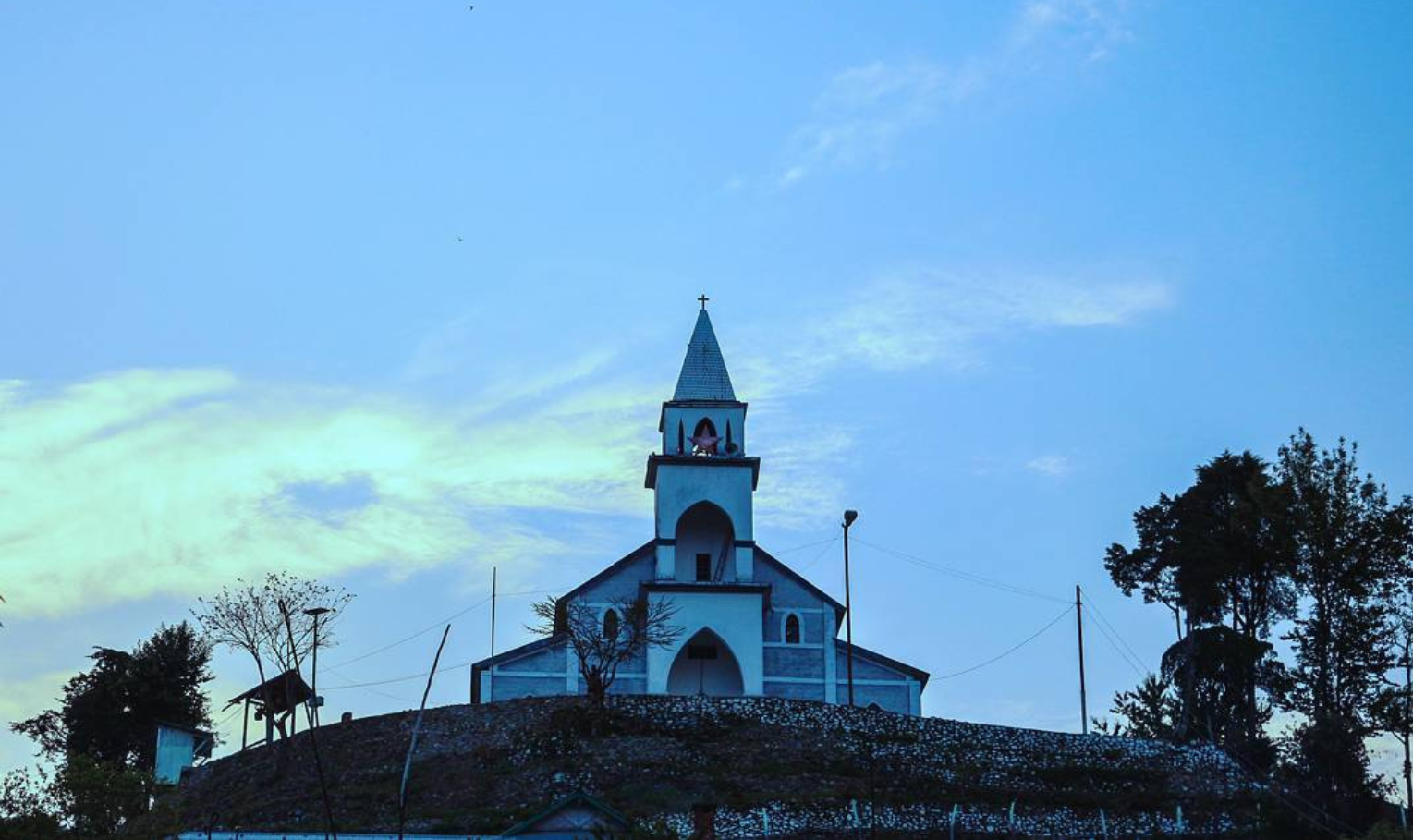
Lāmenlā and the shadow of delay
Lāmenlā, the beautiful but always late girl of Somdal, falls in love with a serpent who helps ease her burdens. But when her mother disobeys a warning and kills their children, a single snake survives to sing a haunting song that echoes through the forest to this day.
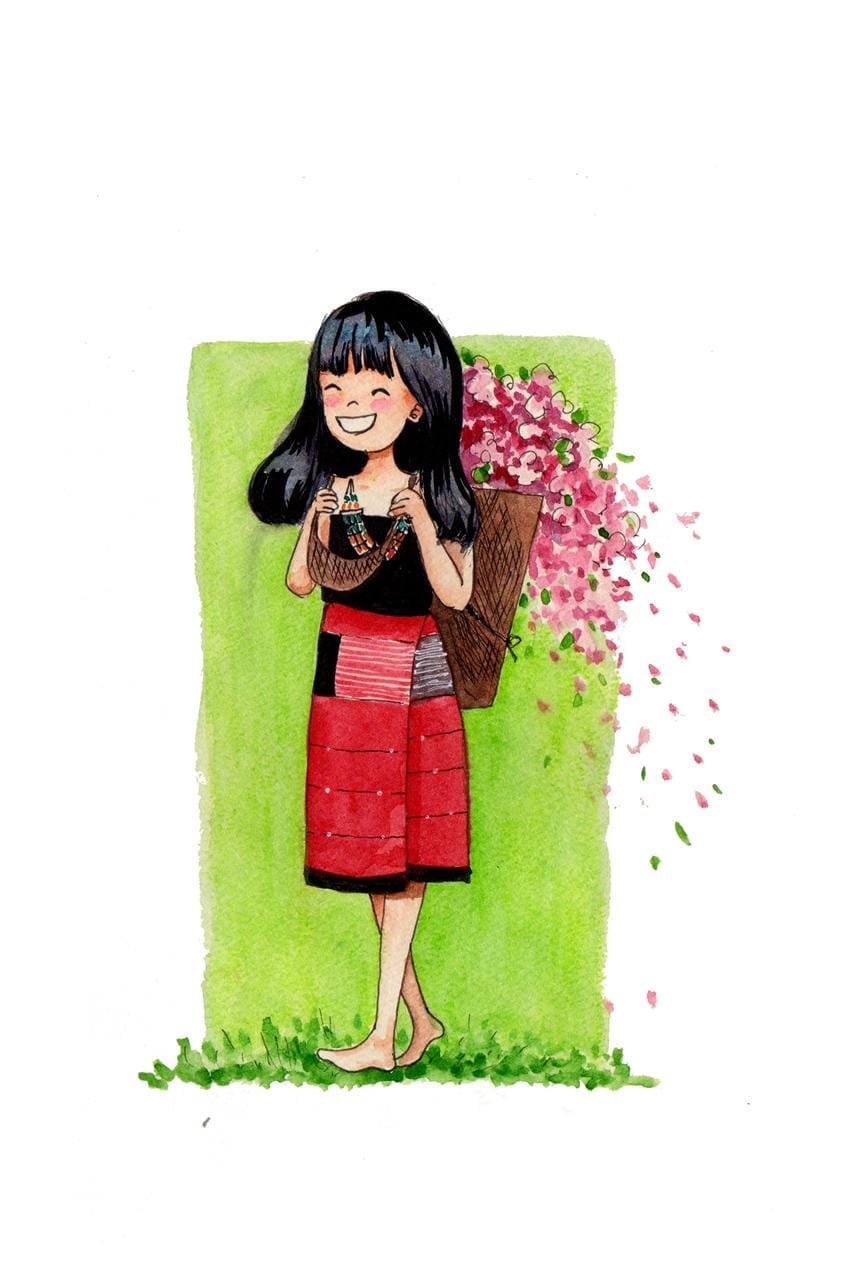
A folktale from Somdal
Long ago, when the sky still spoke softly to the trees and the wind carried names not yet given to the living, there was a village called Somdal. In that village lived a girl named Lāmenlā.
Now Lāmenlā was not simply beautiful. Her beauty was the kind that made even the morning sun hesitate before fully rising, as if it wanted one more moment to look at her. Her hair fell long and dark like rain soaking into bamboo leaves. Her eyes held the quiet shimmer of wet paddy fields at dusk, when the world turns golden and still. And her laughter, ah, her laughter was said to be sweeter than rice beer shared on a cold evening, warming even the loneliest heart.
Yet for all her charm, Lāmenlā had one habit the whole village knew too well. She was always late.
Every morning, when the village slowly awakened, when roosters stretched their voices across the fields and women stepped out with sickles glinting in the sun, the calls would rise from every direction.
“Lāmenlā, come now, let us go to the fields together.”
And Lāmenlā, still brushing her hair or tending to some small task, would answer gently,
“You go ahead. I must feed the cats first.”
Later, when the sun climbed higher and the girls walked toward the stream carrying their pots, laughing as they went, they would call again,
“Lāmenlā, hurry, the river water is still crisp and cold this morning.”
And she would reply without hurry,
“I will follow soon. I must give bones to the dogs.”
Even when the forest called them to gather firewood, and voices echoed through the paths,
“Lāmenlā, the day will not wait forever.”
She would only smile and say, “Go on without me. I have not finished sweeping the floor.”
And so, she always remained behind. Always a step late. Always walking the world at her own gentle pace, as though time itself would understand and slow down for her.
One morning, later than usual, as she hurried along the edge of the forest to catch up with the others in the fields, something shifted among the thick undergrowth. The air grew still. Even the birds seemed to pause. From the shadows of roots and stones, a great python emerged. He was enormous, his body smooth and ancient, moving with the quiet certainty of something that had seen many seasons pass. His eyes were like polished amber, steady and knowing, not cruel, not kind, simply aware.
He spoke.
Not with a hiss, not with threat, but with a deep and measured voice that seemed to rise from the earth itself.
“Why are you always late, Lāmenlā? The others have already begun their work.”
Lāmenlā, though startled, did not run. She bowed her head slightly, as one might before an elder, and answered honestly.
“I have many small things to care for. The animals, the house, the morning chores. I try, but the day always moves faster than me.”
The python watched her for a long moment, as if weighing not her words, but her heart. Then, unexpectedly, he spoke again.
“You carry too much alone. Let me help you.”
From that day forward, the python came to her each morning.
With his strength, he helped carry firewood. With his long, powerful body, he guided her through the forest paths and helped clear the fields. Where others saw danger, Lāmenlā found companionship. Where there had been loneliness in her constant delays, there was now presence.
Days turned into seasons, and something strange and quiet grew between them, something neither fully human nor fully beast, yet deeply real in its own way. And in time, against all expectation, Lāmenlā and the python came to share a bond that resembled love, shaped not by words, but by trust, routine, and understanding.
Later, Lāmenlā bore children. Not like the children of ordinary women, but eggs, carefully tended and warm with life. She placed them inside a wooden drum filled with soft sand, near the granary, where the warmth of the home could protect them. Each night, she would sit beside them and sing, her voice soft as dusk settling over fields. But time, as always, moved forward.
One day, her aging mother came to visit. Lāmenlā welcomed her with respect and affection, preparing food and arranging a place to rest. Yet before leaving for the fields, she spoke carefully, almost pleading.
“Mother, there is one thing I ask of you. Please do not open the wooden drum near the granary. Promise me this.”
Her mother, though curious, agreed.
At first.
But as the hours passed and the house grew quiet, curiosity began to whisper in the old woman’s mind. What could her daughter be hiding so carefully? What life could be inside a sealed drum?
Unable to resist the growing pull of curiosity, she finally lifted the lid of the wooden drum.
The moment it opened, the warmth inside met her face like a breath from another world. But what she saw made her freeze where she stood. Inside, there were countless small serpents, not monstrous, not threatening, but alive, fragile, and moving in a restless cluster, as though they were something newly born and still learning the shape of life itself.
Fear rose in her like a sudden storm. In her mind, there was no time to understand, only time to react. She could not see them as anything but something unnatural, something that did not belong. And so, in panic and confusion, believing she was protecting her home from danger, she made a terrible choice. She boiled water and poured it into the drum.
What followed was silence so heavy it felt almost physical.
In that chaos, only one small snake escaped. Barely alive, trembling with shock, it slipped through a narrow crack in the wood and fell into the grass outside. For a moment it stayed still, as if unable to understand what had just happened. Then instinct took over. It raced across the earth, through dewy fields and trembling grass, driven by something deeper than fear. It was not only fleeing death. It was carrying it. Carrying loss. Carrying a truth too large for its small body. It moved toward the hills where Lāmenlā was working, her figure bent over the field, unaware that something had already broken beyond repair.
From a distance, the little survivor lifted its voice. It was not a voice shaped by language alone, but something older, something closer to grief itself. A sound that did not just speak of pain, but held it.
“Oh awui, Vivi na taotao da tarui kasā da torthat tā ruyei…”
(“Oh mother, grandmother poured boiling water over my siblings. None remain.”)
And in that moment, the world between forest, field, and sky seemed to fall into a strange stillness, as though even the wind had stopped mid breath to listen. Lāmenlā stood frozen where she was, her hands still stained with soil, her body unmoving, as if the ground beneath her had suddenly given way. For a brief moment, she could not think, could not speak, only feel an overwhelming sense that something had gone terribly wrong, somewhere beyond her sight. Then, as understanding began to take shape in her chest like a rising storm, she turned and ran.
But it was too late.
The drum stood silent where it had been placed, no longer holding the soft warmth it once carried. The life that had been carefully tended, spoken to, and protected in quiet nightly songs was gone, leaving behind only stillness and the faint memory of what had been. Her mother wept openly, her sorrow heavy and unrestrained, but no words could undo what fear had done in a single moment. Lāmenlā said nothing. She only stood there, as if sound itself had left her.
What followed is told differently by different voices, each carrying its own version of grief, silence, and the weight of what was lost.
Some say Lāmenlā wept until her tears became rain, and the python slipped back into the forest, never to be seen again. Others believe she herself crossed into the world of serpents, leaving the human village behind and never returning as she once was. And there are those who still whisper that she was never fully gone at all, only changed, moving quietly between both worlds, neither entirely present nor entirely lost.
But in Somdal, there is an older belief.
That if you walk alone at the edge of the fields when evening light turns soft and uncertain, you may still hear a faint song moving through the wind, carried from somewhere deep within the hills.
“Oh awui, Vivi na taotao da tarui kasā da torthat tā ruyei…”
And so, the tale of Lāmenlā remains in Somdal, carried quietly from one generation to the next like a memory that refuses to fade. She is remembered as the girl who was always behind time, yet moved through life with a quiet gentleness that left a lasting mark on those around her. She is also remembered as the beauty who lived beyond ordinary understanding, and for a love that grew in silence and defied time itself.
Even today in Somdal, Lāmenlā’s name has become part of everyday speech. When someone is slow to arrive, unhurried in keeping pace with others, or often reaches after everyone else has already gathered, people smile and say they are like Lāmenlā. It is not said to shame or scold, but to gently point to a familiar kind of way of moving through the world that everyone recognizes.
In that way, her story no longer lives only in memory or legend. It quietly continues in conversation, woven into daily life, keeping her presence alive in the simplest of moments.